
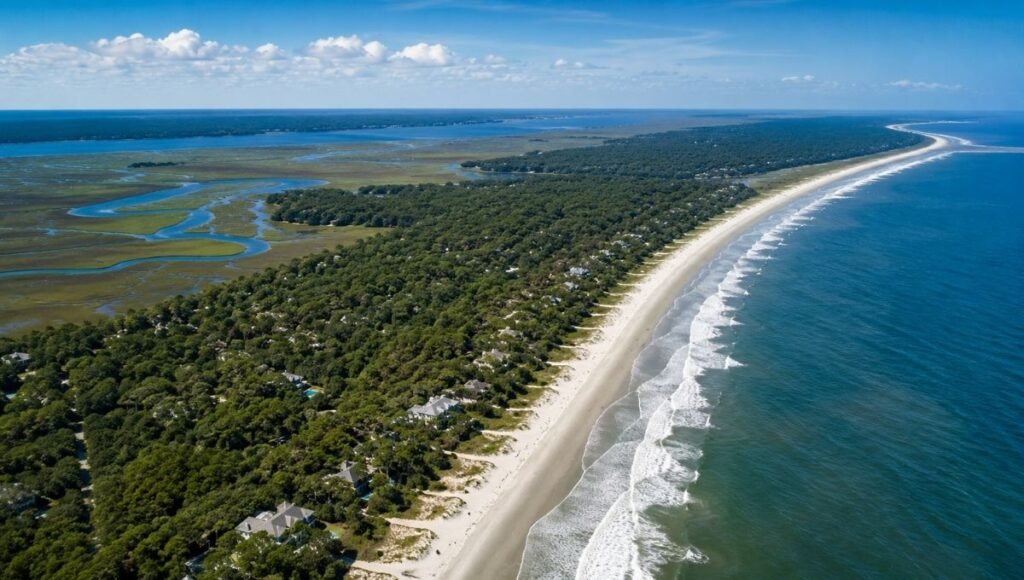
There’s a moment that happens on Hilton Head that doesn’t happen at most beach destinations. You pull into the island, and the first thing you notice is that you can’t see the beach. Or the hotels. Or really much of anything except trees — live oaks dripping with Spanish moss, palms, pines — because Hilton Head passed strict zoning laws decades ago that require all development to sit behind the tree line. Signs are small and subdued. Buildings don’t tower above the canopy. The island genuinely looks more like a nature preserve than a resort destination, at least at first glance.
Then you find your beach access, walk through the dune path, and the Atlantic opens up in front of you: ten miles of wide, clean, relatively uncrowded sand, with gentle-to-moderate surf and that particular South Carolina coastal light that photographers come specifically to capture.
Hilton Head Island is one of the better-kept secrets on the East Coast for families — it has everything you’d want from a beach vacation, plus 60 miles of bike paths, dolphin cruises, kayaking through tidal creeks, and a pace that doesn’t feel like anyone is trying to hustle you into the next paid experience. This guide covers what’s actually worth your time, with honest logistics for families with kids of every age.
Key Takeaways
- Hilton Head has 60+ miles of paved bike paths running throughout the island — cycling is genuinely practical transportation here, not just recreation, and most families rent bikes within hours of arriving
- Coligny Beach Park is the best base camp for families — free public parking, restrooms, showers, a playground, beach chair rentals, and direct beach access in one spot
- The island’s strict tree canopy ordinances mean no billboard signage and all development sits behind the tree line — it looks and feels fundamentally different from most resort beach towns
- Dolphin watching is nearly guaranteed in Hilton Head’s tidal creeks and marshes — the resident bottlenose dolphin population is one of the most accessible in the Southeast
- September is the sweet spot — ocean water still warm from summer (78°F+), significantly fewer crowds than July and August, accommodation prices drop, and the island’s hiking and kayaking trails are beautiful in the softer autumn light
The Beaches of Hilton Head — What You’re Actually Getting
Hilton Head has 12 miles of Atlantic-facing beach, and the character varies depending on where you access it. The island is privately developed into several “plantations” — gated resort communities — but public beach access points exist throughout.
Coligny Beach — The Best Family Beach Access
Coligny Beach Park is the most family-friendly public beach access on the island, and it’s not close. Free parking (limited but usually manageable), clean restrooms and showers, a playground directly adjacent to the beach, and a cluster of shops and restaurants within easy walking distance. The beach at Coligny is wide, well-maintained, and has lifeguards on duty during summer season.
The surf at Hilton Head is Atlantic surf — real waves, bigger than Gulf Coast beaches, but generally gentler than Cape Cod or Outer Banks. Young children need active supervision in the water; older kids find it ideal for bodyboarding and wave jumping.
Editor’s take: Coligny is where you go first. Once you have your bearings on the island, you’ll discover quieter access points through the various plantations — many of which welcome day visitors — but Coligny is the reliable default.
Driessen Beach Park — The Quieter Alternative
Driessen Beach Park on the north end of the island is a solid alternative to Coligny for families who want more space and fewer people. It has its own parking lot, restrooms, and a picnic area. The beach here tends to be less crowded than Coligny, particularly on summer weekends.
Alder Lane Beach — Mid-Island Access
Alder Lane offers a smaller, quieter access point in the mid-island area — particularly useful if you’re staying in one of the central plantation rentals. Parking is limited; arrive early on summer days.
Things to Do in Hilton Head for Families
Cycling the Island — The Activity That Defines Hilton Head
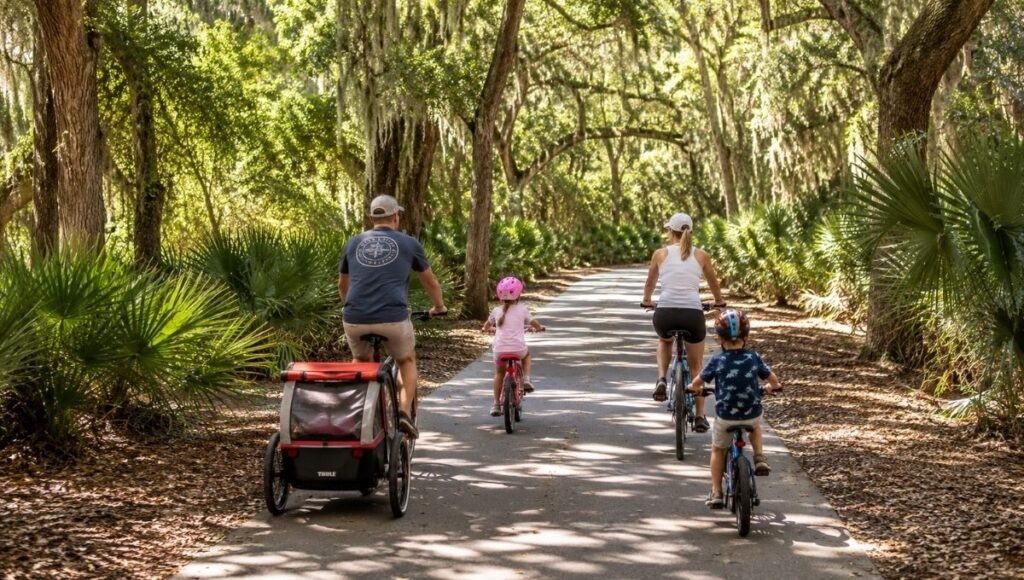
No other activity captures the Hilton Head experience as well as cycling. The island has over 60 miles of paved bike paths that weave through maritime forest, past marshes, along the beach, and through each of the main plantation communities. Crucially, these are separated bike paths — not just road shoulders — which means families with young children can cycle safely without sharing lanes with cars.
Cycling is not optional on Hilton Head. It’s the primary way families get around. The paths connect beaches, restaurants, shops, and attractions across the island. Families with kids who can ride (typically 5+) genuinely use bikes as their main transportation for the week.
Bike rentals are available from multiple outfitters — Pedals Bicycles, Hilton Head Bicycle Company, and others offer a range of options including bikes for children, tagalongs, trailers for toddlers, and adult tandems. Weekly rentals are significantly more economical than daily rates if you’re staying for a full week.
With very young children: Child trailers and tagalongs mean even families with toddlers and infants can participate. The flat terrain of the island makes the physical effort manageable for most fitness levels.
Kayaking the Tidal Creeks — Where the Wildlife Is
Hilton Head’s real natural drama isn’t on the beach — it’s in the network of tidal creeks, marshes, and estuaries on the back side of the island. These protected waterways are where the dolphins actually live, where great blue herons and egrets fish the shallows, where horseshoe crabs emerge at low tide, and where the landscape shifts from resort island to genuine Lowcountry wilderness.
Guided kayak tours are widely available and are the right call for families unfamiliar with tidal paddling — tidal currents can be strong, and a guide who knows the waterways adds both safety and the knowledge to make wildlife sightings actually happen. Tour length typically runs 1.5–2.5 hours.
For families with children under 6, consider a kayak tour specifically offered for families — these tend to run in calmer creek sections with gentler currents.
Best time: Early morning, when the light is beautiful and wildlife activity is highest. Dolphin encounters on morning tours are remarkably consistent.
Dolphin Watching — It’s Not a Maybe Here
Hilton Head’s bottlenose dolphin population is resident — they live in the island’s tidal creeks and nearshore Atlantic waters year-round. This is different from many coastal areas where dolphins are seasonal or sightings are hit-or-miss.
Dolphin watching options include dedicated dolphin cruise boats from Shelter Cove Marina, kayak tours through the back creeks, and — if you’re lucky — watching from the beach as dolphins work the surf zone in the early morning.
The “strand feeding” behavior unique to the Lowcountry coast occasionally happens on Hilton Head beaches: dolphins cooperatively herd fish onto the beach and briefly strand themselves to catch them before sliding back into the water. If you see it, you won’t forget it.
With kids: Any dolphin cruise rated for families will work. Keep expectations realistic — dolphins appear near virtually every tour, but “swimming with dolphins” isn’t what this is. It’s wild dolphin observation in their natural habitat, which is more meaningful and more memorable.
The Hilton Head Island Lighthouse — History Plus Views
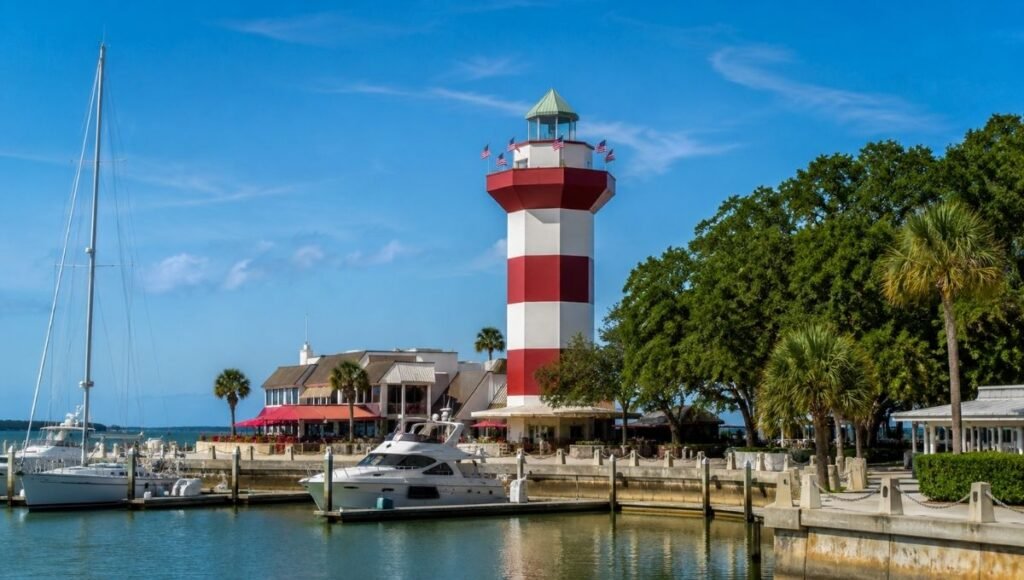
The Harbour Town Lighthouse at Sea Pines Plantation is Hilton Head’s most photographed landmark — the red and white striped tower at the tip of the Harbour Town marina. It’s climbable (114 steps), with views from the top that show the full sweep of the marina, the Sound, and on clear days, Daufuskie Island across the water.
Sea Pines Plantation charges a gate fee for non-residents entering by car ($10 per vehicle in 2026). Alternatively, many families cycle in via the island’s bike path network. The Harbour Town marina area has several restaurants and shops worth exploring alongside the lighthouse visit.
For kids: Most children who can climb stairs find the lighthouse worthwhile. The gift shop at the base has lighthouse-themed souvenirs that become the souvenir of the trip.
Kayaking and Paddleboarding at Shelter Cove
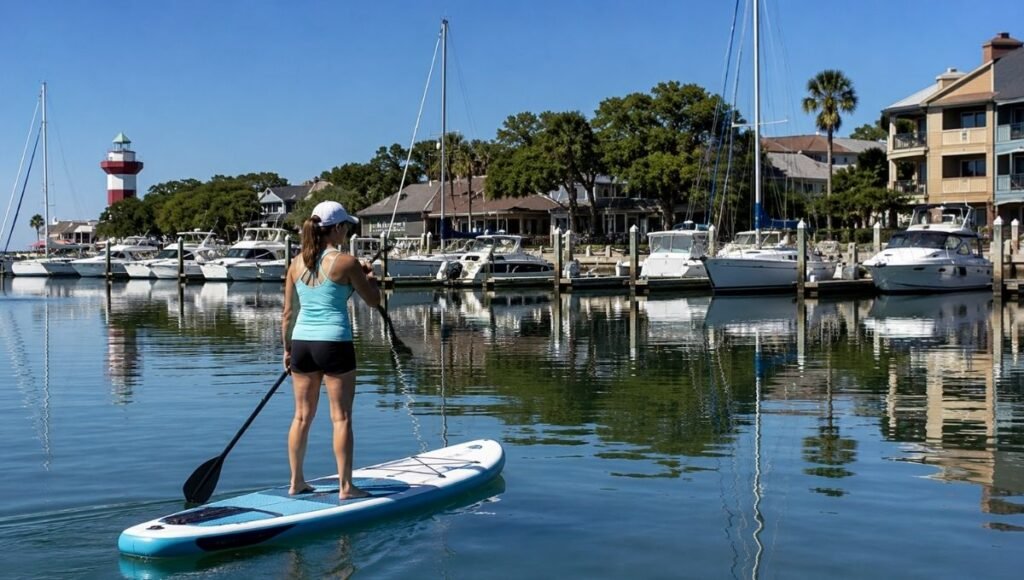
Shelter Cove Harbour on the mid-island is a marina complex with kayak and paddleboard rentals on calm protected water — ideal for beginners and families who want to paddle without worrying about tidal currents or ocean conditions. The harbour is sheltered enough that even wobbly first-time paddleboarders can manage without drama.
Paddleboarding on flat harbour water is significantly more forgiving than ocean paddleboarding. If you have children 8+ who want to try SUP, Shelter Cove is the right environment.
Fishing — Shore, Pier, and Charter Options
Hilton Head has solid fishing across multiple formats:
Coligny Beach pier fishing: The pier at Coligny is accessible and a good beginner introduction. No boat required, tackle is available for rent nearby.
Shelter Cove fishing: The marina area has calm water accessible for light tackle fishing — flounder and redfish are common inshore catches.
Charter fishing: Inshore charters targeting redfish, trout, and flounder run from multiple Hilton Head marinas. Half-day inshore charters are the right format for families — shorter duration, calmer water, and guides who are experienced with kids.
Offshore options: Grouper and snapper charters run offshore into the Atlantic. These are better suited to older children and adults with sea legs.
Nature Center and Sea Turtle Programs
The Coastal Discovery Museum at Honey Horn is a Hilton Head institution — a natural history and cultural museum set on a 68-acre historic plantation property with live oak alleys, tidal marsh access, and exhibits on Hilton Head’s ecology and Gullah Geechee heritage.
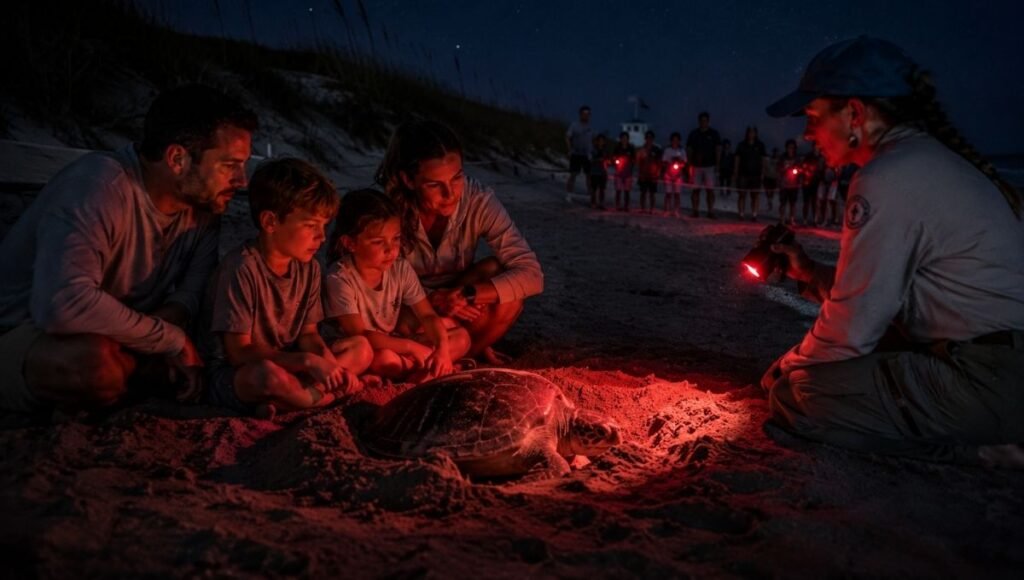
The museum offers seasonal sea turtle programs — Hilton Head beaches host loggerhead sea turtle nesting from May through August, and hatchlings emerge August through October. The museum’s turtle walks (guided evening beach walks to observe nesting or emerging turtles) are among the most memorable family experiences the island offers. Book well in advance — they fill up.
Mini Golf — The Rainy Day Backup
Hilton Head has several mini golf options, including Pirate’s Island (consistently the best-themed course on the island, with a pirate ship and waterfall features that kids genuinely enjoy) and Adventure Cove. Both run $12–$15 per person per round and provide the reliable, all-weather family activity that fills the gaps when beach conditions are poor.
Hilton Head vs Myrtle Beach — The Honest Comparison
This question comes up constantly, and the answer depends entirely on what your family is optimizing for.
Hilton Head is better if: You want a quieter, more natural island environment. Your family enjoys outdoor activities beyond the beach — cycling, kayaking, wildlife. You’re willing to pay more for a calmer, less commercial experience. You have children of mixed ages who need different types of engagement.
Myrtle Beach is better if: You want maximum entertainment infrastructure — water parks, aquariums, go-karts, boardwalk energy. Budget is a primary concern (Hilton Head is significantly more expensive). You have younger children who need facilities and amenities close at hand.
The core difference: Hilton Head genuinely feels like a nature preserve that happens to have resort facilities. Myrtle Beach is a resort destination that happens to have a nature preserve (Myrtle Beach State Park) nearby. Neither is better — they serve different families looking for different experiences.
Best Time to Visit Hilton Head
September and October: The genuine sweet spots. Ocean water stays warm from summer (76–80°F in September, cooling to 68–72°F in October). Crowds drop significantly after Labor Day. Accommodation prices fall 25–40% from peak. The island’s trail system and kayaking are beautiful in the softer autumn light. Hurricane season (June–November) requires awareness and travel insurance, but the probability of a direct hit in any given year is low.
June: Good alternative — warm water, summer energy, before the peak July/August crowds. Accommodation is still available at lower prices than peak summer.
July and August: Peak season. Every beach and attraction is in full operation. The island handles crowds better than many beach destinations because of its size and the dispersal effect of the plantation system, but popular spots like Coligny Beach are genuinely busy on peak summer weekends.
Off-season (November–March): Beautiful for cycling and kayaking. Too cold for ocean swimming (water drops to 50–60°F). Many restaurants reduce hours. Accommodation prices hit annual lows. Best for couples or adults seeking the natural island experience without summer crowds.
Getting Around Hilton Head with Kids
The island is 12 miles long and 5 miles wide — too large to walk between attractions, but perfectly sized for cycling. The bike path network is the transportation system that actually makes Hilton Head work as a family destination.
Renting a golf cart: Golf cart rentals are available and popular for families — they’re street-legal on most of Hilton Head’s roads and allow families with very young children (who can’t yet bike) to access the island without constant car trips. Daily rates run $80–$120 for a 4–6 person cart.
Car: Necessary for getting to and from the island and for accessing some outlying areas. Within the island, you’ll use it less than you expect if you have bikes.
Shuttle and rideshare: Uber and Lyft operate on the island. Useful for evenings when you don’t want to cycle after dinner.
Beach Safety at Hilton Head
Rip Currents
Hilton Head’s Atlantic beaches have rip currents, particularly during periods of swell from offshore storms. Check the flag warning system at Coligny Beach and other lifeguarded access points. The correct response to a rip current is to swim parallel to shore rather than against the current — the rip is narrow and swimming sideways exits it.
The United States Lifesaving Association estimates rip currents account for over 80% of lifeguard rescues on Atlantic beaches. Teach this response before your children enter the ocean.
Jellyfish and Stingrays
Both are present in Hilton Head waters. Sea nettles are the most common jellyfish and produce a painful but manageable sting — rinse with seawater, remove tentacles with tweezers, apply heat. Stingrays rest on the sandy bottom in shallow water — the stingray shuffle (dragging feet rather than lifting them as you enter) prevents most encounters.
Sun Protection
South Carolina summer UV index reaches 10–11 (Extreme). Apply reef-safe SPF 50+ sunscreen 30 minutes before beach exposure and reapply every 2 hours and immediately after water. Children’s skin burns faster than adults’ and with more lasting consequence — UPF rash guards are worth using for extended water time.
If You Only Have One Day on Hilton Head
7:30 AM: Rent bikes from your accommodation or a nearby outfitter. Cycle to Coligny Beach.
8 AM – 11 AM: Early beach morning. Best light, fewest people. Let the kids have the beach before it fills.
11 AM: Cycle to Harbour Town at Sea Pines (via bike path — no car gate fee on bikes). Climb the lighthouse. Walk the marina.
1 PM: Lunch at Harbour Town or cycle back to Coligny area restaurants.
3 PM: Afternoon kayak tour through the tidal creeks — dolphin sightings are most common in calm afternoon conditions.
Evening: Shelter Cove marina for dinner and a sunset over the harbour.
That’s a full, excellent, genuinely Hilton Head day.
Frequently Asked Questions
What is Hilton Head known for? Hilton Head Island is known for its wide Atlantic beaches, 60+ miles of paved bike paths, strict environmental zoning that keeps development behind the tree line, world-class golf (Heritage PGA Tour event is held here annually), and the accessible bottlenose dolphin population in its tidal creeks and marshes. It’s considered one of the premier family beach destinations on the East Coast.
Is Hilton Head good for families with young kids? Yes — particularly for families with children who can participate in outdoor activities. The flat bike paths are perfect for families with children 5+. The dolphin cruises and kayak tours work for most ages. Coligny Beach’s calm-ish surf and family facilities make it a good beach base. For families with very young toddlers, the golf cart rental option helps with transportation.
How does Hilton Head compare to Myrtle Beach? Hilton Head is quieter, more upscale, more nature-focused, and more expensive. Myrtle Beach has more entertainment infrastructure (water parks, boardwalk, more dining variety) and lower accommodation costs. Families who prioritize outdoor activities and a calmer pace prefer Hilton Head. Families who want maximum activities and entertainment often prefer Myrtle Beach.
What is the best beach on Hilton Head Island? Coligny Beach Park for facilities and family convenience. Driessen Beach Park for fewer crowds. For accessing the full width of the beach away from other visitors, mid-island access points through the plantation day visitor systems work well.
When is the best time to visit Hilton Head? September is the sweet spot — warm ocean water remaining from summer, significantly reduced crowds after Labor Day, and lower accommodation prices. June is a good second option. July and August are peak season with peak prices.
Are there dolphins at Hilton Head? Yes — resident bottlenose dolphins live in Hilton Head’s tidal creeks and nearshore waters year-round. Dolphin cruises from Shelter Cove Marina have very consistent sighting rates. Kayak tours through the back creeks produce close-up encounters. Early morning beach walks occasionally include dolphins working the surf zone.
The Bottom Line
Hilton Head Island rewards the families who slow down enough to actually experience it. The beach is beautiful, but the bike paths, the tidal creek kayaking, the dolphin encounters in the marshes at dawn — these are what make Hilton Head genuinely different from any other East Coast beach destination.
It’s not the cheapest option on the coast. It’s not the most entertainment-dense. But the combination of natural beauty, outdoor activity, and a pace that forces you to actually relax rather than consume experiences is hard to find anywhere else.
Rent the bikes on day one. Find the tidal creek tour. Watch for dolphins from the beach at first light.
The rest fills itself in.
Planning your East Coast beach trip? Read next:
- Cape Cod Beaches: The Honest Family Guide
- Things to Do in Myrtle Beach SC: The Honest Family Guide
- Outer Banks Beaches: The Complete OBX Guide
- Beach Vacation Packing List: What to Actually Bring
- Jellyfish Sting Treatment & Beach Safety Guide
References
- Town of Hilton Head Island — Official Visitor Information: hiltonheadislandsc.gov
- Coastal Discovery Museum — Sea Turtle Programs: coastaldiscovery.org
- United States Lifesaving Association — Rip Current Safety Statistics: usla.org
- CDC — Sun Safety and UV Protection: cdc.gov/cancer/skin
- South Carolina Department of Natural Resources — Marine Wildlife Guidelines: dnr.sc.gov