
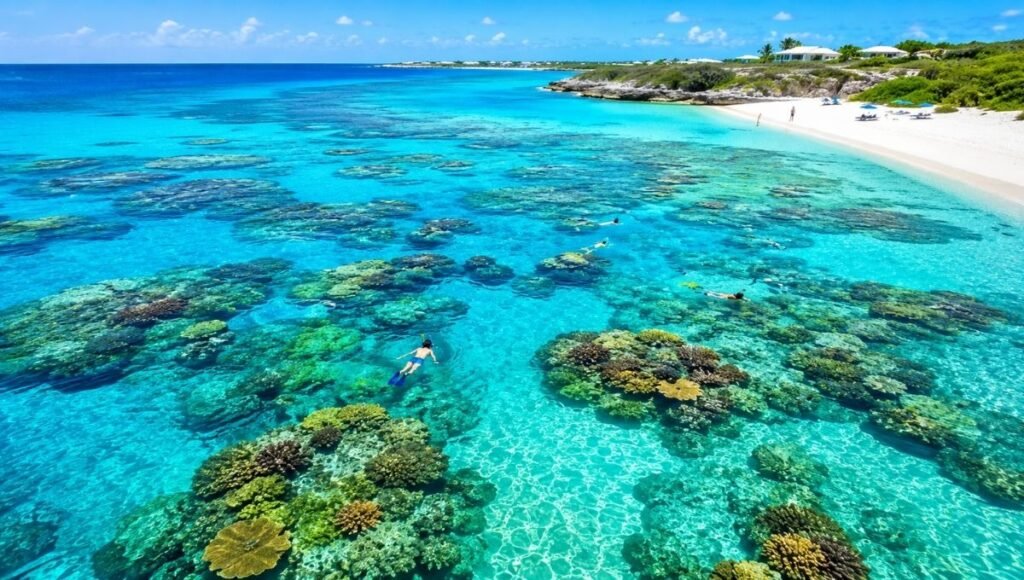
There’s a question that comes up in every Turks and Caicos family travel forum, asked in slightly different ways but always with the same underlying anxiety: “Is the snorkeling actually as good as everyone says, or is this just Caribbean marketing?” And then, almost immediately: “Can my seven-year-old do it?”
Both questions deserve a real answer.
Yes — the Turks and Caicos snorkeling is genuinely as good as the photos suggest. The water clarity here is exceptional even by Caribbean standards, the reef health on Providenciales is better than most comparable destinations, and the marine life diversity means you can do five snorkel sessions in a week and see something different each time. The part that most guides skip: not all of it is appropriate for families with young children, and the difference between a great experience and a frustrating one comes down almost entirely to picking the right spot for your family’s swimming level.
This guide doesn’t cover every reef on the archipelago. It focuses on what actually works for families — the shore-accessible spots that don’t require a boat, the guided tours worth booking versus the ones you can skip, the safety details that experienced snorkelers gloss over, and the specific logistics that make the difference between kids who come out of the water begging to go back and kids who announce they’re done forever.
Key Takeaways
- Bight Reef (Coral Gardens) is the single best shore-accessible snorkeling spot for families on Providenciales — shallow, calm, clearly marked with buoys, and home to over 60 coral species including regular sea turtle sightings
- There are no lifeguards at any beach in Turks and Caicos — including Grace Bay. This changes the supervision equation significantly for families with young children
- Grace Bay Beach itself has almost no snorkeling near shore — the famous beach has sandy bottom close in, and the barrier reef is half a mile offshore requiring a boat. Bight Reef is a 20-minute walk west along the beach
- Reef-safe sunscreen is legally required when entering the water in TCI — oxybenzone and octinoxate-based sunscreens are prohibited under local environmental law
- The dry season (November–April) offers peak visibility and calmest conditions; water temperature stays 78–82°F year-round, so there’s no bad season for the water itself
The Grace Bay Confusion — What Nobody Tells You Before You Arrive
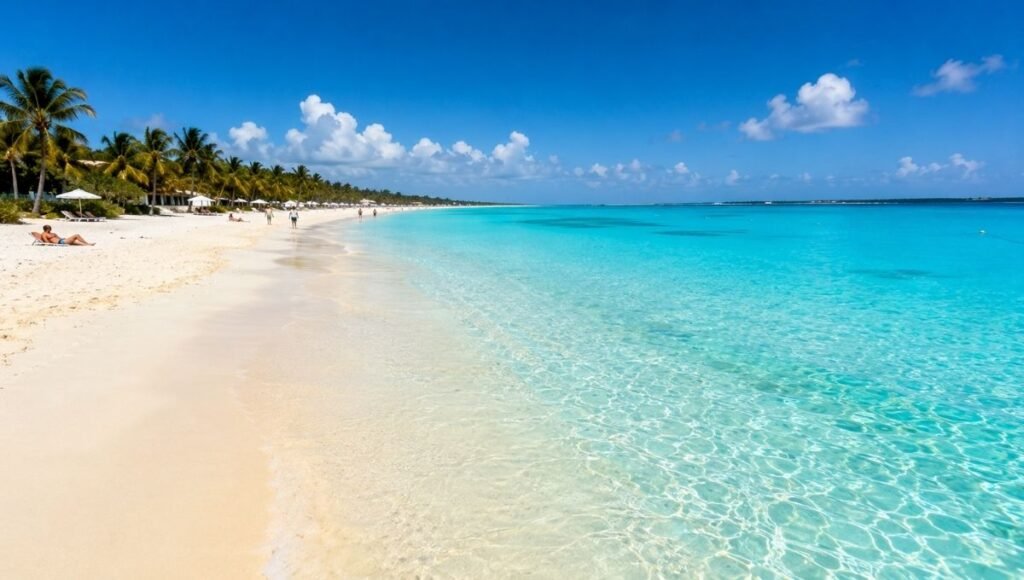
This is the single most common frustration among first-time visitors to Turks and Caicos, and it’s entirely preventable with the right information.
Grace Bay Beach is genuinely one of the most beautiful beaches in the Caribbean — the photos are accurate, the water color is real, the sand is as white and fine as advertised. But Grace Bay Beach itself, as a snorkeling location, is largely disappointing. The beach runs along a shallow sandy bottom close to shore, and the actual barrier reef sits more than half a mile offshore. To snorkel the Grace Bay barrier reef, you need a boat.
What’s confusing is that the best family snorkeling on Providenciales is called “Grace Bay” snorkeling in many marketing materials. What they actually mean is Bight Reef — also called Coral Gardens — which is located at the western end of the Grace Bay Beach stretch, about a 20-minute walk from the main hotel cluster. It’s shore-accessible, shallow, calm, and extraordinary.
The practical distinction:
- Floating in front of your resort on Grace Bay Beach → beautiful swimming, minimal fish, no reef
- Walking 20 minutes west to Bight Reef → immediate underwater reef, sea turtles, 60+ coral species, accessible from shore without a boat
Know this before you arrive and you’ll have a completely different trip.
Best Turks and Caicos Snorkeling Spots for Families
Bight Reef (Coral Gardens) — The One You Need to Visit
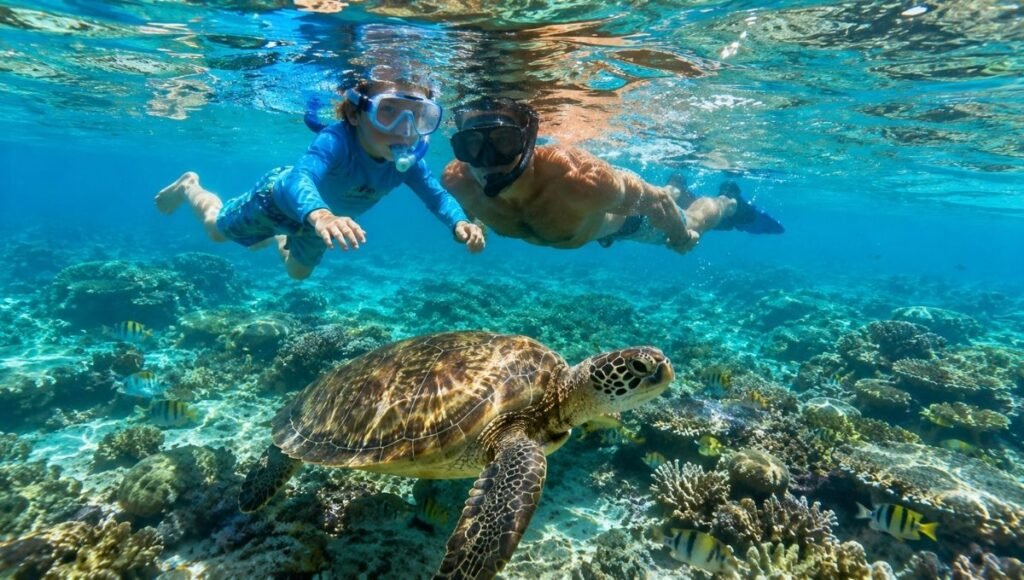
If you do one snorkel in Turks and Caicos with kids, make it Bight Reef. The reef extends about 400 feet offshore from a soft sandy beach, the entry is easy (no rocky shore, gradual depth), and the buoy markers clearly define the safe snorkel zone so you always know where you are and where the boat traffic is.
What you’ll see: The reef is home to over 60 species of coral — brain coral, elkhorn coral, staghorn coral, and fire coral visible at various depths. Closest to shore, where kids can still stand, you’ll see swarms of colorful fish. Around the back of the reef, the diversity increases dramatically — it’s possible to stop counting species of fish around 25 without having covered the full area.
Green and hawksbill turtles are regular sightings at Bight Reef, particularly on the deeper side furthest from shore. Stingrays move through the sandy areas between coral formations. Our 5-year-old took off with her snorkel in pursuit of fish — she was so excited. That’s not unusual. The fish concentration close to shore is dense enough that even children who’ve never snorkeled before get immediate visual payoff.
The crowd reality: Bight Reef is the most popular shore snorkeling spot on Providenciales. By 10 AM in peak season, it has genuine crowds. If you arrive at 9 AM, there are no beach chairs set up — but also no other snorkelers. For about 30 minutes you can have the place to yourselves. This is the move with kids — early morning before the charter boats arrive and the beach fills.
Logistics: Parking on Stubbs Road or Penn’s Road nearby. The Somewhere Cafe & Lounge is right next to the reef access — perfect for post-snorkel coffee or lunch. No entry fee.
Important: Stay between the beach and the red and green boat channel markers — there is significant boat traffic, and the channel markers define the safe snorkeling zone. Go in the early morning rather than late in the day for best visibility and to avoid low-light conditions near dusk.
Smith’s Reef — More for Older Kids and Confident Swimmers
Smith’s Reef is close to Turtle Cove marina in Princess Alexandra National Park and offers a complement to the more heavily visited Bight Reef. Loads of reef fish populate it — parrotfish, damselfish, barracudas, and butterflyfish. Moray eels, spiny lobsters, eagle rays, and stingrays are also regularly seen.
The key difference from Bight Reef: Smith’s Reef is a bit more isolated and harder to find. The relative isolation means it’s less busy than Bight Reef. However, there is no lifeguard here, and you need to watch for boat traffic from Turtle Cove Marina nearby. Be aware of tides and currents — and watch for lionfish, which are an invasive species that have become common in some parts of TCI.
For families: The southern access point at Smith’s Reef leads to shallow, kid-friendly waters. The northern access is where the more experienced snorkeling happens. Consider snorkeling at night here when nocturnal creatures like octopi are active and bioluminescent algae light up the water. (Night snorkeling is for older children and adults with guided tours only.)
Bottom line: Bight Reef for families with children under 10. Smith’s Reef for families with older children who are confident swimmers and want a less crowded, more diverse experience.
Half Moon Bay — The Calm Water Option for Young Children
Half Moon Bay has calm, shallow waters that make it perfect for young children or first-time snorkelers. The catch: it’s only accessible by boat, which adds cost and logistics. For families with very young children (5 and under) who aren’t ready for the more dynamic Bight Reef environment, a Half Moon Bay day trip is worth considering.
Taylor Bay Beach offers similarly tranquil, shallow water that stretches far from shore — particularly ideal for toddlers who want to splash freely. Not a traditional snorkeling destination, but a good option when you have mixed-age groups and someone needs very calm, very shallow water.
Boat Tour Snorkeling — When It’s Worth the Cost
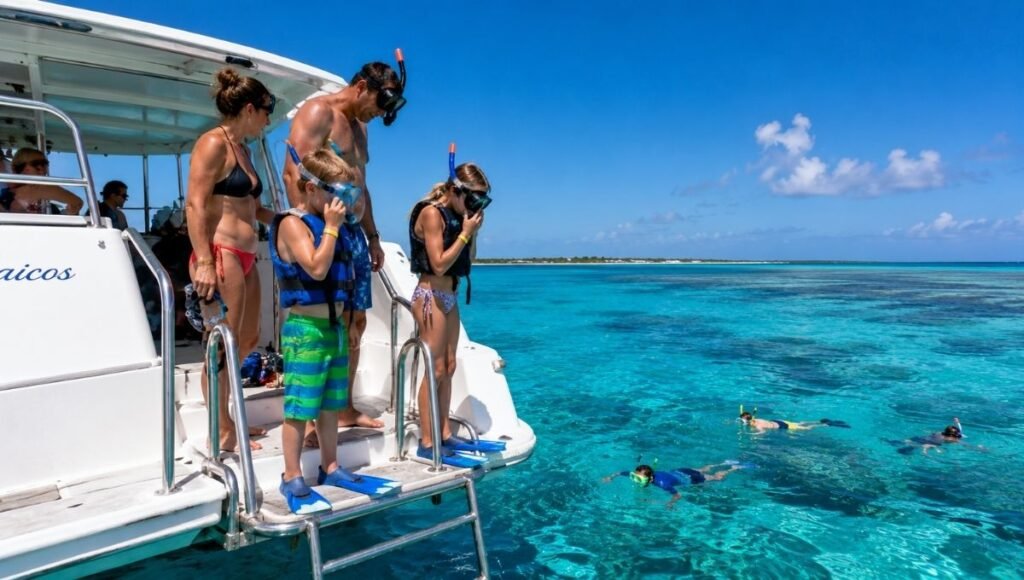
Shore-accessible snorkeling at Bight Reef and Smith’s Reef is excellent. But some of the best snorkeling tour destinations are the West Caicos Marine National Park, the coral reefs near French Cay, the barrier reef off Grace Bay, and Leeward Cut Reef. These sites collectively shelter a wide spectrum of the marine life native to TCI and are only feasibly accessed by private boat or snorkeling cruise.
The upgrade from shore snorkeling to boat tour snorkeling is meaningful — the outer reefs and remote cays have marine life density and coral health that’s genuinely beyond what’s accessible from shore. If your family is doing a full week on Providenciales, one boat tour day is worth building into the budget.
Operators worth knowing:
- Caicos Dream Tours — consistently recommended for family-friendly guided tours, clear safety briefings, professional guides, and access to multiple spots in one trip
- Big Blue Collective — their half-day eco-tours are focused on finding active marine life rather than covering predetermined spots; better for families interested in wildlife over itinerary
What to look for when booking: Gear quality matters more than price on budget tours. Check that masks are adjustable and that child-sized equipment is available. Guides who provide pre-water safety briefings are non-negotiable for families with children.
Snorkeling with Kids in Turks and Caicos — The Honest Age Guide
This is the question that comes up most often in travel forums, and the answer is more nuanced than most guides provide.
Ages 4–6: Shore-accessible snorkeling at Bight Reef is possible for confident young swimmers with proper equipment — a child-sized mask that fits correctly and a snorkeling vest for buoyancy. Children this age tire quickly and have short attention spans underwater. Plan for 20–30 minutes maximum, build in significant beach time, and treat any snorkeling as a bonus rather than the centerpiece of the day.
Ages 7–10: The prime age for Bight Reef. Old enough to follow instructions, young enough to be genuinely captivated by seeing fish at close range. Many children this age have their best wildlife encounter of their lives at Coral Gardens. This is when Turks and Caicos snorkeling really delivers for families.
Ages 11–14: Ready for Smith’s Reef and guided boat tours. Teens who are confident swimmers can handle the outer reef boat excursions that access deeper marine environments. This is the age where the Leeward Cut and barrier reef boat tours become genuinely appropriate.
The non-negotiable for every age: Beginner snorkelers are always advised to wear life jackets. There is no lifeguard on any beach in Turks and Caicos. This isn’t a guideline — it’s the operating reality of snorkeling here. Plan your supervision accordingly.
What You’ll Actually See Underwater
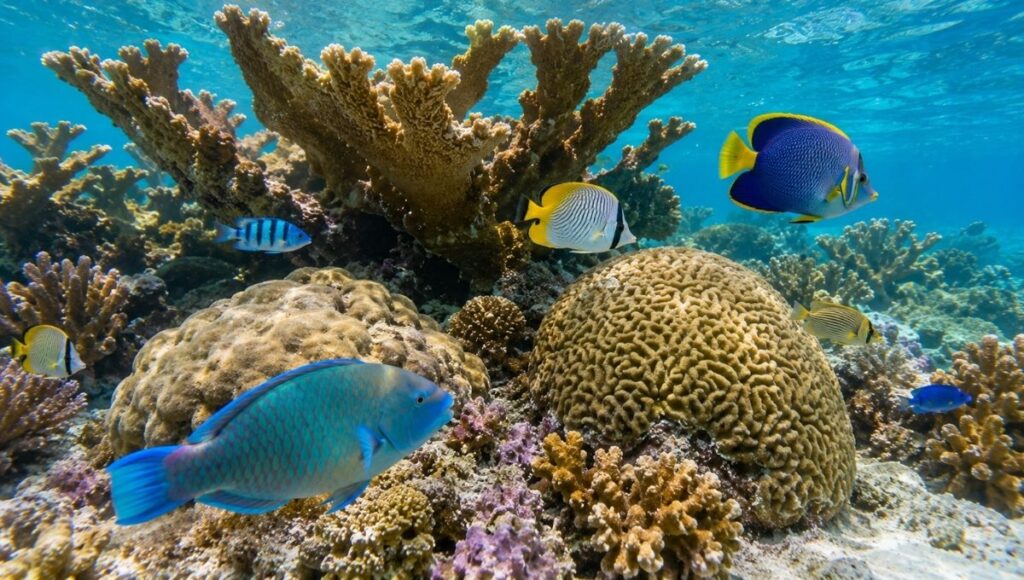
Managing expectations accurately is what separates a good guide from a travel brochure, so here’s the honest version.
Reliably seen at Bight Reef on any visit: Schools of sergeant majors and parrotfish immediately near shore. Blue tang, butterflyfish, and trumpetfish around the coral formations. Brain and elkhorn coral visible from the surface. Stingrays in the sandy areas.
Frequently sighted, not guaranteed: Green and hawksbill sea turtles — they’re present at Bight Reef regularly, but they move and you might spend 30 minutes snorkeling without seeing one. If you see a turtle, do not chase it or block its path. Observe from a respectful distance and it will often continue feeding near you.
Occasional sightings that make a trip exceptional: Nurse sharks resting on the sandy bottom near coral formations (not aggressive, completely safe to observe from distance). Eagle rays gliding through the water. Moray eels visible in reef crevices.
On boat tours to outer reefs: All of the above plus spotted eagle rays, reef sharks, barracuda in open water, and — between January and April — migrating humpback whales visible from the boat and occasionally underwater.
The only known shark attacks on snorkelers in Turks and Caicos were incidents involving spear fishers far from shore, and they weren’t fatal. Spearfishing is illegal in TCI. Standard reef snorkeling carries no meaningful shark risk.
Snorkeling Gear for Turks and Caicos — Bring Your Own
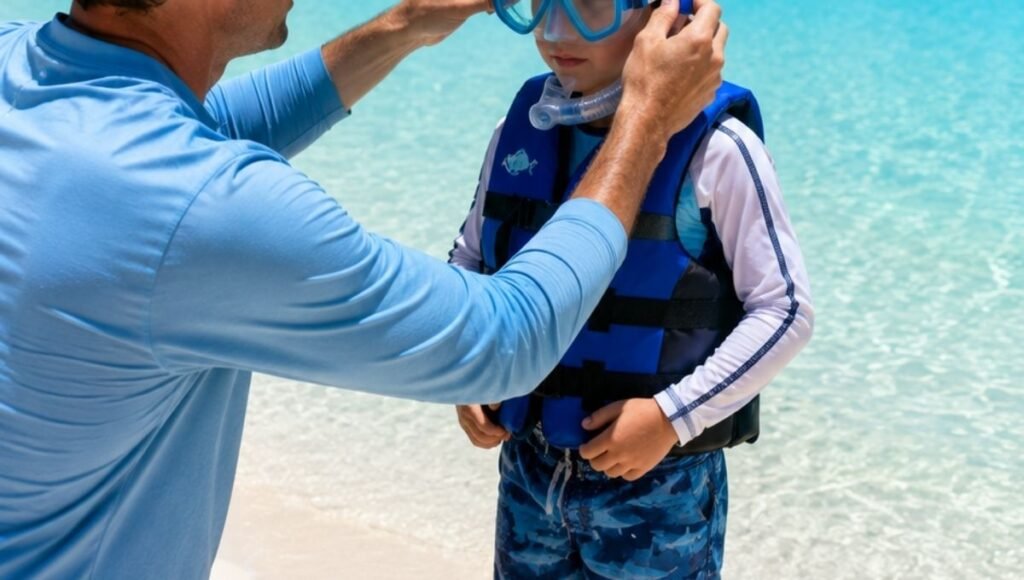
The question of whether to bring gear or rent it has a clear answer for families: bring your own masks and snorkels, especially for children.
Rental gear at beach operators ranges from acceptable to poor. Mask fit is the single most important variable in snorkeling quality, and a mask that doesn’t seal to a child’s face will flood constantly. Child-sized masks are often the weakest part of any rental fleet.
Bringing your own gear is important. While many boat charters offer gear on board, bringing your own ensures proper fit and comfort. Plus, your kids can practice with it before the actual snorkeling trip. Practicing in a pool or bathtub before the trip eliminates the learning curve that consumes the first 20 minutes of beach time.
What to bring:
- Child-sized masks (test the fit at home — hold against face without strap, inhale through nose, it should hold in place)
- Dry-top snorkels for children who are still learning
- Full-foot fins in the correct size (or water shoes for very young children who find fins overwhelming)
- Snorkeling vests for non-confident swimmers
- Underwater camera or GoPro — the fish at Bight Reef are close enough to photograph without specialized equipment
The Reef-Safe Sunscreen Requirement — This Is Serious
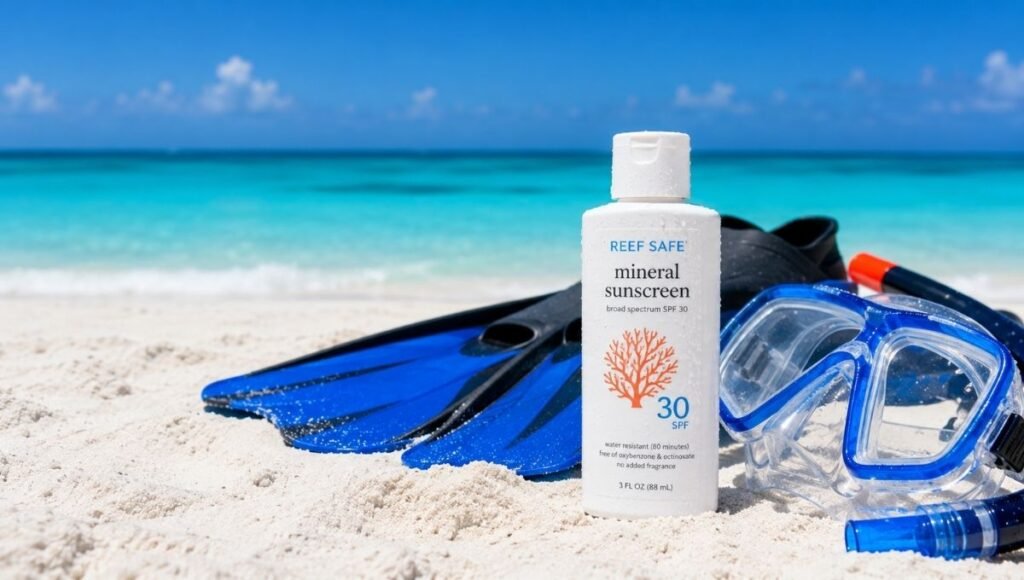
Reef-safe sunscreen is required when entering the water in the Turks and Caicos. Common types of sunscreen containing oxybenzone and octinoxate cause lasting and significant damage to corals. Over the last decade, reefs and coral in the Caribbean have seen a significant decline due to these products.
This isn’t a suggestion — it’s an environmental protection measure backed by local law. The coral reefs of Turks and Caicos are among the healthiest in the Caribbean, and maintaining that requires everyone in the water using reef-safe mineral sunscreen (zinc oxide or titanium dioxide based) rather than chemical sunscreen.
Apply sunscreen 30 minutes before entering the water, allow it to absorb, and use UPF rash guards for children for extended water time. Rash guards provide better sun protection than sunscreen for hours-long snorkel sessions and reduce the amount of sunscreen you need to apply.
Editor’s note: The Caribbean reef decline from chemical sunscreen is real and documented. The 10 minutes it takes to find a reef-safe brand before your trip is worth it — you’re swimming above the reefs that make TCI worth visiting in the first place.
Safety — The Part Most Guides Rush Past
No lifeguards anywhere. This bears repeating because it changes the entire supervision dynamic. Every beach on Providenciales, including Grace Bay and Bight Reef, operates without lifeguard coverage. You are solely responsible for your children in the water.
Boat traffic at Bight Reef. The channel markers (red and green buoys) define the boundary between the snorkel zone and the boat traffic lanes. Stay inside the markers. This is especially important for children who might drift while watching fish.
Currents at Smith’s Reef. Smith’s Reef has more variable conditions than Bight Reef — tidal currents can develop, particularly on the northern access side. Check conditions before entering and exit if you feel unexpected water movement.
Lionfish awareness. Lionfish are an invasive species that have become common in some parts of the Turks and Caicos. Their spines are venomous. They’re distinctive — spiky, slow-moving, often hover near reef structures. Teach children to look but not touch anything underwater, which is good practice regardless of lionfish.
Fire coral. Looks like coral but produces a burning sting on contact. Brown or mustard-colored, often branching or plate-shaped. Teach children never to touch any coral — the no-touch rule protects both the reef and the snorkeler.
When to seek medical attention: A lionfish sting requires medical treatment — immerse in hot water as first aid while seeking a clinic. Mild jellyfish stings can be treated with seawater rinse and heat; seek medical attention for significant reaction, widespread stinging, or any sign of allergic response.
If You Only Have One Morning to Snorkel in Turks and Caicos
This is the tight version for families whose itinerary includes many activities:
6:45 AM: Wake up. Pack masks, snorkels, reef-safe sunscreen, rash guards, water bottles, snacks.
7:30 AM: Arrive at Bight Reef (Coral Gardens). Park on Stubbs Road. You’ll be among the first people on the beach.
7:45 AM – 9:30 AM: Snorkel. Children 7+ can do the full reef circuit. Younger children do the near-shore section where they can still stand. Look for turtles on the far side of the buoys.
9:30 AM: Exit the water before the charter tour boats arrive and the beach fills.
10:00 AM: Breakfast at Somewhere Cafe & Lounge right next to the reef. Coffee. Whatever the kids want. You’ve already had the best snorkeling experience of the trip.
That’s it. That morning is worth the flight.
Frequently Asked Questions
Is snorkeling in Turks and Caicos good for beginners? Yes — specifically Bight Reef (Coral Gardens) on Providenciales is one of the most beginner-friendly snorkeling locations in the Caribbean. The water is shallow, calm, clearly marked with buoys, and the fish and coral are visible immediately from shore without needing to swim far. Children as young as 5–6 can snorkel here with proper equipment and adult supervision.
Can kids snorkel in Turks and Caicos? Yes. Bight Reef is specifically good for children — shallow water, calm conditions, the sandy entry requires no rocky scrambling, and fish are visible almost immediately. Children 7+ who are comfortable in the water can do the full reef circuit. Younger children benefit from snorkeling vests and staying in the shallower near-shore section. Bring child-sized gear from home — rental equipment for children varies in quality.
What can you see snorkeling in Turks and Caicos? At Bight Reef: parrotfish, sergeant majors, butterflyfish, blue tang, trumpetfish, brain and elkhorn coral, stingrays in sandy areas, and frequent green and hawksbill sea turtle sightings. On boat tours to outer reefs: all of the above plus eagle rays, nurse sharks, barracuda, and — January through April — humpback whales.
Is Grace Bay good for snorkeling? Grace Bay Beach itself has minimal near-shore snorkeling — the beach has a sandy bottom and the barrier reef is over half a mile offshore requiring a boat. Bight Reef (Coral Gardens), located at the western end of the Grace Bay Beach stretch, is the excellent shore-accessible snorkeling that most guides are referring to when they say “Grace Bay snorkeling.”
Do I need to take a boat tour to snorkel in Turks and Caicos? No — Bight Reef and Smith’s Reef on Providenciales are both shore-accessible and excellent. You do not need a boat for a genuinely great snorkeling experience. Boat tours access more remote outer reefs with richer marine life, but they’re an upgrade rather than a requirement.
What sunscreen can you use snorkeling in Turks and Caicos? Reef-safe mineral sunscreen only — zinc oxide or titanium dioxide based. Chemical sunscreens containing oxybenzone or octinoxate are prohibited when entering the water in TCI. Apply 30 minutes before entering and use UPF rash guards to reduce total sunscreen application needed.
The Bottom Line
Turks and Caicos snorkeling is worth the trip. Not in a “it’s pretty good for the Caribbean” way — in a genuine, your-seven-year-old-will-talk-about-seeing-a-sea-turtle-for-years way. Bight Reef is accessible, family-safe (with appropriate adult supervision — remember, no lifeguards anywhere), and delivers immediate underwater wonder without requiring equipment expertise, boat bookings, or a long swim.
Go early. Bring your own masks. Use reef-safe sunscreen. Stay inside the boat channel markers. Watch for turtles on the far side of the buoys.
The rest takes care of itself.
Planning your beach trip? Read next:
- Snorkeling for Beginners: Everything You Need Before Getting in the Water
- Things to Do in Hilton Head: The Honest Family Guide
- Cape Cod Beaches: The Honest Family Guide
- What to Bring to the Beach: Complete Beach Gear Guide
- Jellyfish Sting Treatment & Beach Safety Guide
References
- Visit Turks and Caicos Islands — Official Snorkeling Guide: visittci.com
- Turks and Caicos National Trust — Marine Conservation and Reef-Safe Sunscreen Policy
- CDC — Sun Safety and UV Protection in Tropical Climates: cdc.gov/cancer/skin
- NOAA — Coral Reef Conservation and Chemical Sunscreen Impact: coris.noaa.gov
- Caicos Dream Tours — Family Snorkeling Tours: caicosdreamtours.com