
Virginia Beach was named one of the top places to visit in 2026 by The New York Times, which is a sentence that would have surprised anyone who visited during its tackier decades and assumed it had peaked. It hasn’t peaked. It’s in the middle of a genuine revival — the ViBe Creative District murals, the restored Cavalier Hotel, the seafood scene that’s finally as good as the location demands — and the result is a beach destination that works better for families than it has in a long time.
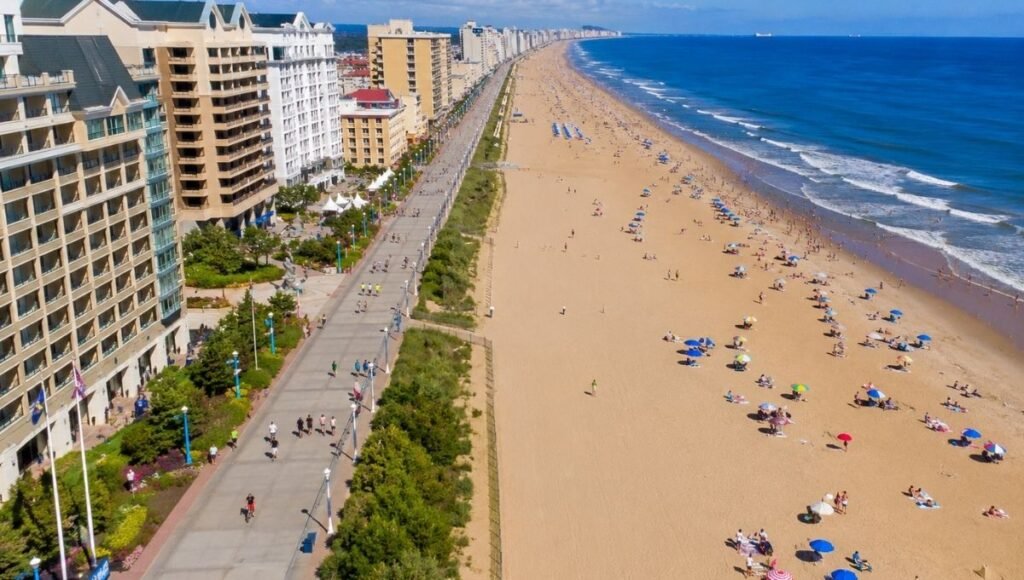
But here’s what nobody tells you before you arrive: the Virginia Beach Boardwalk is not what most people picture when they hear “boardwalk.” It’s three miles of wide, paved, concrete promenade — not a wooden structure with arcades and funnel cake concentrated every 50 feet. The attractions are spread out. The energy is more resort-town than carnival. The beach itself is the main event, with the boardwalk functioning as the frame rather than the picture.
Understanding that distinction before you arrive is what separates families who spend the whole trip trying to find the “real” boardwalk from families who relax into what Virginia Beach actually is: the longest pleasure beach in the country, a city with 38 miles of coastline, a food scene that punches above its weight, and just enough of the old-school Atlantic resort energy to feel like a beach vacation is supposed to feel.
Key Takeaways
- The Virginia Beach Boardwalk stretches 3 miles from 2nd to 40th Streets — it’s paved concrete (not wood), with a dedicated bike lane separate from the pedestrian path, and a beach access ramp roughly every block
- Parking costs $20–$30/day at municipal lots on Atlantic Avenue from April through October — the free Boardwalk Trolley runs Atlantic Avenue from roughly 10th to 40th Street, making it possible to park once and move around without moving the car
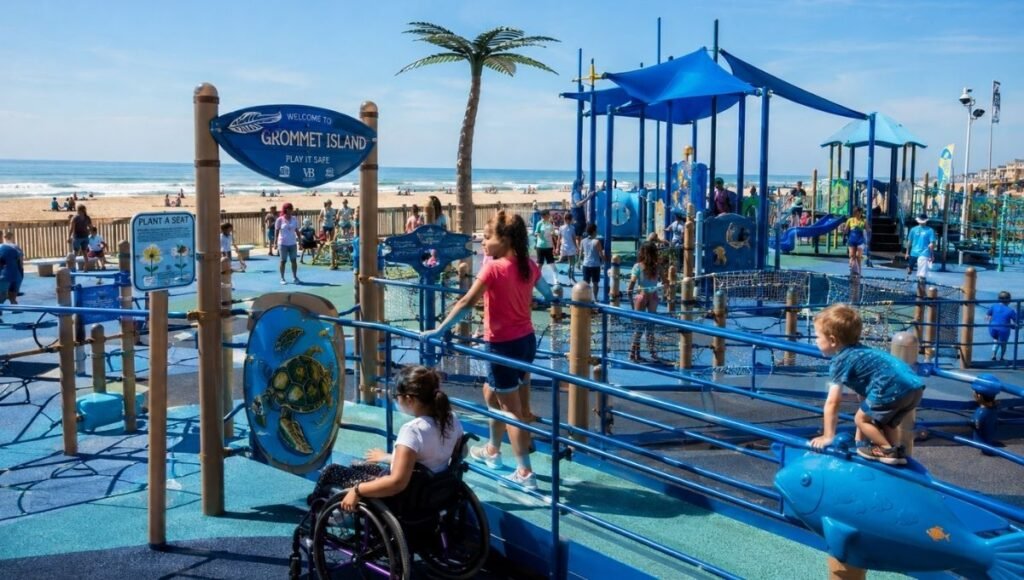
- Grommet Island Park at 40th Street is America’s first fully accessible beach playground — designed for children of all abilities, it’s consistently one of the best family-specific attractions on the entire East Coast
- September is the sweet spot for families — water stays warm at 72–74°F, summer crowds leave after Labor Day, and oceanfront hotel rates drop roughly 40% from July peaks
- Virginia Beach has 38 miles of coastline — the main Oceanfront Boardwalk area is just one of several distinct beach zones, including the calm Chesapeake Bay side (Chick’s Beach) and the secluded Sandbridge Beach to the south
The Virginia Beach Boardwalk — What It Actually Is
The honest framing first: the Virginia Beach Boardwalk is not Wildwood or Ocean City. There are no concentrated amusement parks, no dense stretch of arcades and boardwalk fries in one block. What it is: a wide, well-maintained 3-mile paved promenade between the Atlantic Ocean and the resort hotel strip, with scattered attractions, free summer concerts, a dedicated bike lane, and one of the best beaches on the East Coast directly accessible from it.
The beach on the Atlantic side is the boardwalk’s genuine asset. Wide, clean, well-maintained, with consistent surf that’s good for swimming and bodyboarding, and enough width that it never feels claustrophobic even on busy summer days. Virginia Beach’s “world’s longest pleasure beach” claim is legitimate — the sheer scale means that even in peak season, walking a few blocks from the main concentration at 17th Street gives you meaningfully more space.
The boardwalk’s best uses:
- Morning bike rides (earliest hour, fewest crowds, beautiful sunrise over the Atlantic)
- Evening strolls when the free concert stages at 17th, 24th, and 31st Streets are active
- As a navigation spine connecting beach access points throughout the day
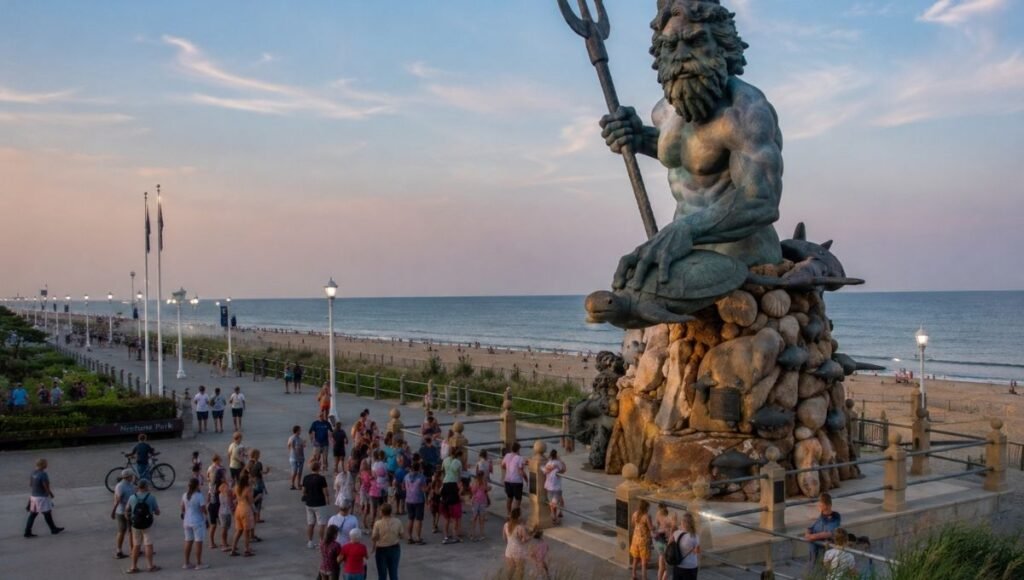
What to calibrate your expectations for: The specific “boardwalk experience” — the carnival energy, the concentrated food stands, the amusement rides — is more limited than comparable Northeast boardwalks. Atlantic Fun Park at 15th Street has carnival rides and go-karts. The King Neptune statue at 31st Street is worth seeing. But the Virginia Beach Boardwalk is primarily a beach access infrastructure rather than an entertainment destination in itself.
Things to Do at the Virginia Beach Boardwalk for Families
Grommet Island Park — America’s First Fully Accessible Beach Playground
At the northern end of the boardwalk at 40th Street, Grommet Island Park is the most family-specific attraction in the entire Virginia Beach oceanfront area. It’s America’s first fully accessible beach-themed playground, designed specifically so children of all abilities can play together — the equipment accommodates wheelchairs, children with limited mobility, and children with sensory processing needs alongside typically developing kids.
The playground is genuinely excellent even for children without accessibility needs — well-designed, ocean-themed, and positioned directly adjacent to the beach with bathrooms and shower facilities nearby. This is the best end of the boardwalk for young children, and the least crowded section of the strip.
Editor’s take: Grommet Island Park doesn’t get the attention it deserves because it’s at the far end of the boardwalk away from the main hotel cluster. That’s exactly why it’s the right call for families — less traffic, the same beach access, better playground facilities.
King Neptune Statue — The 31st Street Hub
The 34-foot bronze King Neptune statue at 31st Street is Virginia Beach’s most recognizable landmark and the gravitational center of the boardwalk’s social scene. Neptune Park — the open area around the statue — hosts live music almost every evening in summer, with lawn seating under the stars. Free concerts through the Oceanfront Concert Series run most Wednesday evenings from early June through mid-September.
For families: the 31st Street area is the highest-energy section of the boardwalk. Summer evenings here have street performers, musicians, and the kind of accessible beach entertainment that doesn’t require spending money. Good for an hour of evening exploration after dinner.
Bike Rentals and the Dedicated Bike Lane
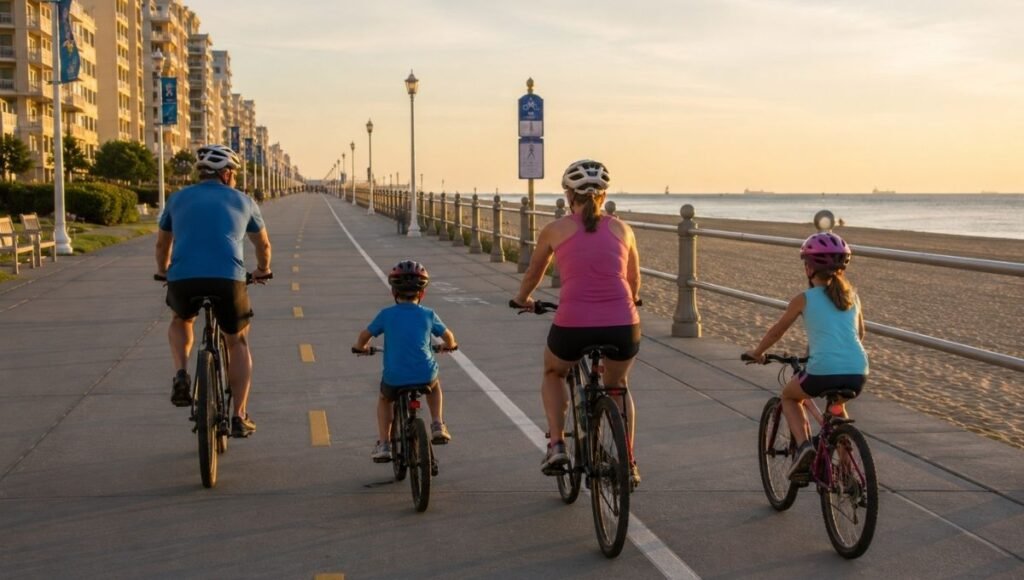
One of Virginia Beach’s genuinely smart infrastructure choices: a dedicated bike lane running the full length of the boardwalk, separated from the pedestrian path. This means cyclists and walkers aren’t competing for the same space, and the lane is wide enough that family groups cycling together don’t create bottlenecks.
Bike rentals are available throughout the boardwalk area — Cherie’s Bicycle & Blade Rentals and VB Surf Sessions both rent bikes, beach chairs, and umbrellas. Surrey carts (multi-person pedal carts) are a family favorite — slower and more communal than individual bikes, they’re the specific vehicle that makes the boardwalk cruise feel like a vacation activity rather than just transportation.
Morning ride strategy: The boardwalk bike lane from 2nd to 40th Street and back is about 6 miles round trip. An early morning ride — 7:30 to 9 AM before the beach crowds build — is the best way to experience the full length of the boardwalk without fighting foot traffic.
Atlantic Fun Park — Classic Carnival Energy
At 15th Street, Atlantic Fun Park provides the concentrated carnival experience that the rest of the boardwalk doesn’t. Ferris wheel, go-karts, midway-style games — the classic beachside amusement park format that’s increasingly rare on the East Coast. It’s seasonal (summer only) and relatively small compared to major boardwalk parks, but it fills the gap for families with children 6–14 who need something more structured than beach time.
Virginia Beach Fishing Pier — Free to Walk, No License to Fish
The fishing pier at 15th Street charges a $4 entry fee for non-anglers who want to walk out, but fishing from the pier requires no additional license — a notable policy that makes it genuinely accessible for first-time fishing families. The pier extends far enough into the Atlantic that the views back toward the shoreline and the hotel strip are worth the $4 regardless of whether you fish.
The Old Coast Guard Station — Maritime History at 24th Street
The historic museum at 24th Street covers Virginia Beach’s maritime history through exhibits on shipwrecks, rescues, and coastal life. For families interested in history alongside beach time, it’s a good 90-minute indoor activity — particularly useful on days when afternoon sun is too intense for the beach or weather turns.
Beyond the Boardwalk — Virginia Beach Beaches by Type
The Oceanfront Boardwalk area is the best-known section of Virginia Beach’s coastline, but the city has 38 miles of coast with distinct zones for different family needs.
Chick’s Beach — Calm Water for Young Children
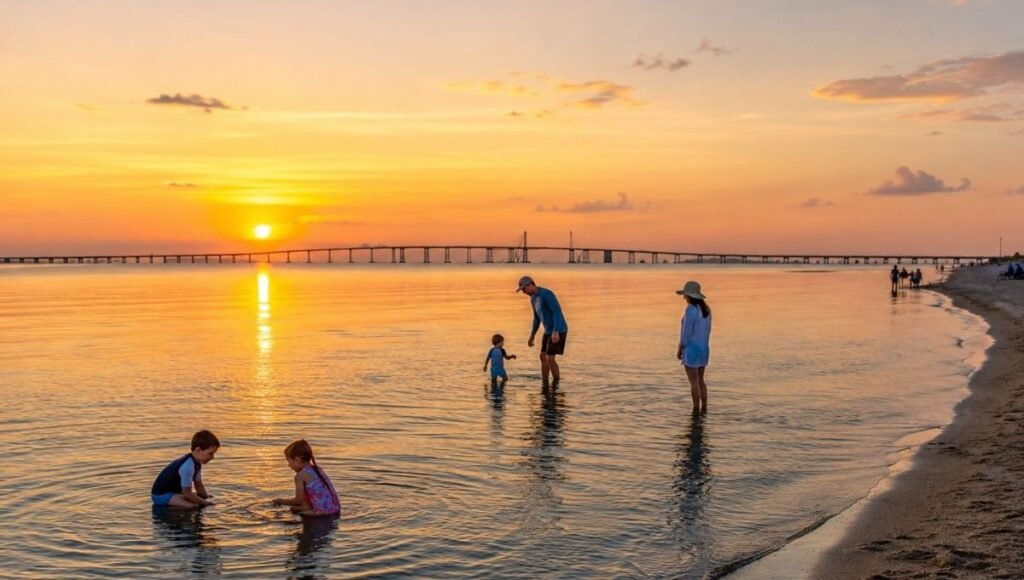
Chick’s Beach (officially Chesapeake Beach) sits on the Chesapeake Bay side of the Virginia Beach peninsula, about 20 minutes from the Oceanfront by car. The difference from the Atlantic side is significant: the bay water is calm, warm, and so shallow that young children can wade far from shore without depth concerns. No significant waves, no meaningful current.
This makes Chick’s Beach one of the best beaches for families with very young children on the entire Virginia Beach coastline. The sunset views looking over the Chesapeake Bay Bridge-Tunnel are spectacular — the bridge is long enough that it disappears into the horizon, and watching the sun drop behind it from the beach is genuinely beautiful.
First Landing State Park — Where History Meets Nature
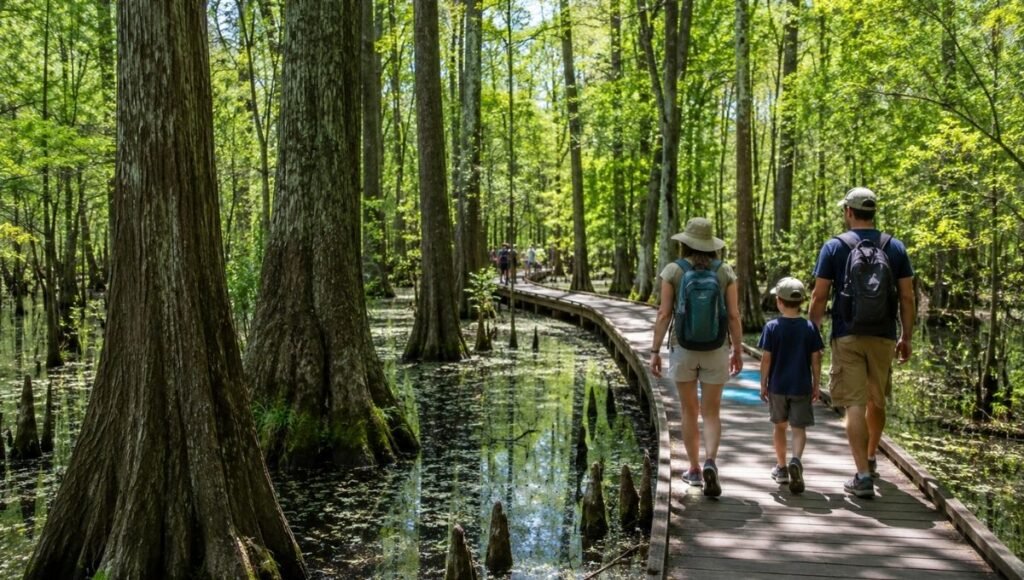
First Landing State Park occupies 2,888 acres at the northern end of Virginia Beach — named for the English colonists who landed here in 1607, before Jamestown. The park has 20 miles of trails through bald cypress swamp, maritime forest, and coastal dune environments, and a calm bay beach on the Chesapeake side that’s excellent for families.
The trails here are genuinely interesting for families with older children who want something beyond beach time — the bald cypress swamp is the northernmost habitat of that species and looks unlike anything else in the region. In April, the spring-green cypress forest is particularly beautiful. In winter, the park is bare and silver-lit and nearly empty.
The park connects directly to the northern end of the boardwalk — you can walk from the park beach to the boardwalk on foot, making First Landing a good morning activity that transitions naturally to an afternoon on the oceanfront beach.
Sandbridge Beach — The Secluded Alternative
Sandbridge is 14 miles south of the Oceanfront, past the resort hotel strip and across Back Bay. It has no commercial boardwalk, minimal development (primarily vacation rental homes), and the wide Atlantic beach that characterizes the main resort area — but much quieter. The trade-off is distance and fewer facilities (no restaurants within walking distance, limited parking).
For families staying in Sandbridge rental homes, it’s an excellent base for a week-long trip. For day visitors, the logistics require more planning than the main boardwalk area.
Croatan Beach — For Families with Older Surfers
Croatan Beach, just south of the main resort area, has two designated surfing areas and a noticeably more local, less tourist-facing atmosphere. For families with teenagers interested in surfing, or adults who surf, Croatan offers lessons and a mellower vibe than the crowded Oceanfront.
Virginia Beach vs Outer Banks vs Myrtle Beach — The Honest Comparison
Virginia Beach vs Outer Banks: Virginia Beach has significantly more amenities, activities, and infrastructure than the Outer Banks — more hotels, more restaurants, more organized activities. The Outer Banks has wilder, more dramatic natural scenery, wild horses, and more of the remote barrier island character. Virginia Beach is better for families who want activities and convenience; the Outer Banks is better for families who want natural experience and are comfortable with more limited infrastructure.
Virginia Beach vs Myrtle Beach: Both are developed Atlantic resort destinations with boardwalk entertainment. Myrtle Beach has more concentrated amusement park infrastructure (especially for the 6–12 age range) and cheaper accommodation. Virginia Beach has better natural beaches, more diverse activities (First Landing State Park, Chick’s Beach, Virginia Aquarium), and a higher overall quality ceiling for dining and culture. Myrtle Beach’s dry-town neighbor Ocean City is the better family choice if the boardwalk atmosphere specifically is the priority; Virginia Beach is better if beach quality, nature, and cultural range matter more.
The Virginia Aquarium — Best Rainy Day Option
The Virginia Aquarium and Marine Science Center, located about a mile south of the downtown resort area, is the best indoor activity in Virginia Beach for families. It’s not as large as some major aquariums, which means it’s more manageable with younger children — you can see everything meaningful in 2–3 hours without the exhaustion factor of a full-day museum visit.
Three animal touch pools feature stingrays, moon jellies, and horseshoe crabs. Turtles, sharks, otters, and Komodo dragons are viewable close-up. An outdoor nature trail, ropes course, and zip line area extend the visit for children who still have energy after the indoor exhibits.
Honest note from TripAdvisor visitors: Some find the admission cost high relative to the size. Worth it for families with children 5–12; older teens may find it too brief. Check current admission prices before planning — they’ve increased in recent years.
ViBe Creative District — When the Kids Need a Break from Beach
The ViBe Creative District around 19th Street (16th–18th Streets, just off the boardwalk) is Virginia Beach’s arts neighborhood — wall-to-wall murals, the Virginia Museum of Contemporary Art (MOCA), boutique shops, and restaurants that haven’t been simplified for summer tourist crowds.
For families with older children or teens, a morning at MOCA followed by lunch in the ViBe District provides genuine cultural engagement alongside the beach vacation. The murals alone are worth the walk — the neighborhood is dense enough with street art that wandering it is its own activity.
Best Time to Visit Virginia Beach with Kids
September: The consensus pick for most families. Water temperature stays at 72–74°F through September — still comfortable for swimming. Labor Day ends the peak season, and the beach and boardwalk thin significantly while remaining lively. Hotel rates drop 40% from July peaks. The Neptune Festival in late September draws 350,000 visitors for one weekend — plan around it or specifically for it, but don’t be surprised by it.
June: Good shoulder option before full peak. Water is warming (68–72°F by late June), the summer program is fully operational, and the crowds haven’t yet reached July intensity. Prices are moderate.
July–August: Peak season. Water warmest (80°F in late July). Everything is fully operational. Hotels run $200–$350+/night at mid-range Oceanfront properties. Parking fills quickly ($25–$30/day). Beach is most crowded but also widest — Virginia Beach’s beach width means it handles crowds better than more cramped East Coast resort beaches.
May and early June: Water too cold for comfortable swimming (low-to-mid 60s°F). Good for First Landing State Park hiking and exploring the city when it’s less crowded.
Practical Virginia Beach — Parking and Getting Around
Parking reality: Municipal lots on Atlantic Avenue charge a maximum of $20/day from April through October. Side street lots run $25–$30. The boardwalk fills early on summer weekend mornings — arrive before 9 AM or accept premium rates.
Free Boardwalk Trolley: Runs Atlantic Avenue from roughly 10th to 40th Street in summer — the practical move for families who want to explore the full length of the boardwalk without moving the car.
The parking strategy: Park at the northern end near Grommet Island Park (less congested, same beach quality) and trolley or bike south to the 17th–31st Street main area for concerts and dining.
Beach Safety at Virginia Beach

Virginia Beach’s Atlantic surf is real Atlantic surf — bigger waves, stronger rip currents, and more active ocean conditions than Florida’s Gulf Coast. The city’s beach is lifeguarded during peak season, but conditions change quickly.
Rip currents: Virginia Beach’s oceanfront beach has consistent rip current activity, particularly after storms and during periods of offshore swell. The United States Lifesaving Association documents significant annual rescue activity here. Swim in lifeguarded sections during staffed hours. The flag warning system is posted at beach access points — check before entering.
For young children: The Atlantic surf at the main Oceanfront beach requires active supervision. If you have children under 6 who aren’t strong swimmers, Chick’s Beach on the Chesapeake Bay side is the significantly safer option — calm water, no waves, extremely gradual depth.
Sun protection: Virginia Beach summer UV index reaches 9–10 (Very High). Apply SPF 50+ mineral sunscreen 30 minutes before beach exposure. Reapply every 2 hours and after swimming. The ocean breeze makes the UV intensity feel lower than it is — this is one of the most common causes of serious sunburn at Virginia Beach.
If You Only Have One Day at Virginia Beach
7:30 AM: Early morning bike ride on the boardwalk before the crowds arrive. Sunrise over the Atlantic from the bike lane is one of the better sunrise experiences on the East Coast.
9 AM: Beach at the 40th Street end near Grommet Island Park. Less crowded than the 17th–24th Street area. Same beach, better playground for younger children.
11 AM: Walk or trolley south to the King Neptune statue at 31st Street. Virginia Aquarium if you have children who want indoor marine exhibits.
1 PM: Lunch in the ViBe Creative District (19th Street area) — better food, better prices than the boardwalk restaurants.
3 PM: Return to beach for late afternoon swim. Afternoon crowds thin after 3:30 PM.
Evening: Neptune Park at 31st Street for free live music (Wednesday evenings, summer). Seafood dinner at one of the oceanfront restaurants. Walk the boardwalk as the lights come on.
Frequently Asked Questions
What is the Virginia Beach Boardwalk? The Virginia Beach Boardwalk is a 3-mile paved concrete promenade running from 2nd to 40th Streets along the Atlantic Ocean Oceanfront. It has a dedicated bike lane, beach access ramps roughly every block, free summer concert stages at 17th, 24th, and 31st Streets, and attractions including the King Neptune statue, Grommet Island Park playground, and the Atlantic Fun Park amusement area.
Is Virginia Beach good for families? Yes — Virginia Beach consistently delivers for families across a range of ages. Young children have the accessible playground at Grommet Island Park, the calm Chesapeake Bay water at Chick’s Beach, and wide Atlantic beaches with lifeguard coverage. Older children have surf, the Virginia Aquarium, Atlantic Fun Park, and First Landing State Park trails. The boardwalk’s live music and food scene provides family-friendly evening entertainment.
How long is the Virginia Beach Boardwalk? Three miles, from 2nd Street to 40th Street along the Oceanfront. The full walk takes about 45–60 minutes at a casual pace. A bike ride from end to end and back takes 30–45 minutes.
What is the best time to visit Virginia Beach? September is the consensus best month — warm swimming water (72–74°F), reduced crowds after Labor Day, and accommodation prices roughly 40% below July peak. June is a good second option. July and August deliver the fullest experience at maximum cost and crowds.
How much does parking cost at Virginia Beach? Municipal lots on Atlantic Avenue charge a maximum of $20/day (April through October, 2026 rates). Side street lots run $25–$30. The free Boardwalk Trolley runs the length of the strip, making it practical to park once and cover the full boardwalk without moving the car.
What is the difference between Virginia Beach and Myrtle Beach? Both are developed Atlantic resort destinations. Myrtle Beach has more concentrated amusement park infrastructure and slightly lower average accommodation prices. Virginia Beach has better natural beach quality, more diverse outdoor activities (First Landing State Park, Chick’s Beach, 38 miles of coastline), a stronger cultural scene (ViBe District, MOCA), and the Virginia Aquarium.
The Bottom Line
Virginia Beach rewards the families who understand what it is rather than what they expected from the name. It’s not the carnival boardwalk of the Northeast — it’s a city with 38 miles of coastline, a legitimate arts district, the best sunrise beach on the East Coast, and a laid-back summer energy that’s been quietly getting better for years.
Go in September if you can. Park at 40th Street. Walk Grommet Island Park with the kids in the morning. Bike the boardwalk before the crowds arrive. Watch the sun set from Chick’s Beach in the evening.
The boardwalk will take care of the rest.
Planning your East Coast beach trip? Read next:
- Outer Banks Beaches: The Complete OBX Guide
- Cape Cod Beaches: The Honest Family Guide
- Things to Do in Myrtle Beach SC: The Honest Family Guide
- Jersey Shore Beaches: The Honest Family Guide
- Beach Vacation Packing List: What to Actually Bring
References
- Visit Virginia Beach — Official Boardwalk Guide: visitvirginiabeach.com
- Virginia Beach Department of Parks and Recreation — First Landing State Park
- United States Lifesaving Association — Rip Current Safety Statistics: usla.org
- CDC — Sun Safety and UV Protection: cdc.gov/cancer/skin
- The New York Times — Top Places to Visit 2026 (Virginia Beach listing)