
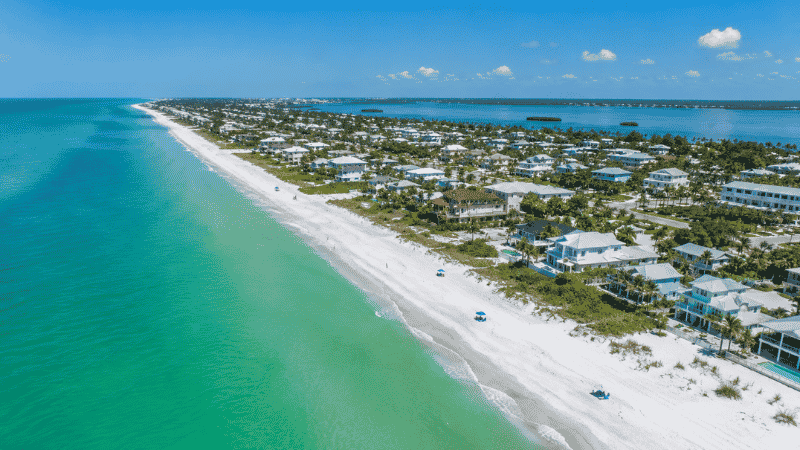
If you’ve spent time on Clearwater Beach or Siesta Key and loved everything about them — the white quartz sand, the turquoise Gulf water, the laid-back Florida energy — but wished it was a little less crowded and a little more like what Florida used to feel like before the resort towers arrived, Anna Maria Island is where you go next.
Anna Maria Island is a seven-mile barrier island sitting about 45 minutes south of Clearwater, separated from the mainland by Tampa Bay. It has the same Gulf Coast sand and water as its more famous neighbors, but with a character that’s genuinely different: no high-rise hotels, no chain restaurants dominating the main street, no resort infrastructure that turns every sunset into a paid experience. The island has a building height limit that’s been in place for decades — nothing above 35 feet — which means the skyline is still palm trees and beach cottages rather than towers.
The result is a beach experience that feels closer to the Florida of 40 years ago than most places on the Gulf Coast can claim. This guide covers what the island actually offers, how to get there, where to park, and what to do once you arrive.
Key Takeaways
- Anna Maria Island has 7 miles of Gulf-facing beach with the same white quartz sand as Siesta Key — but no high-rise hotels, thanks to a 35-foot building height limit enforced since the 1970s
- Bean Point at the north tip of the island offers a double water view — Gulf on one side, Tampa Bay on the other — and is one of the best sunset spots on Florida’s west coast
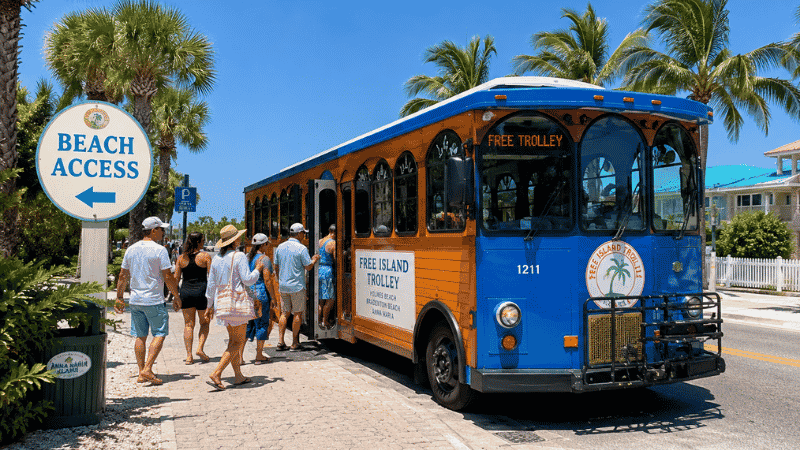
- The free Island Trolley runs the full length of the island connecting all major beach access points — no car needed once you’re on the island
- Coquina Beach at the south end has the most facilities and easiest parking — the best starting point for first-time visitors
- Anna Maria Island has no traffic lights — the island deliberately keeps its pace slow, and the speed limit tops out at 35 mph
The Beaches of Anna Maria Island — All Seven Miles
The island has five main beach areas, each with a distinct character. Understanding which one fits your plans makes the difference between a good day and a great one.
Bean Point — The Wild North End
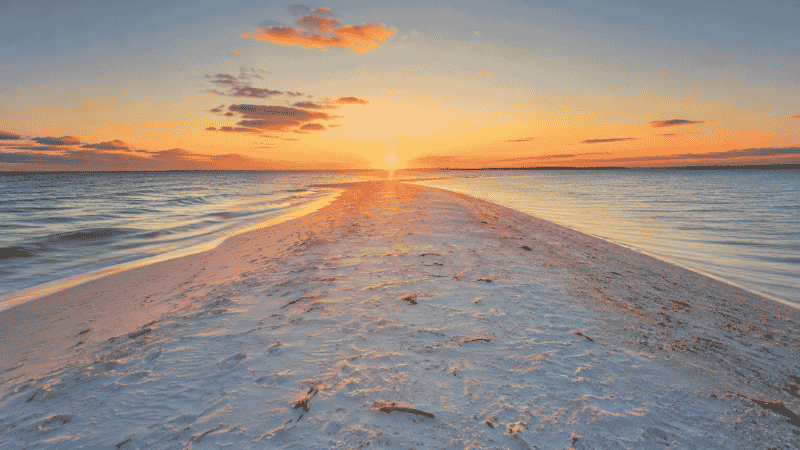
Bean Point sits at the northern tip of Anna Maria Island where the Gulf of Mexico meets Tampa Bay. It’s the most dramatic geography on the island — you can stand at the water’s edge and watch Gulf water on your left and bay water on your right, with the full sweep of the horizon visible in both directions.
The beach here is wider than anywhere else on the island, partly because sand accumulates at the point where two bodies of water meet. The water is calm on the bay side, with more wave action on the Gulf side. There are no facilities — no bathrooms, no concession stands, no parking lot. You walk in from the nearest street parking on Pine Avenue in Anna Maria City.
Why it’s worth the effort: Bean Point is one of the least visited beaches on the island precisely because you have to walk to it. The absence of a parking lot keeps the crowds manageable even on summer weekends. Sunset here — watching the sun drop into the Gulf while the bay turns gold behind you — is genuinely one of the better sunset experiences on Florida’s west coast.
Best time to go: Any evening with a clear sky. Arrive 45 minutes before sunset and walk out to the point.
Bayfront Park Beach — The Bay Side Alternative
On the east side of the island facing Tampa Bay rather than the Gulf, Bayfront Park has calm, protected water ideal for kayaking, paddleboarding, and swimming with young children. The bay water is shallower and even calmer than the Gulf side — no wave action, clear water, and a gradual sandy bottom.
The park has solid facilities: bathrooms, a playground, picnic areas, and free parking. It’s also the launch point for kayak and paddleboard rentals if you want to explore the bay.
What makes it different: Most visitors come to Anna Maria Island for the Gulf beach and overlook the bay side entirely. If you have young children who aren’t confident swimmers, or if you want to kayak through the mangroves and see wildlife (manatees are regularly spotted in Tampa Bay near the island), Bayfront Park is genuinely worth a morning.
Manatee Beach — The Central Hub
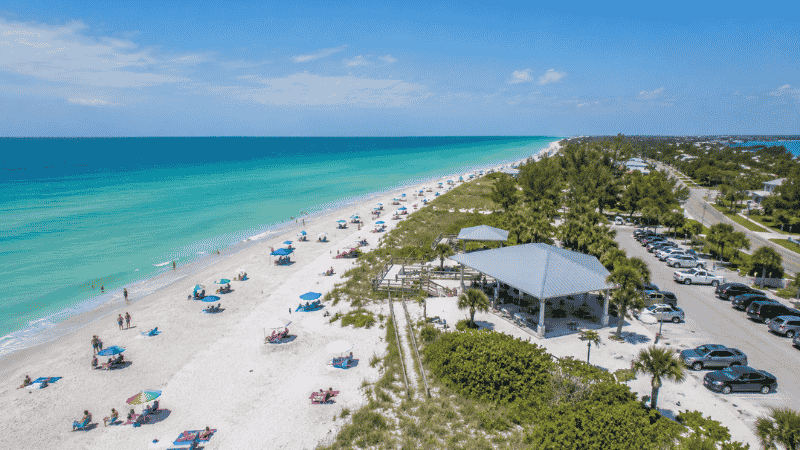
Manatee Beach is the island’s most developed public beach — and “developed” here means a parking lot, restrooms, a café, beach chair and umbrella rentals, and a volleyball court. On the Gulf Coast scale of beach infrastructure, this is still modest. There are no resort hotels looming overhead, no commercial strip immediately adjacent.
The beach itself is wide and well-maintained. The water is typical Gulf — shallow, warm, turquoise-to-emerald, calm except in afternoon wind. This is where the island feels most like Clearwater or Siesta Key in terms of setup.
Best for: Visitors who want a traditional beach day with facilities and amenities without the full resort-town experience. Families with kids who need restroom access and don’t want to walk far.
Parking: The main lot fills quickly on summer weekends. Arrive before 9 AM on peak days.
Holmes Beach — The Residential Middle
Holmes Beach is the largest of the island’s three municipalities, occupying the middle section. The beach along Holmes Beach is accessed through multiple public access points along Gulf Drive — there’s no single large parking area, just a series of street-end accesses with limited parking.
The character here is residential — beach cottages, small rental properties, the Gulf Drive strip with local restaurants and shops. It’s the most “neighborhood” feeling of any part of the island, and the beach reflects that. Wide, uncrowded, well-maintained. You share it with people who are renting the cottage across the street rather than people who drove in for the day.
Practical note: Parking along Holmes Beach requires local knowledge or a willingness to park and walk. The free Island Trolley stops throughout Holmes Beach — park further out and trolley to the beach rather than fighting for the limited beachfront spots.
Coquina Beach — Best for First-Time Visitors
Coquina Beach sits at the southern end of the island near the bridge, making it the first beach you encounter arriving from the mainland. It has the most parking capacity of any beach on the island, clean facilities, picnic pavilions, and a boat ramp on the bay side. The beach faces the Gulf and has the same white sand as everywhere else on the island.
Why it’s the right starting point: If you’ve never been to Anna Maria Island and you want to understand what it’s about before exploring further, Coquina Beach gives you the Gulf water and the character of the island with the most accessible logistics. Park, set up, explore the rest by trolley.
The boat ramp on the bay side makes Coquina a useful launch point if you’re bringing a kayak or paddleboard.
Things to Do in Anna Maria Island
The Free Island Trolley — Use It
The Anna Maria Island Trolley runs the full length of the island, connecting all major beach access points, shops, and restaurants. It’s completely free. It runs daily from early morning through evening during season.
The practical upside: park once at Coquina Beach (the largest lot) and use the trolley to move up and down the island throughout the day. You reach Bean Point at the north end, Bayfront Park on the bay side, every beach access in between, and the commercial strip on Gulf Drive — without moving your car once.
Check the current trolley schedule at mymanatee.org before your visit — routes and hours vary seasonally.
Kayaking and Paddleboarding
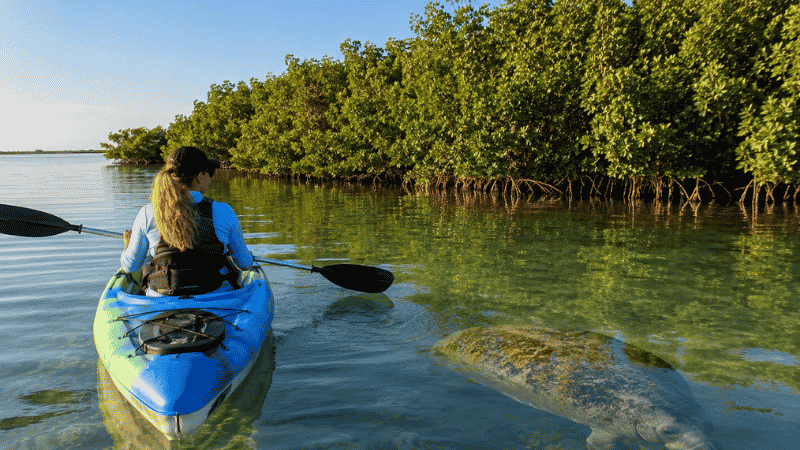
The bay side of Anna Maria Island is one of the better kayaking environments on Florida’s Gulf Coast. The mangrove channels between the island and the mainland have calm water, abundant wildlife (manatees are regular visitors, particularly in warmer months), and a landscape that looks completely different from the Gulf beach side.
Several outfitters on the island offer kayak and paddleboard rentals by the hour. Bayfront Park is the most convenient launch point. The bay is calm enough for absolute beginners — no swell, no current, manageable in almost any wind condition.
Wildlife note: Manatees in Tampa Bay are most commonly sighted in summer and early fall when water temperatures are warmest. They tend to congregate near the mangrove edges and around the Cortez area south of the island. The Florida Fish and Wildlife Conservation Commission requests that boaters and paddlers maintain a 50-foot distance from manatees — observe from a respectful distance.
Fishing
Anna Maria Island has a strong fishing culture. The Anna Maria City Pier on the north end offers free access to anglers — the pier extends into the bay and catches include snook, redfish, and trout in season. The Rod & Reel Pier in the same area is a classic Old Florida-style fishing pier with a casual atmosphere and a small café.
Charter fishing is available for both inshore and offshore options. Half-day inshore charters in Tampa Bay target redfish, snook, and spotted seatrout. Offshore charters go after grouper and snapper in the Gulf.
Shell Collecting
Anna Maria Island’s beaches produce good shelling, particularly after storms that churn material up from deeper water. The best shelling spots are Bean Point (where the current concentrates shells at the tip) and the quieter stretches of Holmes Beach.
Timing: Within 2 hours of low tide is when the most shells are exposed. Check a tide chart before planning a shelling walk. Early morning at low tide — before other visitors — is the optimal window.
What to look for: Lightning whelks (Florida’s state shell), banded tulip shells, olive shells, and scallop shells are all found on AMI beaches. Sand dollars occasionally appear at Bean Point — leave any live ones (fuzzy, purple) in the water.
Cycling the Island
Anna Maria Island is 7 miles long and has dedicated bike paths running much of the length. The flat terrain and relatively low traffic (no traffic lights, 35 mph speed limit) make cycling a genuinely practical way to get around. Multiple rental shops offer bikes by the hour or day.
Cycling from Coquina Beach at the south end to Bean Point at the north end takes about 30–40 minutes one way at a casual pace. This covers the full island and gives you a ground-level view of every beach and neighborhood.
Getting to Anna Maria Island and Getting Around
From Tampa, Sarasota, or Clearwater
Anna Maria Island is accessible via the Manatee Avenue Causeway (from mainland Bradenton) or the Cortez Road bridge. From Tampa, drive south on I-75 to Bradenton, then west on Manatee Avenue (FL-64) across the causeway — approximately 1 hour. From Sarasota, drive north on US-41 and west on SR-684 — approximately 45 minutes. From Clearwater, drive south on US-19 or US-41 to Bradenton — approximately 45–60 minutes.
Traffic reality: The two causeways in and out of the island create bottlenecks, particularly on summer weekend afternoons when everyone is leaving at once. If you’re day-tripping, plan to leave the island before 4 PM or after 7 PM to avoid the worst of the outbound causeway traffic.
Parking
Free parking exists at Coquina Beach (largest lot), Bayfront Park, and numerous street-side spots throughout the island. The street parking requires attention to posted time limits. On summer weekends, arrive before 9 AM for the main lots.
The better strategy: Park at Coquina Beach, use the free trolley to move around the island. The trolley eliminates most of the parking problem entirely.
No Traffic Lights, No High-Rises
Anna Maria Island has no traffic lights. The speed limit doesn’t exceed 35 mph anywhere on the island. There are no hotels above 35 feet tall. These aren’t accidents — they’re deliberate policy decisions made decades ago and maintained since. The island’s character is a direct result of these choices, and they’re worth knowing before you arrive so you understand what you’re getting: a slower, quieter, more genuinely Florida experience than most of its neighbors offer.
Best Time to Visit Anna Maria Island
October and May are the best months for the combination of warm water, manageable crowds, and lower accommodation prices. October specifically is when many repeat visitors go — water temperature around 78°F, summer crowds largely gone, and the island’s restaurants and shops fully open.
Summer (June–August): Warmest water, most active. The island gets busy but never reaches the density of Clearwater or Siesta Key — the lack of large hotel inventory naturally limits the visitor volume. Afternoon thunderstorms are standard June through August; plan beach time in the morning.
Winter (November–February): Pleasant for walking and exploring, too cool for swimming (water drops to 60–65°F by January). The island’s restaurant scene stays active through winter, and accommodation prices drop significantly.
Spring Break (March): Can be busy — the island attracts spring break visitors from the Southeast. Mid-March to early April is the busiest stretch if you’re not specifically looking for that atmosphere.
Anna Maria Island vs. Siesta Key vs. Clearwater Beach
All three are Gulf Coast quartz-sand beaches with similar water quality. The differences are in character and infrastructure:
Anna Maria Island: No high-rise hotels, no traffic lights, free trolley, fishing pier culture, vacation rental-dominant accommodation, quieter overall. Best for: people who want the Florida Gulf Coast beach experience without the resort-town atmosphere.
Siesta Key: Ranked #1 beach in the US, free public parking, drum circle on Sunday evenings, more developed restaurant and bar scene than AMI. Best for: people who want the iconic Gulf Coast experience with good facilities.
Clearwater Beach: Most developed, most amenities, best family infrastructure (Clearwater Marine Aquarium, Pier 60 Sunset Festival, dolphin cruises). Best for: families who want a full-activity beach vacation with everything in one place.
Frequently Asked Questions
What is Anna Maria Island known for? Anna Maria Island is known for its old Florida character — seven miles of white quartz Gulf beach with no high-rise hotels (a 35-foot building height limit has been in place for decades), no traffic lights, and a fishing pier culture that predates the modern resort era. It’s often described as what Florida’s Gulf Coast used to look like before development.
How far is Anna Maria Island from Tampa? Approximately 50 miles, typically a 50–60 minute drive. Take I-75 south to Bradenton, then drive west on Manatee Avenue (FL-64) across the causeway to the island.
Is Anna Maria Island crowded? Less crowded than Clearwater Beach or Siesta Key, because the island has no large resort hotels — most accommodation is vacation rentals in residential-scale properties. On summer weekends it gets busy, but the crowd level doesn’t reach the density of its more famous Gulf Coast neighbors.
Is there free parking at Anna Maria Island? Yes. Coquina Beach has the largest free public parking lot. Bayfront Park also has free parking. Street parking is available throughout the island with posted time limits. The free Island Trolley allows you to park at Coquina and reach any beach on the island without moving your car.
What is the best beach on Anna Maria Island? Bean Point at the north tip is the most dramatic — a double water view of Gulf and bay, wide sand, and no facilities keeping the crowds down. Coquina Beach has the best facilities and easiest logistics for first-time visitors. Holmes Beach has the best residential character for those who want to feel like they’re not at a tourist destination.
Can you see manatees at Anna Maria Island? Yes. Manatees are regularly sighted in Tampa Bay on the east side of the island, particularly in summer and early fall when water temperatures are warmest. Kayaking from Bayfront Park into the bay channels is one of the more reliable ways to encounter them. Maintain at least 50 feet of distance — approaching manatees is regulated under the Marine Mammal Protection Act.
The Bottom Line
Anna Maria Island earns its reputation as Florida’s best-kept Gulf Coast secret — though it’s becoming less secret every year as visitors who’ve exhausted Clearwater and Siesta Key look for something that feels less developed.
The beach quality is equivalent to its more famous neighbors. The character is different in ways that matter: quieter, slower, more residential, more connected to the fishing and boating culture that defines old Florida. The free trolley eliminates the parking headache. The height limit keeps the horizon clear.
If you want everything that makes Florida’s Gulf Coast worth visiting, without the resort-town version of it, Anna Maria Island is the answer.
Planning your Florida Gulf Coast trip? Read next:
- Best Beaches in Florida: The Realist’s Guide to Choosing the Right Shore
- Things to Do in Clearwater Beach: The Honest Guide
- Things to Do in Siesta Key: The Real Guide Beyond the Beach
- What to Bring to the Beach: Complete Florida Beach Gear Guide
References
- Florida State Parks — Coquina Beach and Anna Maria Island State Recreation Area: floridastateparks.org
- Manatee County — Island Trolley Schedule and Routes: mymanatee.org
- Florida Fish and Wildlife Conservation Commission — Manatee Protection Guidelines: myfwc.com
- Visit Florida — Anna Maria Island Destination Guide: visitflorida.com
- TripAdvisor Travelers’ Choice Best Beaches 2025–2026