
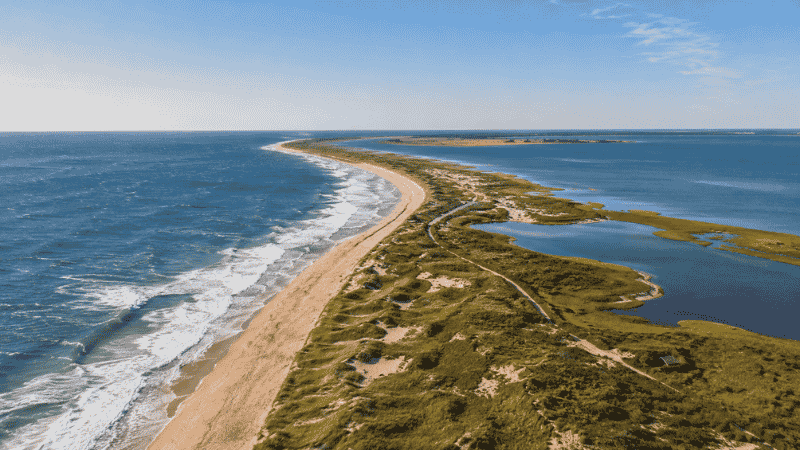
Here’s a scenario that plays out every summer on Cape Cod: a family drives three hours from Boston or New York, pulls into the first beach parking lot they see, pays $30 for a day pass, and discovers that the water is barely knee-deep at low tide because they accidentally picked a bay beach at the wrong time of day. The kids are disappointed. The parents are frustrated. Nobody mentioned this in the travel guides.
Cape Cod beaches are genuinely beautiful — some of the best on the entire East Coast — but they require more planning than most beach destinations because the Cape has two completely different ocean environments side by side. The bay side (Cape Cod Bay) has calm, warm, shallow water that’s ideal for young children but retreats dramatically at low tide. The Atlantic side has consistent waves, cooler water, and the wild open-ocean energy that older kids and adults love. Choosing the wrong side for your family’s needs, or showing up at the wrong tide, is the most common Cape Cod mistake.
This guide fixes that. We’ll walk you through the bay vs. Atlantic decision, the best beaches for families on each side, the parking system that confuses every first-timer, and everything else you need for a genuinely good Cape Cod beach day.
Key Takeaways
- Bay side vs. Atlantic side is the most important decision you’ll make about Cape Cod beaches — bay beaches are calmer and warmer but tide-dependent; Atlantic beaches have consistent waves and are better for older swimmers
- Cape Cod National Seashore beaches (Coast Guard, Nauset, Marconi, Race Point, Herring Cove) charge $25/day per vehicle in 2026 — no town sticker required, but arrive early because lots fill by mid-morning in summer
- Most town beaches require a resident sticker — visitors can buy daily passes at $10–$25 depending on the town, but some beaches are resident-only entirely
- Arrive before 9 AM or after 3 PM — the sweet spot windows that get you parking, avoid peak UV hours, and on the bay side, catch the best swimming tides
- Brewster’s bay beaches at low tide offer something you won’t find on most East Coast beaches: you can walk nearly a mile out on the tidal sand flats, which kids find genuinely magical
Bay Side vs. Atlantic Side — The Decision That Changes Everything
Before you pick a beach, you need to pick a side. The Cape curves like an arm flexed at the elbow, with Cape Cod Bay on the inside (calmer) and the Atlantic Ocean on the outside (wilder). These are fundamentally different beach experiences, and the right choice depends entirely on your family.
Bay Side (Cape Cod Bay) — Best for Families with Young Children
The bay side runs along the inner curve of the Cape from Sandwich through Wellfleet. The water here is warmer than the Atlantic (often by 5–8°F in summer), significantly calmer, and so shallow in places that you can walk hundreds of yards before it gets deep. No meaningful waves. Almost no current to worry about. For families with children under 8, this is the right choice.
The catch: bay beaches are intensely tide-dependent. At low tide, the water recedes so far in some spots (especially Brewster) that you’re walking on tidal flats rather than swimming. High tide is the best time to swim on the bay side. Check the tide chart before you go — it’s not optional.
Bay side towns worth knowing: Sandwich, Barnstable, Dennis, Yarmouth, Brewster, Eastham, Wellfleet.
Atlantic Side (Cape Cod National Seashore) — Best for Older Kids and Adults
The Atlantic-facing beaches run along the outer arm of the Cape — Eastham, Wellfleet, Truro, and Provincetown. These are the dramatic, wide, open-ocean beaches that Cape Cod is most photographed for. Real waves. Cooler water. Consistent surf that’s good for bodyboarding. The wild energy that makes a beach feel like a beach.
For confident swimmers and older children who want to actually play in waves, the Atlantic side is significantly more exciting than the bay. For toddlers or non-swimmers, it requires more active supervision.
Our honest take: Most families with a mix of ages end up doing both — a couple of bay days for the little ones, an Atlantic day for the energy and the views. That’s the right approach.
Best Cape Cod Beaches for Families — Bay Side
Mayflower Beach, Dennis — The Classic Family Choice
Mayflower Beach in Dennis is consistently recommended as one of the best family beaches on the bay side, and the reasons are straightforward: clean, well-maintained, lifeguarded in summer, good facilities, and the water is exactly what you want for young children — warm, calm, and shallow.
The beach faces west, which means beautiful sunset views over the bay. At low tide, the sand flats extend far enough to explore without needing to worry about depth. At high tide, it’s a proper swimming beach with enough water for everyone.
Parking reality: Mayflower Beach is popular and fills during summer. Arrive before 9 AM on summer weekends. Daily visitor passes are available but check with the town of Dennis for current pricing — it varies by season.
Brewster Flats (Paine’s Creek, Crosby Landing, Linnell Landing) — The Low-Tide Experience
Brewster’s bay beaches offer something genuinely unusual: at low tide, the water retreats so far that you can walk nearly a mile out on the tidal sand flats. It looks like the ocean has disappeared. Kids find it fascinating — there are hermit crabs, small fish in the tidal pools, shells everywhere, and the strange sensation of standing where the ocean was an hour ago.

The timing is critical here. High tide is swimming time. Low tide is tidal flat exploration time. You want to arrive about an hour before low tide, explore the flats as the water recedes, and then swim as it comes back in. If you arrive at the wrong time with young children expecting to swim, you’ll find a beach with no water near shore.
Paine’s Creek Beach specifically has a small parking lot that fills early — arrive by 8:30 AM on summer weekends. A town sticker or daily pass is required.
Craigville Beach, Barnstable — The Livelier Option
Craigville Beach has a classic Cape Cod beach feel and is one of the more active bay beaches — a bit more commercial energy than the quieter Dennis or Brewster spots. It works well for families who want a beach with more people around and nearby food options. The water is calm and warm, typical of the bay side.
Best for: Families who like a livelier beach atmosphere and want amenities close by.
Grays Beach (Bass Hole), Yarmouth Port — The Boardwalk Beach
Grays Beach is small and can get very shallow at low tide — not the best pure swimming beach. But the Bass Hole Boardwalk, which stretches out over a salt marsh with views of the bay and tidal channels, is one of the most genuinely scenic walks on the Cape. Kids who are restless on the sand often love the boardwalk.
The beach is free to access. Park in the lot and walk to either the beach or the boardwalk. Good for a half-day visit rather than a full beach day.
Best Cape Cod Beaches for Families — Atlantic Side (Cape Cod National Seashore)
Herring Cove Beach, Provincetown — Best National Seashore Beach for Families

Herring Cove is the most family-friendly of the six Cape Cod National Seashore beaches. The surf is generally gentler than the other Atlantic beaches, there’s a snack facility in summer, and the facilities (bathrooms, showers) are solid. It faces west, which means sunset views directly over the water — one of the few Atlantic-side beaches where you get a proper ocean sunset.
The $25/day parking fee applies (2026 rate). Arrive early — the lot fills by 10 AM on summer weekends. The National Seashore pass (America the Beautiful) covers entry if you have one.
Our take: If you’re doing one Atlantic side beach with younger children, make it Herring Cove. The gentler surf makes it more manageable than Coast Guard or Nauset.
Coast Guard Beach, Eastham — The Dramatic One
Coast Guard Beach is what people picture when they imagine Cape Cod at its most beautiful — wide, wild, dramatic, with the Atlantic stretching to the horizon and real waves breaking on a shore that curves for miles in both directions. It’s consistently rated among the best beaches on the entire East Coast.
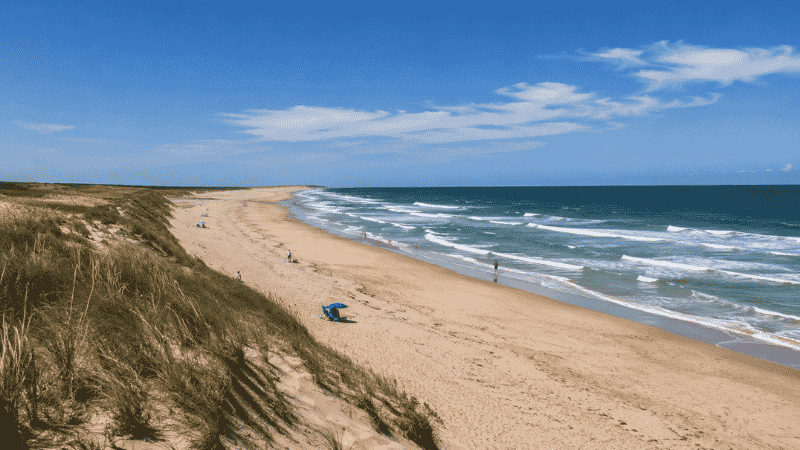
The logistics: There’s no parking at Coast Guard Beach itself in summer. You park at the Little Creek Shuttle Lot on Doane Road and take a free shuttle to the beach. This is actually fine — the shuttle runs frequently and the beach itself is never as crowded as it would be with direct parking. Budget 15 extra minutes each way.
The surf here is real Atlantic surf — better for older children and confident swimmers. Younger children can play in the lower wave zone, but active supervision is required.
Nauset Light Beach, Eastham — History Plus Beach
Nauset Light Beach is directly adjacent to the Nauset Lighthouse, which is worth a visit on its own. The beach has strong surf and is better for older children. The lighthouse visit adds an educational element that breaks up the beach day nicely if you have kids who need variety.
$25/day parking at the National Seashore lot. Facilities available.
The Cape Cod Parking System — What Every First-Timer Gets Wrong
This is the part that causes the most confusion and frustration for visitors, and it’s genuinely complicated.
Town beaches: Most Cape Cod town beaches require a town resident sticker for parking. Visitors can often purchase a daily pass ($10–$25 depending on the town), but some beaches are resident-only and simply won’t sell you a pass. Rules vary by town. Check the specific town’s website before you drive there — arriving to find out a beach is resident-only is a significant waste of a morning.
Cape Cod National Seashore beaches: These six beaches (Race Point, Herring Cove, Head of the Meadow, Marconi, Nauset Light, Coast Guard) charge a daily vehicle fee of $25 (2026 rate) and accept cash, credit cards, and America the Beautiful passes. No town sticker required. These are actually the most visitor-friendly option in terms of access.
The practical approach for visitors: Use the National Seashore beaches (they’re also the most beautiful and dramatic) and supplement with the handful of town beaches that sell daily visitor passes. Towns that generally accommodate visitors well include Dennis, Yarmouth, Harwich, and Orleans. Towns that are more restrictive include some parts of Chatham and Barnstable.
Timing: Arrive before 9 AM or after 3 PM. Even with a parking pass or sticker, lots at popular beaches fill completely during peak summer hours.
The Cape Cod Rail Trail — When the Beach Isn’t Enough

One of the best family activities on Cape Cod has nothing to do with the ocean directly: the Cape Cod Rail Trail is a 22-mile completely flat, paved bike path that runs through Dennis, Harwich, Brewster, Orleans, Eastham, and Wellfleet.
It’s pram-friendly, stroller-accessible, shaded in large sections (which matters in summer heat), and passes through genuinely beautiful Cape Cod landscapes — cranberry bogs, kettle ponds, pine forest. Families with young children who need breaks from the beach use the Rail Trail as a reliable backup activity.
Bike rentals are available at multiple points along the trail. Nickerson State Park in Brewster is a good entry point — the park also has freshwater swimming ponds if the ocean isn’t cooperating.
Things to Do in Cape Cod Beyond the Beach
Provincetown — Worth the Drive
Provincetown sits at the very tip of the Cape and is one of the most distinctive towns in New England — a small fishing village turned vibrant arts community with galleries, restaurants, whale watching, and Race Point Beach. The drive out Route 6 through the National Seashore is genuinely beautiful.

With kids: the whale watching cruises from Provincetown Harbor are excellent — the Stellwagen Bank whale sanctuary is one of the most productive whale watching locations on the East Coast, and humpback and fin whales are regular sightings. Pilgrim Monument offers views of the entire Cape from the observation deck.
Chatham — The Classic Cape Village
Chatham has the most classic Cape Cod village atmosphere — a compact main street, fish pier where the day’s catch comes in each afternoon (worth watching with kids), and Chatham Lighthouse with views of the harbor. The fish pier scene at 3–4 PM in summer, when the fishing boats return and seals gather in the water nearby waiting for scraps, is genuinely memorable.
Cape Cod Museum of Natural History, Brewster
Better than it sounds. The museum has indoor exhibits on Cape Cod ecology and connects to outdoor boardwalk trails through salt marshes. For rainy days or hot afternoons, it’s a solid 2-hour activity with kids.
Best Time to Visit Cape Cod
Late June and September are the sweet spots. June has warm days, water just warming up (60–65°F by late June), crowds below peak, and availability in rental properties. September has warm water (it peaks in August and stays warm through September at 68–72°F), schools back in session which dramatically reduces crowds, and rental prices that drop 30–40% from August peak.
July and August are peak season — every beach is busy, rentals are at maximum price, and the Cape’s limited road infrastructure (Route 6 and Route 28 are the two main roads, and they back up) creates traffic that can add significant time to any drive. Still beautiful, still worth it, but come prepared.
A typical 3-bedroom family rental runs $4,500–$7,000 per week in peak summer (2026 rates). The same property in September can run $2,500–$3,500.
Cape Cod Beach Safety
The Atlantic Side Requires More Respect
The Cape Cod National Seashore beaches face open Atlantic Ocean. Rip currents form regularly, particularly at beach cut points and after storms. The National Park Service flies warning flags and lifeguards are stationed at main beach access points during summer hours.
The correct rip current response: swim parallel to shore rather than directly toward it. The current is narrow — swimming sideways out of it is the escape route.
Sharks at Cape Cod — The Real Situation
Great white sharks are present in Cape Cod waters, particularly near seal colonies on the outer beaches. The Atlantic White Shark Conservancy tracks shark sightings and publishes a Sharktivity app with real-time alerts. This sounds alarming, but the practical advice is sensible: swim near lifeguards, avoid swimming where seals are present (seals are what the sharks are following), and don’t swim at dawn or dusk.
Shark incidents at Cape Cod are rare but have occurred. The risk is real but manageable with awareness. Check the Sharktivity app before swimming on the Atlantic side — it takes 30 seconds and gives you current information.
Bay Side Is Gentler
Bay side beaches (Brewster, Dennis, Yarmouth) have minimal wave action, no significant rip current risk, and the shallow water makes young children significantly easier to supervise. The main hazard on the bay side is tide — the water can recede faster than expected, and children can get further from shore than they realize on the sand flats.
If You Only Have One Day on Cape Cod
This is the tight version:
7:30 AM: Arrive at Brewster Flats (Paine’s Creek or Crosby Landing) as the tide is going out. Walk the tidal flats with the kids. Collect shells. Watch for hermit crabs.
10:30 AM: Drive to Chatham. Watch the fishing boats come in at the fish pier. Lunch on Main Street.
1:30 PM: Drive to Coast Guard Beach, Eastham. Take the shuttle. Two hours of Atlantic surf for the older kids and adults.
4:30 PM: Ice cream anywhere in Orleans or Eastham. The Cape Cod Rail Trail near Nickerson State Park if anyone still has energy.
That’s a full, excellent, genuinely Cape Cod day.
Frequently Asked Questions
What is the best beach on Cape Cod for families? For families with young children: Mayflower Beach in Dennis (calm, warm, lifeguarded, good facilities) and the Brewster tidal flats (low-tide exploration unlike anywhere else). For families with older children who want real waves: Herring Cove Beach in Provincetown (gentler National Seashore surf, sunset views, snack facilities).
Do you need a beach sticker for Cape Cod beaches? Most town beaches require a resident parking sticker. Visitors can purchase daily passes at some beaches ($10–$25), but not all. Cape Cod National Seashore beaches (Herring Cove, Race Point, Coast Guard, Nauset, Marconi, Head of the Meadow) charge $25/day per vehicle (2026) and are open to all visitors — no town sticker required.
Are there sharks at Cape Cod beaches? Yes. Great white sharks are present in Cape Cod waters, particularly near seal colonies on the Atlantic-facing beaches. The Atlantic White Shark Conservancy’s Sharktivity app provides real-time sighting alerts. Swim near lifeguards, avoid areas with seal activity, and avoid dawn/dusk swimming on the Atlantic side.
What is the best time to visit Cape Cod beaches? September is the sweet spot — warm ocean water remaining from summer (68–72°F), crowds significantly reduced after Labor Day, and rental prices 30–40% lower than August peak. Late June is the second best option. July and August are peak season with peak prices and crowds.
What is the difference between Cape Cod bay beaches and ocean beaches? Bay beaches (facing Cape Cod Bay) have calm, warm, shallow water — ideal for young children but very tide-dependent. Atlantic beaches (Cape Cod National Seashore) have real waves, cooler water, and open-ocean energy — better for older swimmers. The right choice depends entirely on your family’s ages and swimming comfort.
How much does parking cost at Cape Cod beaches? National Seashore beaches: $25/day per vehicle (2026). Town beaches: $10–$25/day for visitor passes where available, but some are resident-only. America the Beautiful annual passes cover National Seashore entry. Free parking exists at some smaller access points and along certain roads in off-peak hours.
The Bottom Line
Cape Cod beaches reward the families who do a little homework before they arrive. Know the bay vs. Atlantic decision. Check the tide before going to a bay beach. Understand the parking system — or just use the National Seashore beaches and skip the sticker confusion entirely. Arrive before 9 AM on summer weekends.
Do those things, and the beaches here will deliver everything the reputation promises: water that’s genuinely beautiful, sand that’s clean and wide, and the kind of New England coastal experience that’s hard to find anywhere else on the East Coast.
The tidal flats at Brewster at low tide, with kids running ahead on sand that an hour ago was covered in water, is one of those specific travel memories that shows up in conversations years later. That’s worth a little planning.
Planning your East Coast beach trip? Read next:
- Outer Banks Beaches: The Complete OBX Guide
- Things to Do in Myrtle Beach SC: The Honest Family Guide
- Beach Vacation Packing List: What to Actually Bring
- Jellyfish Sting Treatment & Beach Safety Guide
- What to Bring to the Beach: Complete Beach Gear Guide
References
- Cape Cod National Seashore — National Park Service: nps.gov/caco
- Atlantic White Shark Conservancy — Sharktivity App and Shark Safety: atlanticwhiteshark.org
- Cape Cod Rail Trail — Official Information: capecodrailtrail.net
- United States Lifesaving Association — Rip Current Safety: usla.org
- CDC — Water Safety and Drowning Prevention: cdc.gov/drowning