
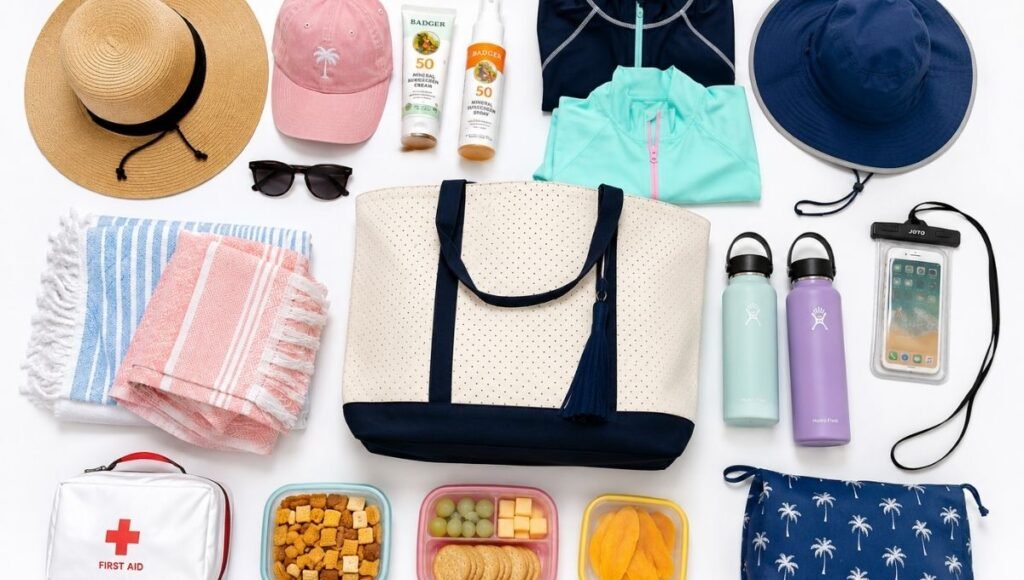
There’s a very specific kind of optimism that happens the night before a beach trip. You’re picturing calm water, sunsets, kids completely absorbed by the sand. The bag looks manageable. Everything is going to be fine.
Then you arrive at the beach and realize the sunscreen is in the car, the toddler’s water shoes are still on the kitchen counter, nobody thought to bring a bag for wet towels, and the snacks you packed are the kind that turn into sand-coated mush within twelve minutes of being opened. The morning has officially gone sideways, and it’s 9 AM.
This is not a unique experience. It’s the beach trip tax — paid in small, irritating moments that are completely preventable with a different packing approach. Not more stuff. Better stuff, chosen intentionally, packed in the right order.
This beach vacation packing checklist was built from the perspective of families who’ve done this many times and made every mistake at least once. It’s organized by priority rather than category, because the sunscreen you forgot matters more than the extra pair of sandals you didn’t need. Use it however works for you — save it, print it, text it to yourself the night before — but read it once before you pack.
Key Takeaways
- The most forgotten item at the beach is not sunscreen — it’s a bag for wet towels and swimsuits at the end of the day. Pack a dedicated wet bag before anything else
- Children under 12 in ocean surf need US Coast Guard-approved life jackets, not pool floaties or puddle jumpers — this is the single most important safety item on this entire list
- Reef-safe mineral sunscreen (zinc oxide or titanium dioxide) is now required at many beach destinations including Costa Rica national parks, Hawaii, and Turks and Caicos — check your destination before you pack
- Pack twice the sunscreen you think you need — a family of four goes through a full bottle per beach day when applying and reapplying correctly every 2 hours
- The sand toy problem is real: toys brought to the beach almost never come home clean — pack cheap replaceable ones or plan to rinse them thoroughly before loading the car
Before You Start Packing — The Three Questions
Most over-packed beach bags come from skipping these three questions:
Where exactly are you going? Gulf Coast beach packing looks different from Atlantic surf beach packing, which looks different from a tropical international destination. Reef-safe sunscreen requirements, water shoe necessity, rash guard vs. not — these decisions change based on the specific beach.
How old are your children? A family with a 2-year-old needs swim diapers, a pop-up sun shelter, and a baby carrier for the sand walk. A family with a 10-year-old needs a boogie board, a longer leash on the sunscreen application, and probably a waterproof phone case for their photos. The lists look different.
Are you driving or flying? Car trips allow the full kit — wagon, beach umbrella, cooler, all of it. Flying means ruthless prioritization and understanding that you can rent most large items at the destination for less than checked baggage fees.
The Beach Vacation Packing Checklist — By Priority
Priority 1 — Sun Protection (Non-Negotiable)
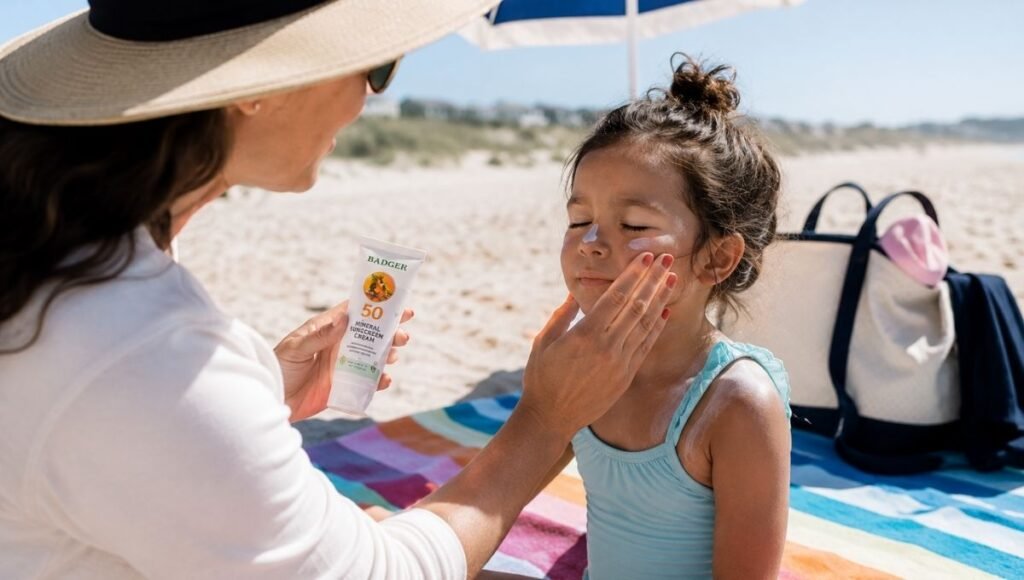
This category kills more beach days than anything else. A day that starts with burned shoulders at 10 AM becomes a miserable afternoon regardless of everything else you packed correctly.
Sunscreen: Mineral (zinc oxide or titanium dioxide), SPF 50+. Reef-safe if your destination requires it — which increasingly includes Costa Rica, Hawaii, the US Virgin Islands, and Turks and Caicos. How much: Plan one full 8oz bottle per person per week, or roughly one application of a 3oz bottle per beach day for an adult. Most families bring half what they actually need.
Application timing matters: Apply 30 minutes before sun exposure, not as you walk out the door. Reapply every 2 hours and immediately after swimming. The ocean breeze makes UV intensity feel lower than it is — this is the most common cause of serious sunburn on beach vacations.
UPF rash guards for children: Non-negotiable for children spending extended time in and out of the water. A UPF 50 rash guard covers constant sunscreen reapplication on the torso and provides better protection over a 4-hour beach session than any sunscreen application schedule. Buy loose-fitting — tight ones are uncomfortable wet.
Wide-brim hats: One per person. Children lose hats — bring a backup or attach a hat clip to small children’s hats.
UV-blocking sunglasses: For adults and children. The glare off water significantly increases UV exposure to eyes.
Lip balm with SPF: Gets forgotten constantly, burned lips last three days.
Priority 2 — Water Safety Equipment
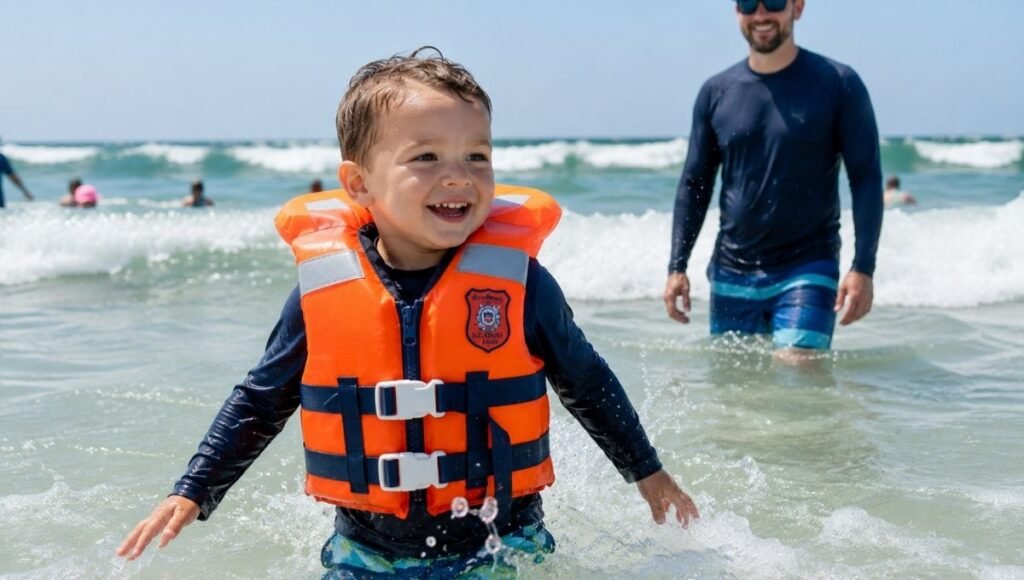
US Coast Guard-approved life jackets for children: If your children are not confident swimmers — and for ocean surf, “confident” means genuinely comfortable in moving water with waves — a properly fitted USCG-approved life jacket is the right choice. Not puddle jumpers. Not pool floaties. A USCG Type III or Type II PFD rated for your child’s weight range.
The distinction matters because puddle jumpers and pool floaties are not Coast Guard-approved for open water use. They’re designed for calm, supervised pool environments. Atlantic surf and Pacific beach conditions are different from that environment — waves can knock children down unexpectedly, currents pull subtly, and a momentary loss of footing can become a serious situation fast.
Swim vests for beginner snorkelers: If you’re planning any snorkeling, beginner swim vests (separate from life jackets) allow less confident swimmers to enjoy snorkeling without exhausting themselves staying afloat.
First aid kit: Compact version: waterproof bandages, antiseptic wipes, tweezers (for stingers, splinters, sea urchin spines), pain reliever, antihistamine (diphenhydramine) for allergic reactions, and a cold pack. Add prescription medications and any EpiPens if relevant.
Priority 3 — The Shade System
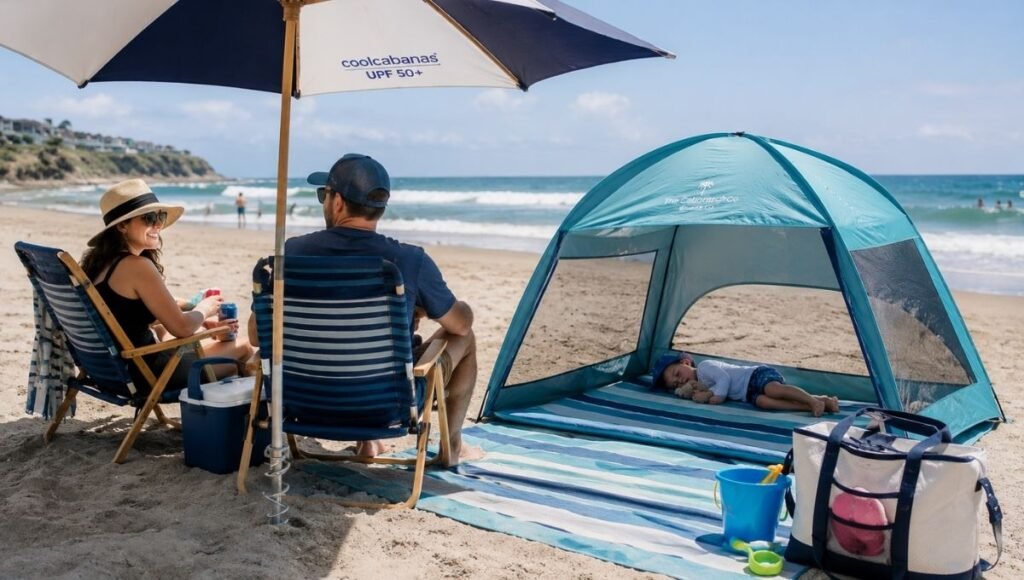
If you have children under 5, this is effectively a non-negotiable category. Young children cannot safely be in direct sun for extended periods, and they can’t articulate when they’re getting too hot.
Beach umbrella or canopy: A UPF 50+ rated umbrella or pop-up canopy provides actual UV protection rather than just shade. Look for one with sand anchors and wind vents — unanchored umbrellas in beach wind become projectiles. A good beach umbrella is one of the highest-value purchases for a family that beaches regularly.
Pop-up sun shelter/UV tent for infants and toddlers: If you have a baby or toddler, a pop-up UV-blocking shelter gives them a protected space for naps and sand play without direct sun exposure. The Shibumi Shade-style designs are excellent for Florida Gulf Coast beaches; pop-up tents work better at more protected beaches.
Beach chairs with canopy/shade: Worth the extra cost for parents of young children who need to nurse, bottle-feed, or manage a resting baby without leaving their own sun-exposed chair.
Priority 4 — The Carry System
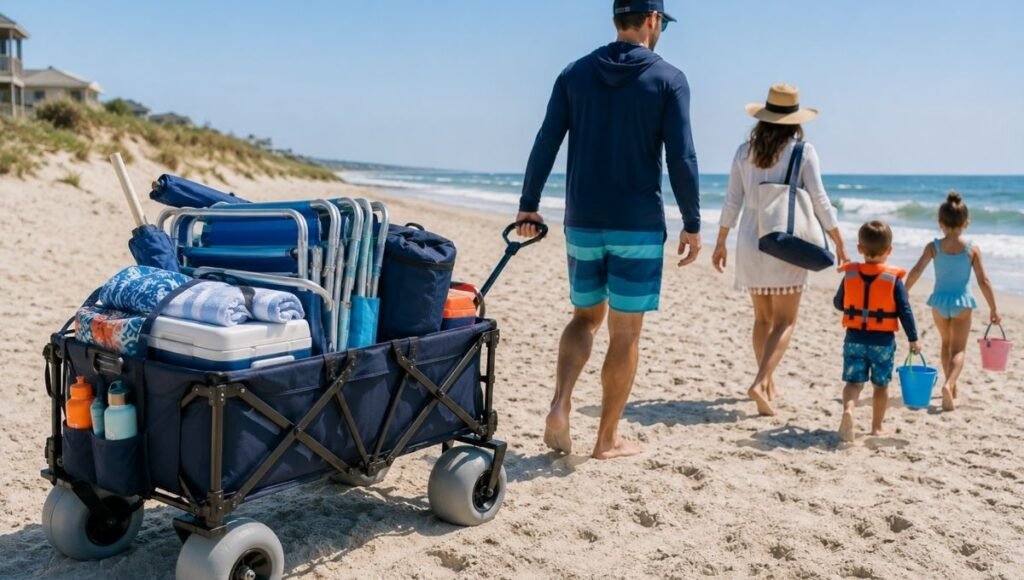
This is the category that separates beach days where you arrive smoothly from beach days where you make three trips from the car while a child melts down in the parking lot.
Beach wagon or cart: For families with children under 8, or for any beach that requires more than a 5-minute walk from parking, a collapsible beach wagon is the single most impactful quality-of-life purchase you can make. It carries the cooler, the umbrella, the towels, the toys, the chairs, and the toddler when necessary. The Kelty Linger or the Mac Sports collapsible wagons are the consistently recommended options for sandy terrain — look for wide wheels specifically designed for soft sand.
Tote bag or backpack: For the daily beach bag that carries what you’ll actually access during the day — sunscreen, snacks, phones, water bottles. Separate from the wagon load so you’re not unpacking everything to find the sunscreen.
Wet bag: A waterproof bag (or two) for wet swimsuits and towels at the end of the day. This is the most forgotten item that causes the most irritation. Dripping wet swimsuits wrapped in a beach towel shoved in a regular bag is how you ruin the car seat, the luggage, and the carpet in the vacation rental all in one trip. A $15 waterproof dry bag prevents all of it.
Priority 5 — Clothing
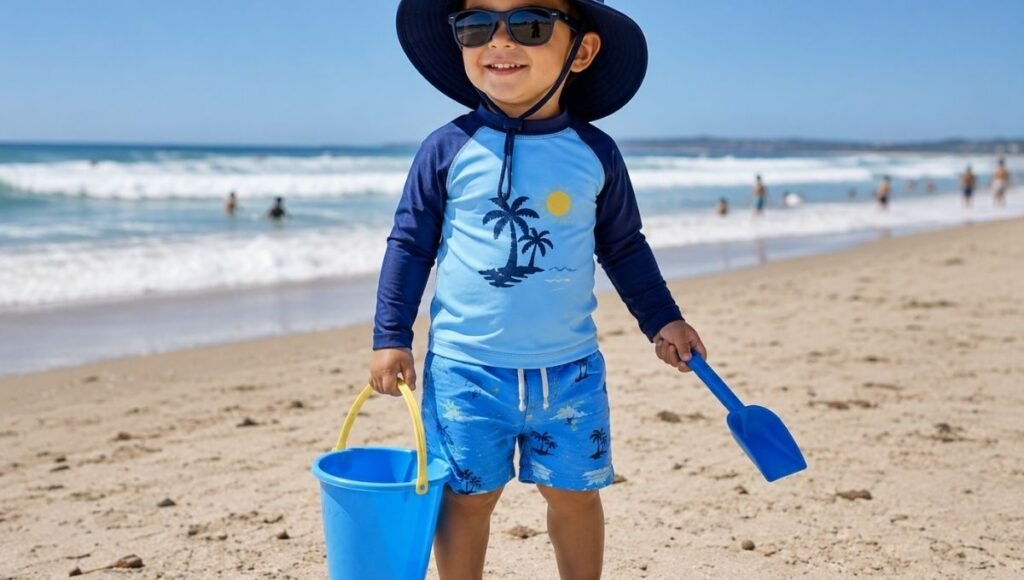
The most over-packed category on most beach trips. The reality: you will spend most of your time in a swimsuit or swimsuit plus cover-up. The rest is gap-filling.
Swimsuits: Two per person minimum. If one is wet and something comes up, you need a dry option. For children, three if they have any propensity for accidents — swim diapers go on before ocean entry, not in the car on the way, unless you enjoy the specific experience of a swim diaper in a hot car.
Cover-ups and lightweight layers: One per adult for walking to/from the beach and casual beachside dining. Linen or quick-dry fabric.
One dressier option per adult: For any beach vacation with a planned dinner out. Just one.
Water shoes for everyone: Prioritize for rocky beaches (Cape Cod, Hawaii, Costa Rica), shell-covered beaches (Sanibel Island), and any beach with hot pavement between parking and the water. Optional for fine-sand Gulf Coast beaches.
Evening layers: Florida summers are hot right until they’re not — a thunderstorm at 5 PM can drop the temperature 15 degrees in twenty minutes. One light jacket or cardigan per person.
Underwear and socks: Pack for the actual number of days. Socks wear out on beach trips faster than you expect; pack one extra day’s worth.
Priority 6 — Food, Hydration, and the Cooler System
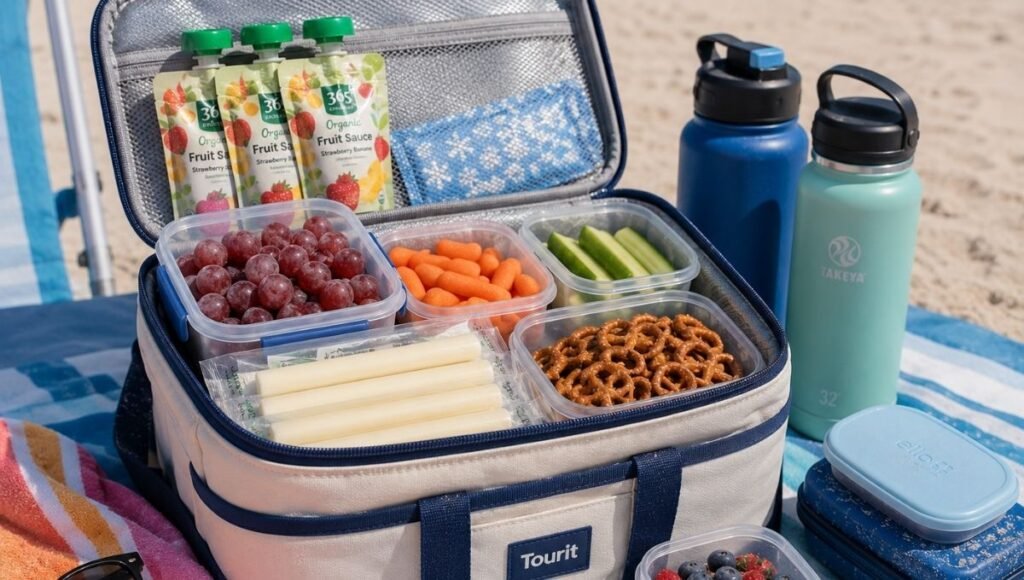
Hydration: A family of four at the beach in summer needs significantly more water than they think — plan 16–24 oz per person per hour of beach time in summer heat. Insulated water bottles, pre-filled and cold, are non-negotiable. Children who are playing in sun and water are not reliably signaling thirst — offer water actively, every 30–45 minutes.
Cooler: For a day at the beach, a soft-sided insulated cooler bag is sufficient and much easier to carry than a hard cooler. For a week-long rental with daily beach trips, a quality hard cooler (Yeti, Coleman Xtreme) justifies itself in not buying overpriced beach concession food every day.
Snack strategy: Beach snacks need to be: not chocolate or anything that melts, not crackers that turn to sand paste, not anything that requires utensils. The things that actually work: string cheese, grapes (pre-washed, in a container), cut vegetables, pretzels in a sealed container, protein bars, fruit pouches for young children. A sealed, sand-resistant container for everything.
The lunch question: Eating lunch at the beach versus going back to the rental versus a nearby restaurant is a genuine daily planning decision on longer trips. Having sandwich materials or easy assembly meals at the rental is almost always cheaper and faster than restaurant lunch with multiple children.
Priority 7 — Beach Toys and Entertainment
For young children (under 6): A bucket and a few shovels is genuinely sufficient for hours of engagement. Sand molds are a bonus. The more elaborate the toy, the more pieces you’ll lose and the harder it is to carry.
For middle childhood (6–12): Boogie boards (can rent at most beach towns), frisbee, beach volleyball, sand castle tools. Waterproof playing cards for when everyone needs a break from the sun.
For teenagers: They need exactly one thing: their phone in a waterproof case. Everything else is negotiable.
Underwater camera or GoPro: If you’re snorkeling or want beach photos without risking a regular phone, a waterproof camera or GoPro is genuinely worth it. The beach photos from a waterproof camera are different from anything you’ll take standing on the sand.
Books/entertainment for adults: Beach reading is one of the genuine pleasures of beach vacation. Waterproof e-readers (Kindle Paperwhite Signature Edition) eliminate the book-getting-wet problem and carry an entire library.
Priority 8 — Toiletries and Hygiene
After-sun lotion: Aloe vera gel or an after-sun lotion for the burns that happen despite best efforts. Apply while skin is still slightly damp after showering.
Insect repellent: Necessary for evening beach time during mosquito season, essential for any tropical destination or Caribbean beach. DEET-free options (picaridin) work well and don’t damage synthetic fabrics.
Waterproof mascara and minimal makeup: Beach trips are genuinely not the time for a full makeup routine. Pack light and lean into it.
Hair care for saltwater: Saltwater damages hair over a week — a leave-in conditioner or hair oil applied before swimming significantly reduces the tangles and dryness that accumulate over a beach vacation week.
Medications: Full supply of any prescription medications, plus: pain reliever, antihistamine (especially if jellyfish are seasonally present), anti-nausea medication (for boat excursions), electrolyte packets (for the inevitable dehydration day), and any child-specific medications.
Priority 9 — Documents and Practical Items
Identification and travel documents: Passports for international destinations, stored separately from luggage in a waterproof travel document holder.
Waterproof phone case or pouch: A dry bag-style case for the beach. Phones in pockets of beach bags routinely get wet — a $15 waterproof pouch prevents a $1,000 phone replacement.
Cash: Many beach parking lots, concession stands, and small beach town vendors are cash-only. Always have some.
Parking apps: Download ParkMobile or the local parking app for your destination before you arrive — many beach towns use app-only parking payment now.
Beach towels: Two per person minimum. Quick-dry Turkish towels or microfiber towels pack significantly smaller than standard bath towels for travel, and they actually dry between uses. Regular hotel-style beach towels stay damp for hours.
The Things That Almost Never Come Home From the Beach
A short list of items that consistently disappear on beach trips, based on pattern:
Sunglasses. Bring a backup pair.
Hair ties and clips. Bring more than you think necessary.
Sand toys. Accept this before you leave.
One sock. Always one sock.
The specific lip balm you really liked. It’s somewhere in the sand.
Children’s water shoes. They take them off, they forget where.
If You Have 10 Minutes to Pack for a Beach Day
Forget the full list — here’s the emergency version for a spontaneous beach day with kids:
- Sunscreen (SPF 50+) — nothing else matters without this
- Water bottles, filled
- Life jacket if your child isn’t a confident swimmer
- At least one towel per person
- Snacks in a container
- A change of clothes for the kids
- A wet bag or grocery bag for the return trip
That’s a functional beach day. Everything else is comfort and convenience.
When to Seek Medical Attention at the Beach
Severe sunburn with blistering, fever, chills, or nausea: seek medical attention. Sunstroke and severe burns require professional treatment. The American Academy of Dermatology classifies second-degree sunburns (blistering) as requiring medical care.
Jellyfish sting with widespread reaction: Localized stings are manageable with seawater rinse, tentacle removal, and heat. Difficulty breathing, swelling beyond the sting site, hives, or signs of allergic reaction require emergency care. Call 911 or go to an emergency room immediately.
Suspected rip current exhaustion: If someone was caught in a rip current and shows signs of exhaustion, disorientation, or breathing difficulty after being pulled from the water, seek medical evaluation. Dry drowning and secondary drowning are real risks that can appear hours after a water incident.
Stingray sting: Immerse in hot water immediately (as hot as tolerable) for 30–90 minutes while seeking medical attention for deep puncture wounds. The venom is protein-based and heat-deactivated; the puncture may require cleaning and antibiotics.
Frequently Asked Questions
What should I not forget to pack for a beach vacation? The three most consistently forgotten items by families: a wet bag for towels and swimsuits at the end of the day, enough sunscreen (families consistently pack half what they need), and a US Coast Guard-approved life jacket for young or non-confident swimmers. After those, the items that cause the most mid-trip purchases are after-sun lotion, extra sunglasses, and a waterproof phone pouch.
How much sunscreen do I need for a week at the beach? Plan one full 8oz bottle per person per week of beach time when applying and reapplying correctly (every 2 hours and after swimming). A family of four needs at least four 8oz bottles for a week. Most families pack two and run out by day three. Buy extra or plan to buy at the destination.
Do I need reef-safe sunscreen for the beach? For some destinations, yes — it’s legally required. Hawaii, the US Virgin Islands, Palau, Bonaire, and many Caribbean destinations including parts of Mexico have banned oxybenzone and octinoxate-containing sunscreens. Costa Rica requires reef-safe sunscreen in national parks. Turks and Caicos strongly recommends it. If you’re visiting a reef ecosystem, use mineral sunscreen regardless of local law — it’s the right call.
What should kids wear to the beach for sun protection? UPF 50+ rash guards for all water time, a wide-brim hat, UV-blocking sunglasses, and SPF 50+ mineral sunscreen on all exposed areas. The rash guard significantly reduces the sunscreen maintenance burden — apply sunscreen on the face, neck, and any exposed areas, and the rash guard handles the torso and arms. For infants, a pop-up UV-blocking shelter combined with UPF clothing and keeping them out of direct midday sun is the appropriate approach.
What is the most important item to pack for a beach vacation with kids? US Coast Guard-approved life jackets for any child who isn’t a confident swimmer in ocean conditions. Not pool floaties, not puddle jumpers — a USCG-rated PFD. The difference between a calm beach day and an emergency can be this single item.
The Bottom Line
The best beach vacation packing isn’t about bringing everything — it’s about bringing the right things in the right order. Sun protection first, water safety second, shade third, everything else after. The families who have the smoothest beach days are rarely the ones with the most stuff; they’re the ones who thought through the actual sequence of a beach day and packed for that reality.
Pack the wet bag. Bring twice the sunscreen. Get the right life jacket. The rest is details.
Ready to plan your beach trip? Read next:
- What to Bring to the Beach: Complete Beach Gear Guide
- Best Beach Umbrella: What Actually Holds Up in Wind
- Best Beach Chair: What to Actually Buy
- Jellyfish Sting Treatment & Beach Safety Guide
- Best Gulf Coast Beaches: Complete Florida West Coast Guide
References
- American Academy of Dermatology — Sunscreen Guidelines and UV Protection: aad.org
- CDC — Sun Safety and Heat-Related Illness Prevention: cdc.gov/cancer/skin
- US Coast Guard — Life Jacket Requirements and PFD Selection Guide: uscg.mil
- National Ocean Service (NOAA) — Rip Current Safety: oceanservice.noaa.gov
- American Academy of Pediatrics — Water Safety Guidelines for Children: aap.org