
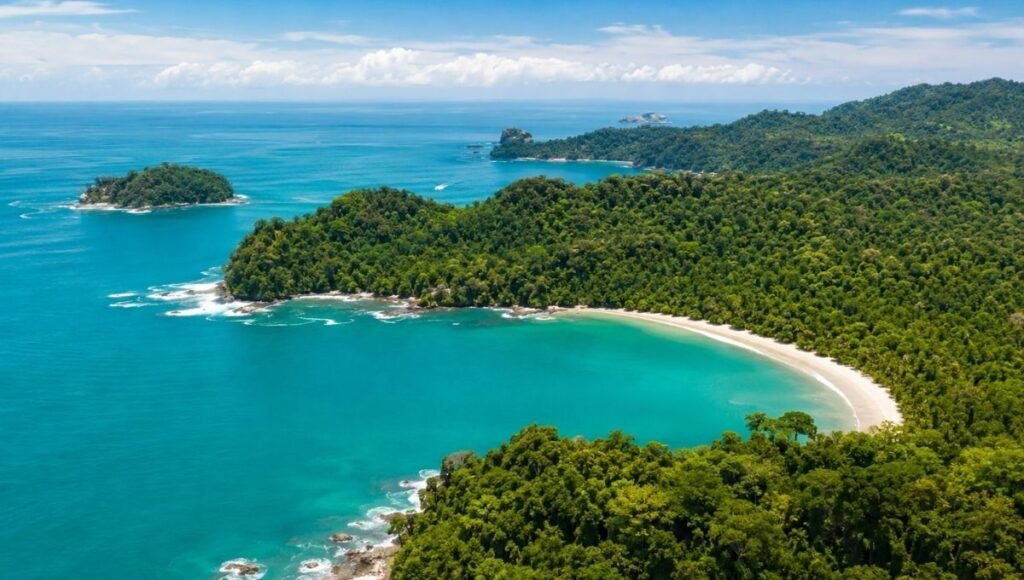
Here’s the thing nobody tells you before you book a Costa Rica beach vacation with kids: the country has two completely different oceans, and choosing the wrong one for the wrong season is the fastest way to turn a dream trip into a week of grey skies and waves too big to swim in.
The Pacific Coast versus the Caribbean Coast isn’t just a geographic distinction — it’s two entirely different countries in terms of culture, weather patterns, beach character, water conditions, and what’s actually safe for children to swim in. The Pacific is dramatic sunsets, reliable dry-season sun, and the country’s most famous beach towns. The Caribbean is reggae rhythms, turquoise reef water, Afro-Caribbean culture, and a laid-back energy that feels completely untouched by the resort development on the other side.
Then there’s the safety conversation most guides barely touch: almost no beach in Costa Rica has lifeguards. Two beaches — Jacó and Playa Dominical — have limited lifeguard coverage. Every other beach, including the famous ones, is unpatrolled. Combined with the Pacific Coast’s powerful rip currents and the surge that comes with open-ocean swell, Costa Rica demands more ocean awareness from families than most Caribbean or Gulf Coast destinations.
This guide gives you the honest version — which beaches are actually calm enough for young children, which are surfer beaches disguised as family destinations, and how to plan a Costa Rica beach trip that delivers on the wildlife-meets-paradise promise without the anxious moments in the water.
Key Takeaways
- Costa Rica has coastline on two oceans — the Pacific (600+ miles, dramatic, surf-heavy) and the Caribbean (125 miles, calmer, reef-oriented) — and they require completely different planning logic
- Almost no beach in Costa Rica has lifeguards — Jacó and Playa Dominical are the main exceptions. Every other beach, including Manuel Antonio, is unpatrolled. This changes the supervision equation for families significantly
- Manuel Antonio National Park is the single best family beach destination in Costa Rica — calm cove water, monkeys and sloths in the trees above the beach, and national park infrastructure that keeps the environment managed
- Playa Samara is the most underrated family beach in Costa Rica — a protected bay with genuinely calm water year-round, a walkable town, and a pace that makes other beach towns feel frantic by comparison
- Reef-safe sunscreen is required in Costa Rica’s national parks and strongly recommended everywhere — bring zinc oxide or titanium dioxide-based sunscreen from home, as chemical sunscreens are increasingly restricted
Pacific vs Caribbean — The Decision That Determines Your Entire Trip
Before you choose a beach, you need to choose a coast. Most families default to the Pacific without realizing the Caribbean exists as an option — and depending on your travel dates, the Caribbean might be the significantly better choice.
Pacific Coast — The One Most Visitors Know
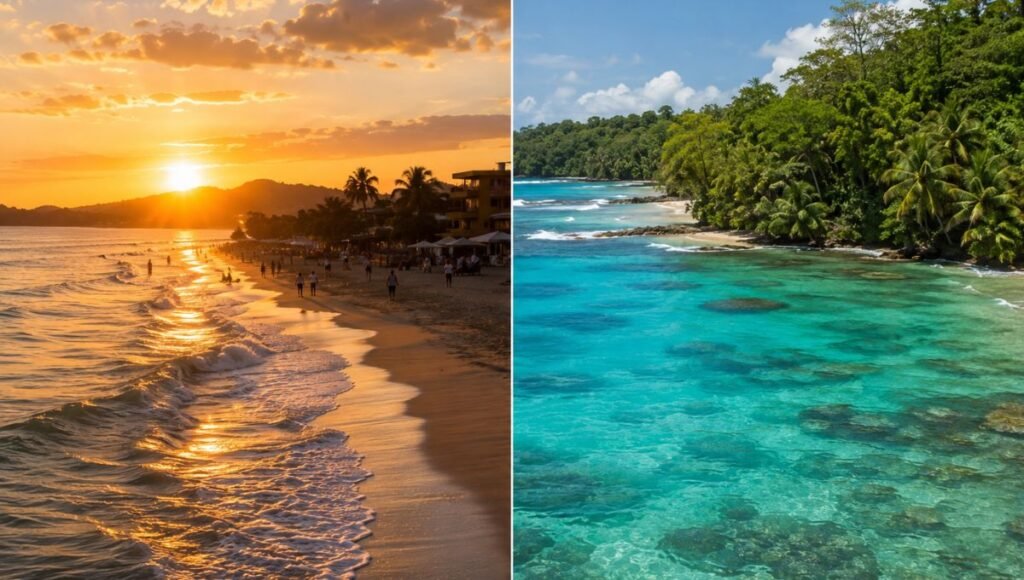
The Pacific runs from the Guanacaste Peninsula in the northwest through the Nicoya Peninsula, Central Pacific, and down to the wild Osa Peninsula in the south. This is where most of Costa Rica’s famous beach towns are — Tamarindo, Nosara, Manuel Antonio, Jacó, Samara. The Pacific has the country’s most developed beach infrastructure, the most surf schools, the most resort hotels, and the most consistent dry-season sunshine (December through April in Guanacaste especially).
The Pacific also has the most powerful surf. Open ocean swell arrives without barrier, and many Pacific beaches have rip currents that form regularly — particularly at river mouths and beach cut points. The family-friendly Pacific beaches are the exceptions rather than the rule: protected coves like Manuel Antonio’s inner park beach, Samara’s broad bay, Conchal’s reef-sheltered water. The wide-open Pacific beaches like Dominical, Santa Teresa, and much of Nosara are surf beaches that happen to be beautiful — not family swimming beaches.
Caribbean Coast — The One Most Families Miss
The Caribbean runs south from the Tortuguero canal system through Puerto Viejo de Talamanca to the Panamanian border. It’s less visited than the Pacific, harder to reach (no major airport nearby — it’s a 4-hour drive from San José or a boat through the Tortuguero canals), and genuinely different in character. Afro-Caribbean culture, reggae music, rice and beans instead of gallo pinto, coral reefs instead of surf breaks, and a water temperature and clarity that’s closer to what people imagine when they think “tropical Caribbean.”
The Caribbean’s best beaches — Punta Uva, Playa Chiquita, Manzanillo — have genuinely calm, clear water protected by offshore coral reefs. For families who want the snorkeling, wildlife, and tropical beach combination, the Caribbean coast delivers it more completely than most of the Pacific.
The catch: The Caribbean’s weather runs counter-intuitive to the Pacific. When the Pacific is in its dry season (December–April), the Caribbean often has rain. When the Pacific is rainy (September–October), the Caribbean has its best weather. Plan accordingly.
Best Costa Rica Beaches for Families — By Honesty Level
Manuel Antonio — The One You’ve Seen in Every Photo
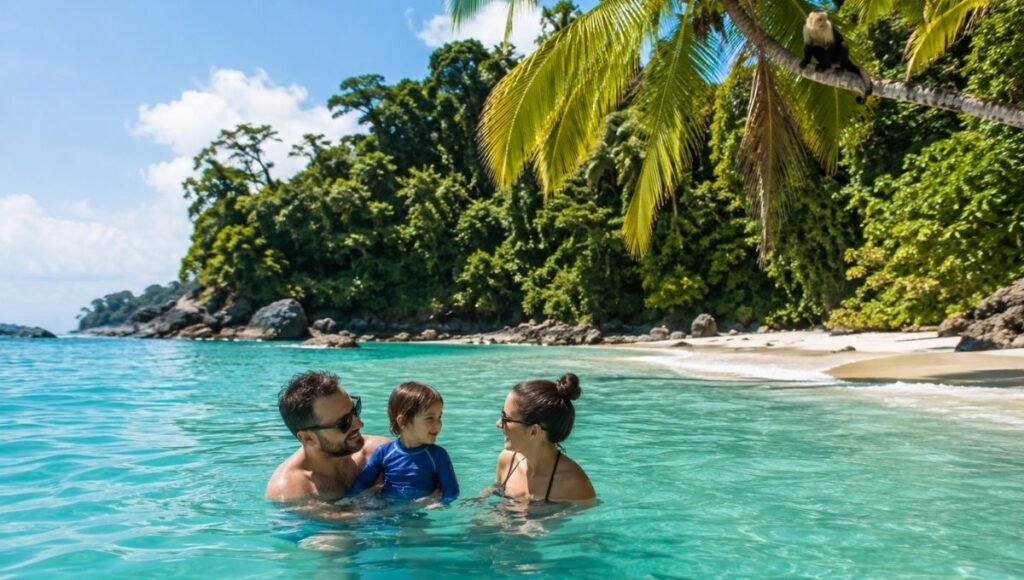
Manuel Antonio National Park is the most famous beach destination in Costa Rica, and it deserves most of the reputation. The beach inside the national park — Playa Manuel Antonio — is a protected cove with white sand, calm water, and the specific magic that comes from swimming in warm Pacific water while white-faced capuchin monkeys swing through the trees directly above your head and three-toed sloths doze in the branches overhead. No other beach on Earth offers this exact combination.
The park entrance fee runs approximately $18.08 for international adults (2026 rates), less for children. You hike in through the national park trails — about 20–30 minutes through primary rainforest where wildlife sightings are nearly guaranteed. The beach itself has the infrastructure of a national park: managed entry, maintained facilities, wildlife protection guidelines.
What nobody tells you: There are two beaches inside the park. Playa Manuel Antonio is the calm, family-safe cove. Playa Espadilla Sur, just steps away, has strong rip currents and is not safe for casual swimming. Know which one you’re aiming for before you arrive.
The crowd reality: Manuel Antonio is Costa Rica’s most visited park for a reason, and that means crowds during peak season. Arrive before 8 AM to beat the busiest tour groups. The park closes when it reaches capacity some days — this is not a metaphor.
Wildlife tip: Don’t leave food unattended for even a moment. The raccoons at Manuel Antonio are organized in a way that suggests they’ve studied human behavior academically.
Best for: Families who want the iconic Costa Rica beach-plus-wildlife experience. Children 5+ who can handle the park hike. Non-swimmers and nervous swimmers who need genuinely calm water.
Playa Samara — The Real Family Secret
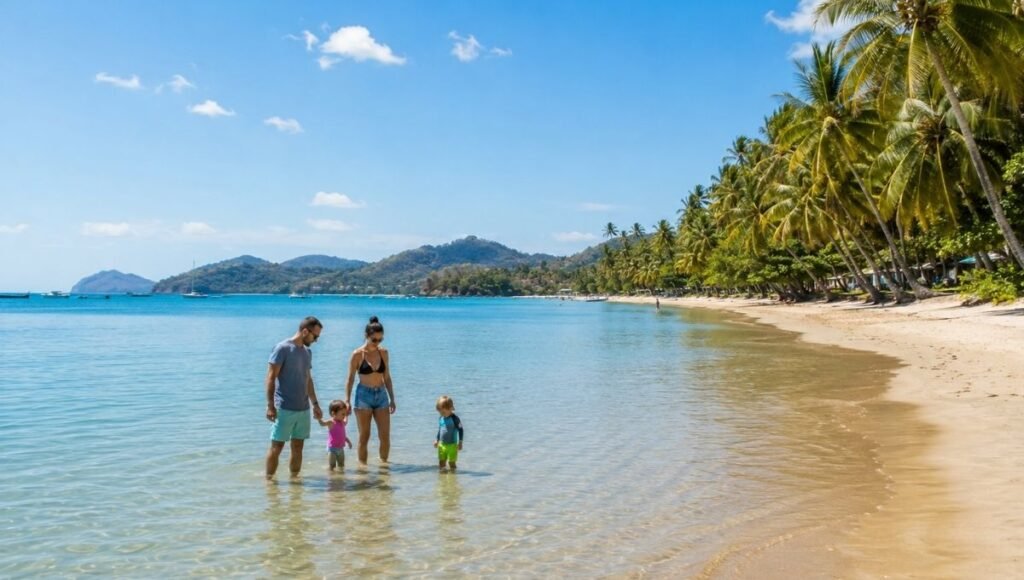
If Manuel Antonio is Costa Rica’s most famous family beach, Playa Samara is its most underrated. The beach sits in a broad, protected bay on the Nicoya Peninsula — the coral reef offshore breaks the open Pacific swell before it reaches shore, leaving the bay with gentle, rollable waves that are genuinely safe for young children year-round.
The town of Samara is walkable in a way that most Costa Rican beach towns aren’t — restaurants, surf schools, tour operators, grocery stores, and the beach all within comfortable walking or cycling distance. The pace is genuinely slower than Tamarindo. The crowd skews toward families and couples rather than the young party-traveler crowd that dominates Jacó and can make Tamarindo louder than it looks.
Five minutes south of Samara by car, Playa Carrillo is one of the most beautiful beaches on the Nicoya Peninsula — a crescent of fine sand lined with palm trees, almost no development visible, and calm water protected by the same reef system as Samara. It’s where locals go when they want to escape the Samara visitors.
Best for: Families with children of any age. The gentlest swimming water on the Pacific Coast. Anyone who wants a beach town with actual character rather than just facilities.
Don’t miss: The macaw parrot breeding center near Samara, which works with students and children. The island kayak tour to Isla Chora, which offers calm-water paddling and a private beach landing.
Playa Conchal — The Shell Beach
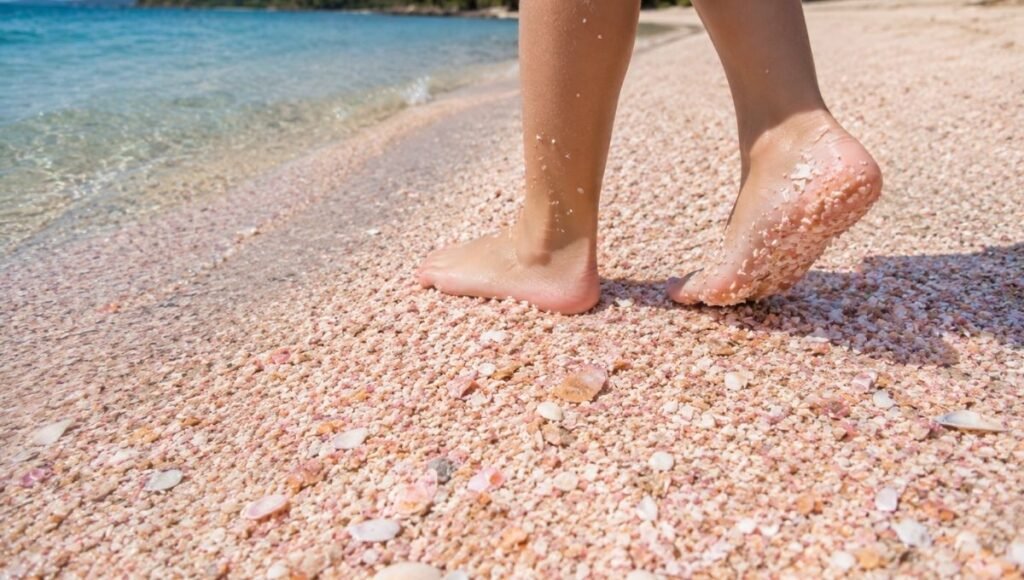
Playa Conchal has sand made entirely of crushed seashells — millions of tiny fragments that give the beach a pinkish-white sparkle and a distinctive texture underfoot that children find fascinating. The water is turquoise and genuinely calm, protected by a reef on the north end where the snorkeling is the best shore-accessible snorkeling in Guanacaste.
The access situation: Conchal is adjacent to the Westin Playa Conchal resort, but the beach is legally public (all beaches in Costa Rica are public). The resort controls the main vehicle access road, but you can walk in from the village of Brasilito (about 15 minutes on foot) without paying any resort fee. Arrive before 9 AM via the Brasilito walking route to beat both the crowds and the resort’s gate management.
Best for: Families who want excellent snorkeling and genuinely unusual sand. Older children who can walk the Brasilito access route. Resort-stayers at Westin who want the easiest luxury family beach option in Guanacaste.
Tamarindo — More Complex Than It Looks
Tamarindo is the most famous beach town in Costa Rica, and the beach itself is genuinely good — wide, golden sand, consistent surf, reliable dry-season weather. Surf schools take children as young as 6, and the central part of the bay has manageable waves.
But: The north end of the beach near the river mouth has dangerous rip currents. The town has a party-town energy at night (and some afternoons) that can feel like a poor fit for families with young children. It’s the most touristy town on the Nicoya Peninsula, which means it’s the most convenient but also the least authentically Costa Rican.
The verdict for families: Tamarindo works for families with older children (8+) who want surf lessons and don’t mind tourist-town energy. For families with young children or anyone seeking a quieter atmosphere, Samara 45 minutes south is the better call every time.
Critical safety note: Do not swim near the river mouth at the northern end of the Tamarindo bay. The rip currents there have been responsible for multiple drowning incidents. The southern and central sections are safe.
Playa Nosara — The Surf Town With a Natural Feel
Nosara has become one of Costa Rica’s most popular destinations over the past decade, and unlike most beach towns that develop toward resort commercialization, Nosara has maintained genuine natural character — strict building regulations keep development behind the tree line, and the beaches feel wilder than the town’s popularity would suggest.
The waves at Playa Guiones (Nosara’s main beach) are excellent for intermediate and advanced surfers — which also means they’re not ideal for young children swimming. For families with surf-focused older children or teens, Nosara works well. For families with young children who need calm water, stay elsewhere.
What makes Nosara interesting: The Nosara Yoga Institute, the quality of the restaurants, the wildlife (scarlet macaws are visible from the beach), and the genuine community of long-term expat residents who’ve built something more interesting than a tourist trap.
The Caribbean — Punta Uva and Puerto Viejo
For families who make it to the Caribbean coast — and it requires commitment, as it’s a 4-hour drive from San José with no major nearby airport — the reward is a completely different Costa Rica.
Punta Uva is consistently cited as one of the most beautiful beaches in the country: white sand, turquoise water, jungle coming to the shore, almost no development visible. The bay is calm, the snorkeling is excellent over the offshore reef, and the crowd density is a fraction of Manuel Antonio or Tamarindo. If you want the quintessential tropical beach image without the managed-park experience, Punta Uva delivers it.
Puerto Viejo de Talamanca, the nearest town, has Jaguar Rescue Center (outstanding wildlife rehabilitation center open to visitors), chocolate farm tours, and Afro-Caribbean culture that’s completely distinct from the Pacific beach towns.
Safety note: Puerto Viejo has higher petty crime rates than the Pacific coast towns. The beaches themselves are safe; the town requires the same street awareness you’d use in any Central American beach town. Keep phones in pockets, don’t flash cameras, use hotel safes.
The Beaches to Approach with Caution (Especially with Kids)
Jacó — Party Town First, Family Beach Second
Jacó gets recommended as a family-friendly beach because it’s the closest major beach to San José (1 hour). It is convenient. It is also Costa Rica’s most notorious party town, with a late-night scene that can make the daytime feel surprisingly functional by comparison.
The beach at Jacó has rip currents and is not the cleanest Pacific beach. It does have lifeguards — which is one of only two Costa Rican beaches that can make that claim — and there’s a full range of family activities (zip lines, ATV tours, surf lessons, crocodile tours). For families who need the closest beach to San José and want a full day rather than an overnight, it works. For a week-long beach vacation base, almost every other option on this list is better.
Playa Santa Teresa — Beautiful, Not for Young Swimmers
Santa Teresa is probably Costa Rica’s most Instagrammed beach — palm trees, perfect waves, golden light, and the bohemian surf-town energy that attracts photographers and yoga retreaters. The waves are also powerful and unpredictable, with rip currents that make it genuinely dangerous for casual swimmers.
For families with teenage surfers, Santa Teresa is excellent. For families with children who want to swim rather than surf, it’s the wrong beach.
Playa Dominical — Surf Beach, Not Swimming Beach
Dominical has one of the only lifeguard services in Costa Rica, but it also has one of the most powerful shore breaks on the Pacific coast. This is a surf beach that happens to have some beautiful scenery. It is not appropriate for young children or non-swimmers.
Costa Rica Beach Safety — What Every Family Needs to Know
The Lifeguard Reality
Almost no beach in Costa Rica has lifeguards. This is the single most important safety fact for families to understand before arriving. Jacó and Playa Dominical are the main exceptions. Every other beach — including the famous ones, including Manuel Antonio — is unpatrolled.
This changes the supervision equation completely. The same ocean that looks approachable and beautiful can have rip currents running at any time. Swim where you can see the bottom, where the water is visibly calm, and where you can stand. If conditions look rougher than expected, trust that instinct.
Rip Currents on the Pacific
Pacific Coast rip currents are real and powerful. The United States Lifesaving Association’s rip current response applies: swim parallel to shore to exit the current rather than fighting directly toward the beach. Teach this to children before they enter Pacific water.
The beaches on this list that are genuinely safe for young swimmers — Manuel Antonio’s inner cove, Samara, Conchal’s protected area, Punta Uva on the Caribbean — are safe precisely because their geography prevents or significantly reduces rip current formation. That geography matters: a change from protected cove to open beach in the same bay can mean dramatically different conditions.
Crocodiles — The One Nobody Warns You About
This isn’t a joke: American crocodiles inhabit Costa Rica’s river mouths, estuaries, and some coastal lagoons. The Tárcoles River crocodiles near Jacó are famous enough to have their own tourist viewpoint. Crocodile encounters in the beach zone are rare but documented. Never swim in river mouths or estuaries, particularly in the Central Pacific region.
When renting a car and exploring beaches independently, check whether a beach is near a significant river mouth before allowing children to wade in the wave zone near the fresh water interface.
Sun and Heat
Costa Rica sits 10 degrees north of the equator — the UV intensity is higher than any US beach destination on this list. UV index regularly reaches 12–13 (Extreme) during midday hours. Apply SPF 50+ mineral sunscreen 30 minutes before exposure and reapply every 90 minutes. Morning beach sessions (7–10 AM) and late afternoon (4–6 PM) avoid the highest UV hours.
Reef-safe sunscreen is required in Costa Rica’s national parks (including Manuel Antonio) and strongly recommended on any beach near a reef. Oxybenzone and octinoxate-based sunscreens are increasingly restricted. Bring zinc oxide or titanium dioxide sunscreen from home — availability in Costa Rica is improving but availability and cost are inconsistent.
Best Time to Visit Costa Rica Beaches
Guanacaste and Nicoya Peninsula (Tamarindo, Samara, Conchal)
Best: December through April — the dry season, essentially guaranteed sunshine, calm morning seas. This is peak season: maximum prices, maximum crowds, maximum convenience.
Green season (May–November): Lush, fewer crowds, 30–40% lower accommodation prices, afternoon rains that typically clear by morning. For families flexible on weather who want value, the green season works well from June through August before the heavy rains of September and October.
Central Pacific (Manuel Antonio, Jacó)
Best: December through April — same dry season logic as Guanacaste. Manuel Antonio specifically gets heavy rain during the wettest months (September–October) — the rainforest setting that makes it spectacular is also the reason it rains more intensely here than in the northern Pacific.
Green season: Still viable June through August with afternoon rain expected. The wildlife doesn’t care about rain — sloths and monkeys are present year-round regardless of season.
Caribbean Coast (Puerto Viejo, Punta Uva)
Best: September–October and February–April — the Caribbean runs counter to the Pacific. When the Pacific is driest, the Caribbean often has rain. September and October, which are the rainiest months on the Pacific, are prime time on the Caribbean.
If You Only Have 3 Days on Costa Rica Beaches
Day 1: Manuel Antonio. Stay at a hotel in the park area. Enter the park at 7 AM before the first tour buses arrive. Wildlife spotting on the trail in (sloths are visible by 8 AM if you walk slowly and look up). Swim in the calm inner cove. Leave by noon before the heat peaks and the park fills.
Day 2: Drive to Samara. Three hours from Manuel Antonio, but worth every minute. Swim in the afternoon at the main Samara beach. Walk to Playa Carrillo in the evening for sunset.
Day 3: Samara morning activities. Kayak tour to Isla Chora, or snorkel tour if the conditions are right. Back to San José in the afternoon.
That 3-day circuit covers the two best family beach experiences in Costa Rica with manageable driving distances.
Frequently Asked Questions
What is the best beach in Costa Rica for families? Manuel Antonio’s inner cove beach (inside Manuel Antonio National Park) is the best combination of calm swimming, wildlife viewing, and managed infrastructure for families. Playa Samara on the Nicoya Peninsula is the best family beach for families who want a full week at the beach — calmer water than Manuel Antonio, a more manageable crowd level, and a genuine beach town character.
Are Costa Rica beaches safe for kids? The protected-cove beaches — Manuel Antonio’s inner park beach, Playa Samara, Playa Conchal’s southern section, Caribbean beaches like Punta Uva — are genuinely safe for children with normal ocean supervision. Open Pacific beaches (Santa Teresa, Dominical, most of Nosara) have significant surf and rip currents that make them inappropriate for young or non-confident swimmers. Almost no beach in Costa Rica has lifeguards.
What is the difference between Costa Rica’s Pacific and Caribbean coasts? The Pacific has more famous beach towns, more surf, more dry-season sunshine (December–April), and better resort infrastructure. The Caribbean has calmer water protected by coral reefs, Afro-Caribbean culture, better snorkeling, and counter-intuitive weather (best during September–October when the Pacific is wet). Most first-time visitors see the Pacific; returning visitors often prefer the Caribbean.
When is the best time to visit Costa Rica beaches? For the Pacific Coast (Guanacaste, Nicoya, Manuel Antonio): December through April is the dry season with guaranteed sunshine. For the Caribbean: September–October and February–April offer the best conditions. For families on a budget, June–August is the green season with 30–40% lower prices and manageable weather.
Do Costa Rica beaches have lifeguards? Almost none. Jacó and Playa Dominical are the main exceptions. Every other major beach in Costa Rica — including Manuel Antonio — is unpatrolled. This makes beach and water safety entirely the responsibility of the visiting family. Choose calm, protected beaches for young children, understand rip current response before entering Pacific water, and do not swim at unpatrolled beaches in rough conditions.
Is it safe to swim at Costa Rica beaches? At the right beaches, yes. Playa Samara, Manuel Antonio’s inner cove, Playa Conchal’s protected section, and Caribbean beaches like Punta Uva and Playa Chiquita are genuinely safe for family swimming. Open Pacific beaches with powerful surf (Dominical, Santa Teresa, Playa Grande, most of Nosara) are appropriate for experienced swimmers and surfers only. Never swim near river mouths on the Pacific coast.
The Bottom Line
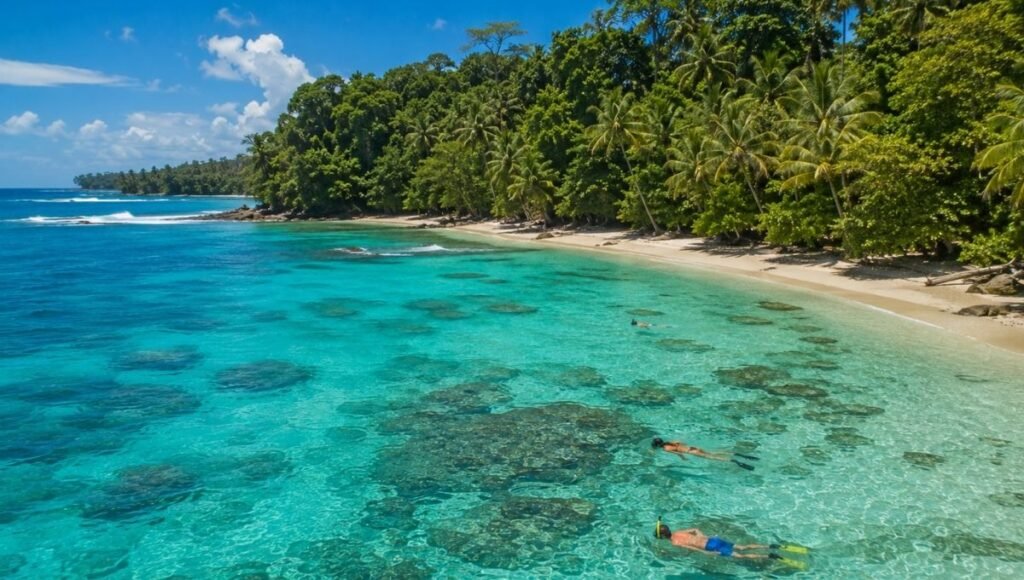
Costa Rica beaches are as extraordinary as the photos suggest — once you’re at the right one for your family’s needs. The wildlife-meets-paradise promise that every travel article makes is real: you genuinely can swim in warm Pacific water while a capuchin monkey swings through the trees above you, and it genuinely feels as magical as it sounds.
The planning work — choosing Pacific over Caribbean (or both), understanding the lifeguard reality, picking a protected cove over an open surf beach for young children, knowing which end of Tamarindo to avoid — is what makes the difference between that experience and a week of anxious ocean watching.
Go to Samara. Go to Manuel Antonio. If you can make it to Punta Uva on the Caribbean, go there too. Bring reef-safe sunscreen. Teach rip current response before you get in the water.
Pura vida.
Planning your beach trip? Read next:
- Turks and Caicos Snorkeling: The Honest Family Guide
- Things to Do in Turks and Caicos: The Honest Family Activity Guide
- Snorkeling for Beginners: Everything You Need Before Getting in the Water
- What to Bring to the Beach: Complete Beach Gear Guide
- Jellyfish Sting Treatment & Beach Safety Guide
References
- Costa Rica National System of Conservation Areas (SINAC) — Manuel Antonio National Park: sinac.go.cr
- United States Lifesaving Association — Rip Current Safety Guidelines: usla.org
- CDC — Traveling to Costa Rica: Health and Safety Guidelines: cdc.gov/travel
- Costa Rica Tourism Board (ICT) — Official Beach Safety Information: visitcostarica.com
- NOAA — UV Index Tropical Regions: noaa.gov