
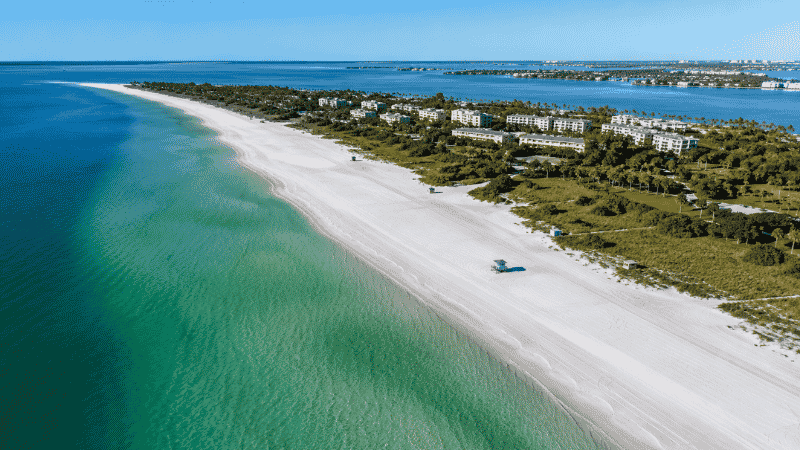
You already know about the sand. Everyone knows about the sand — 99% pure quartz, cool to the touch even at noon in August, softer than anything you’ve ever walked barefoot on. Siesta Key Beach has been ranked the #1 beach in the United States and #4 in the world, and for once, those rankings aren’t wrong.
But here’s what most Siesta Key guides won’t tell you: if all you do is park a towel on the sand and stare at the Gulf, you’re leaving the best parts of this island untouched.
Siesta Key is a barrier island about 8 miles long, and it has layers. There’s the main beach scene at Siesta Beach — the volleyball courts, the pavilion, the drum circle on Sunday nights. Then there’s the quieter south end at Crescent Beach and Turtle Beach, where the crowds thin out and the wildlife comes in. Then there’s Siesta Key Village, which is genuinely one of the better beach town main streets in Florida. And then there’s the water itself — kayaking, paddleboarding, fishing charters, parasailing, snorkeling at Point of Rocks — all within a few miles of each other.
This guide covers all of it, with the honest logistics you actually need: what’s worth your time, what’s overrated, and how to build a Siesta Key day that goes well beyond a sunburn and a margarita.
Key Takeaways
- Siesta Key Beach is ranked #1 in the US and #4 in the world by Tripadvisor Travelers’ Choice 2025 — its 99% quartz sand stays cool even at 100°F
- The Sunday evening drum circle starts one hour before sunset, is completely free, and is one of the most genuinely Florida experiences you’ll have anywhere in the state
- Point of Rocks at the south end of Crescent Beach is the best snorkeling spot on Siesta Key — no boat required, just walk in from the shore
- The free Siesta Key Breeze Trolley runs the length of the island — park once and use it all day to avoid moving your car
- Turtle Beach on the south end is the least crowded beach on the island, good for shelling, kayak launches, and watching wildlife
Siesta Key Beach — The Main Event, Done Right
Let’s start where everyone starts, because Siesta Beach deserves more than a quick mention. The beach runs for about 8 miles of coastline, and it’s genuinely as good as advertised. The sand is quartz, which means two things that matter practically: it doesn’t get hot enough to burn your feet, and it doesn’t hold moisture the way regular sand does — it shakes off your towel cleanly and stays surprisingly clean.
The main public beach area has real facilities. Lifeguards are on duty during peak hours (a non-trivial thing when you’re swimming with kids). There are restrooms, outdoor showers, a playground, beach volleyball courts, and a concession stand. It’s well-run and well-maintained in a way that some of Florida’s most famous beaches aren’t.
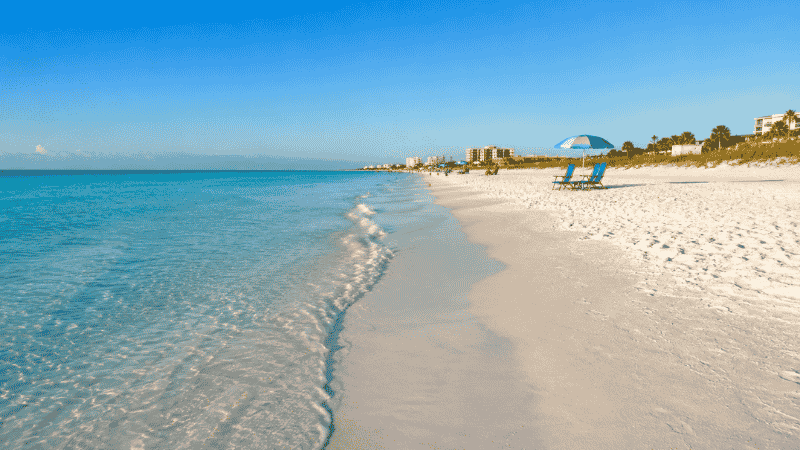
The part most visitors miss: The beach is wide — over 200 feet at its widest — and most people cluster near the main pavilion and parking area. Walk 15 minutes north or south from the center and the crowd drops dramatically while the sand and water stay exactly the same. If you want space, just walk.
Parking reality: The main public lot is free, which is genuinely unusual for a top-ranked US beach. But “free” means it fills by 8:30 AM on summer weekends. Arrive before 8 AM or use the Siesta Key Breeze Trolley (more on that below) and the parking situation stops being a problem.
The Siesta Key Drum Circle — Don’t Miss This
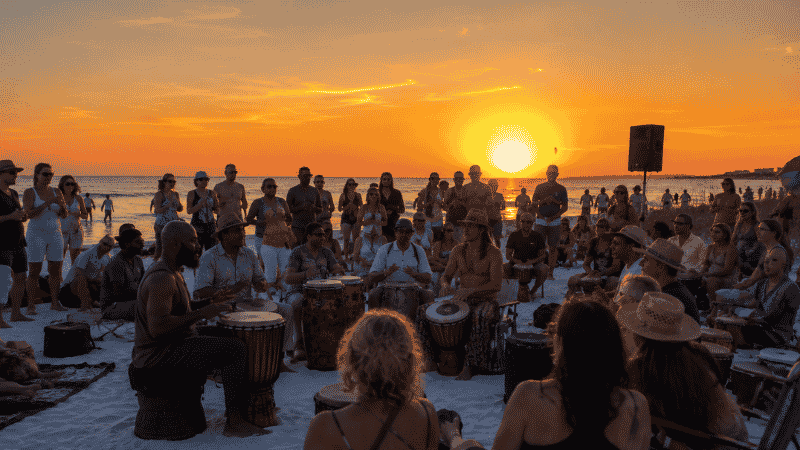
Every Sunday evening, approximately one hour before sunset, something unusual happens on the north end of Siesta Beach. A group of drummers sets up and starts playing. Then more people show up with their own drums. Then dancers arrive. Then vendors set up around the edges. Then somehow, without any tickets or announcements, several hundred people are gathered on the sand watching the sun set while a spontaneous percussion concert takes over the beach.
This is the Siesta Key Drum Circle, and it has been happening every Sunday for decades. It is entirely free, entirely informal, and entirely unlike anything else you’ll find at a Florida beach.
Practical details: It starts roughly an hour before sunset and typically runs until dark or a bit after. Check the sunset time for the day you’re visiting — in summer that’s around 8:15 PM, in fall it moves earlier. Arrive 30 minutes before sunset to get a good spot. Bring a blanket to sit on, cash for the vendors if you want food or drinks, and nothing else. This is one of those experiences where the less you plan, the better it feels.
Things to Do in Siesta Key on the Water
The Gulf of Mexico is right there, and Siesta Key has excellent access to a range of water activities. Here’s what’s actually worth doing versus what’s just filler.
Snorkeling at Point of Rocks — The Best Free Activity on the Island
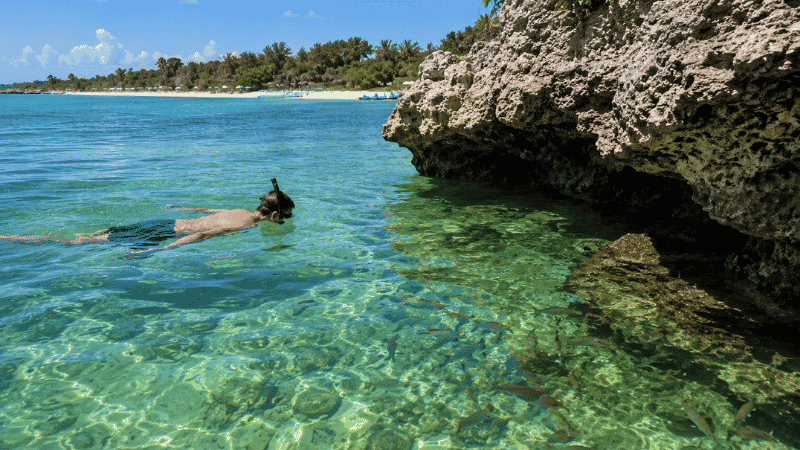
Point of Rocks sits at the south end of Crescent Beach, and it’s the most genuinely underrated thing to do in Siesta Key. It’s a natural limestone rock formation that juts into the Gulf, and it creates a protected habitat for fish, sea life, and occasional sea turtles. You don’t need a boat — you walk in from the beach with a mask and snorkel and the reef is right there.
The visibility on a calm day is excellent. You’ll see parrotfish, angelfish, schools of smaller reef fish, and if you’re lucky, a sea turtle working the rocks. It’s not the Florida Keys, but for a shore-accessible snorkeling spot, it punches well above its weight.
Best conditions: Calm mornings when the Gulf isn’t stirred up. After an afternoon of wind, visibility drops. Get there early.
What to bring: A basic mask and snorkel is all you need — you can rent gear from Ride & Paddle near Turtle Beach if you don’t have your own. Water shoes are a good idea for the rocky entry.
Kayaking and Paddleboarding
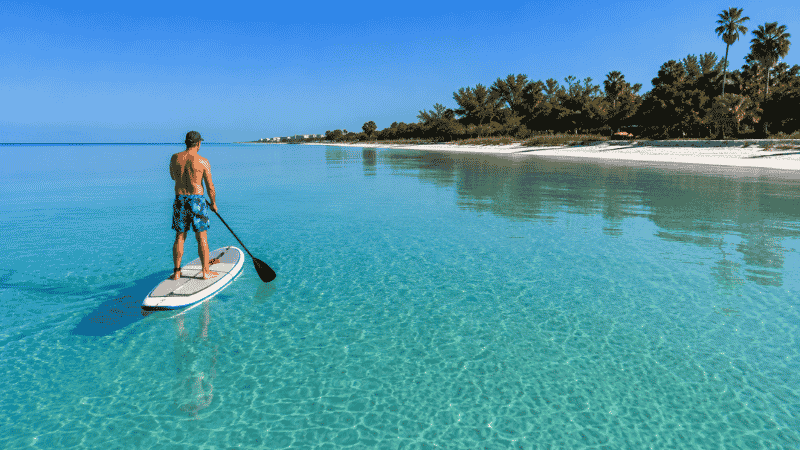
The calm Gulf water around Siesta Key is ideal for both kayaking and stand-up paddleboarding. The water is shallow close to shore, there’s usually minimal boat traffic near the beach itself, and the conditions are forgiving for beginners.
Several outfitters on the island rent equipment by the hour. CB’s Saltwater Outfitters near the main beach is the most established option — they rent kayaks, paddleboards, and also run fishing charters and parasailing if you want to go that direction.
Honest assessment: If you’ve never paddleboarded before, a calm Gulf morning is about as ideal a learning environment as you’ll find. The water temperature is forgiving, the beach is right there, and there are no currents to fight. Plan your rental for the morning before the afternoon wind picks up.
Fishing Charters from Siesta Key
Siesta Key sits at the entrance to Sarasota Bay, and the fishing here is legitimate. The most commonly targeted species on inshore charters are snook, redfish, and spotted seatrout — all of them fun to catch and frequently cooperative. Offshore charters go after grouper and amberjack in the Gulf.
Half-day charters typically run 4 hours and are the right call for first-timers or anyone with kids. Full-day trips make sense if fishing is your primary reason for being here. Most outfitters on the island can book you through CB’s or similar operators.
Parasailing
If you want the aerial view of the Gulf Coast — and it is a spectacular view — parasailing off Siesta Key gives you Siesta Beach, the Gulf, and the Sarasota skyline from a few hundred feet up. It runs about 10–15 minutes in the air after the boat gets out to position. Weight limits apply (typically 200–400 lbs per group depending on the operator). It’s a reasonable bucket list item, particularly for first-time Florida visitors.
Crescent Beach — The Quieter Alternative Right Next Door
Crescent Beach is the southern stretch of Siesta Key’s Gulf-facing coastline, just below the main Siesta Beach area. The sand is the same (same quartz composition, same feel underfoot), the water is the same Gulf, and the crowds are significantly smaller.
What Crescent Beach lacks: the pavilion infrastructure, the volleyball courts, the drum circle proximity. What it has: space, quiet, and Point of Rocks at its southern tip for snorkeling. If you want a beach day that feels less like a festival and more like an actual escape, Crescent Beach is the right call.
Getting there: Drive south on Midnight Pass Road from the main Siesta Beach area. Beach access points are marked along the road. The Siesta Key Breeze Trolley also runs this route.
Turtle Beach — Siesta Key’s Best-Kept Secret
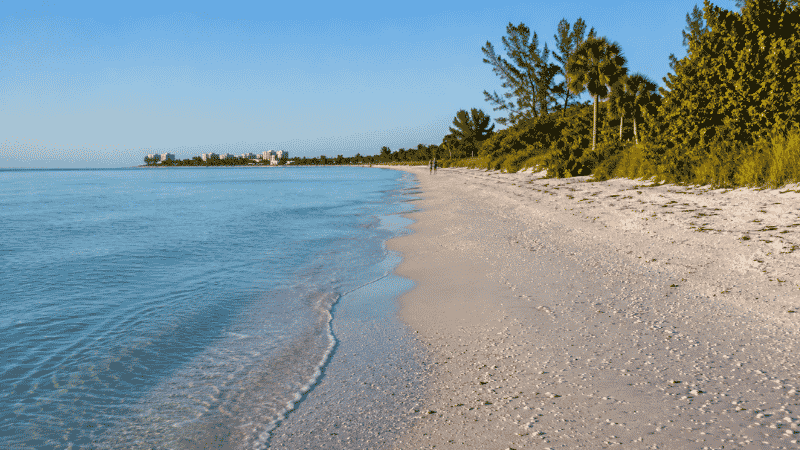
Keep going south past Crescent Beach and you hit Turtle Beach, at the very southern end of Siesta Key. This is a different experience entirely. The sand here is slightly coarser than the quartz beaches to the north (it’s a mix of quartz and shell), the beach is narrower, and there are almost no facilities — one small parking lot, a boat ramp, and a playground.
What Turtle Beach has that the main beach doesn’t: genuine quiet, regular wildlife sightings (the name is not random — loggerhead sea turtles nest here seasonally), excellent shelling conditions, and a launch point for kayaking into the back bay areas.
When to go: Weekday mornings. This beach never gets crowded the way Siesta Beach does, but it’s at its most peaceful early in the day.
What to bring: Everything you need, because there are no concessions. Sunscreen, water, snacks, your own shade setup. The beach is exposed and there’s minimal natural shade.
Siesta Key Village — The Beach Town Done Right
Siesta Key Village is a small cluster of restaurants, bars, boutique shops, and galleries about a mile from the main beach. It’s walkable, genuinely charming, and unlike a lot of Florida beach towns, it doesn’t feel like a souvenir trap. The architecture is casual, the vibe is laid-back island rather than resort commercial, and you can spend a few hours here without feeling like you’re being processed through a tourist machine.
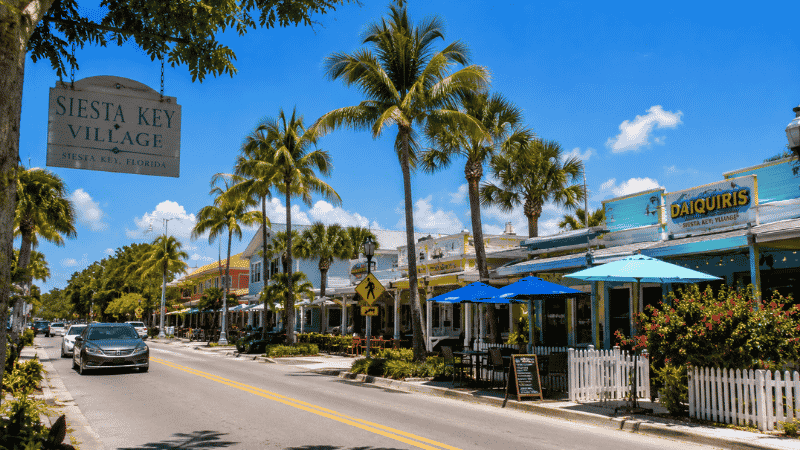
Sunday Farmers Market: Every Sunday morning from 8 AM to noon, the Village hosts an outdoor farmers market. Local produce, prepared food, crafts, and the general pleasant chaos of a good weekend market. If you’re in Siesta Key on a Sunday, the sequence of farmers market in the morning and drum circle in the evening is a pretty ideal day.
Siesta Key Oyster Bar: This is the most reliably recommended spot in the Village for good reason. Cold drinks, live music most evenings, oysters, and a crowd that skews toward people who’ve been on the beach all day and are now feeling appropriately content about it. It’s not fancy and it doesn’t need to be.
Dining note: The Village has solid options across a range of budgets. For a beach town, the quality-to-price ratio is reasonable. Expect longer waits on weekend evenings in summer — plan accordingly or eat early.
Getting Around Siesta Key — Use the Free Trolley
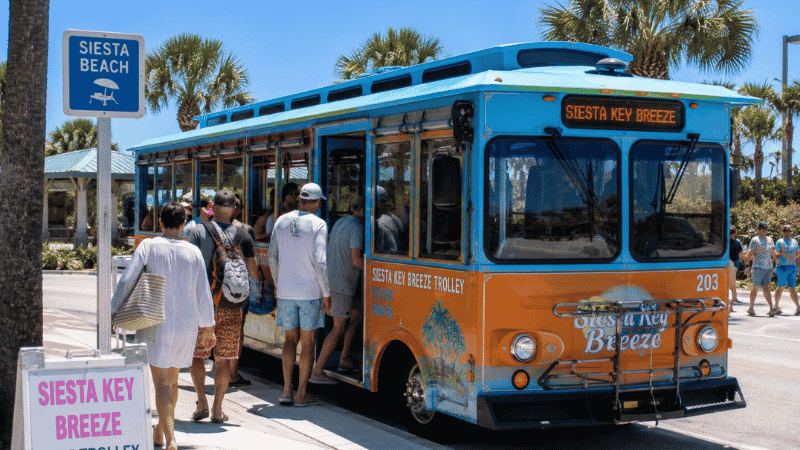
The Siesta Key Breeze Trolley runs the length of the island and connects the Village, the main beach, Crescent Beach, and Turtle Beach. It’s free. It runs frequently during peak season. It’s the single best way to avoid moving your car once you’ve parked.
The practical upside: park once in the morning (ideally before 8:30 AM at the main lot), use the trolley to move between the beach, the Village, and the south end throughout the day. You never deal with the parking situation again until you leave.
Hours: The trolley runs seasonally — check the current schedule at scgov.net before your visit. During peak summer season it typically runs from late morning through evening.
Siesta Key for Families — What Actually Works with Kids
Siesta Key is one of the better family beach destinations in Florida, largely because the water is genuinely safe. The Gulf here is shallow with a gradual slope, calm most days, and warm from May through October. Kids can wade out a significant distance before it gets deep.
The playground at Siesta Beach Pavilion is solid — shaded, in good condition, and positioned close enough to the beach that parents can watch both the kids on the playground and any other kids in the water without needing to be in two places.
Snorkeling at Point of Rocks works well for kids 8 and up who are comfortable in the water. The rocks are interesting, the fish are visible, and it’s a contained enough area that you can keep track of younger snorkelers.
The drum circle on Sunday evenings is genuinely good for families. It’s outside, it’s free, it’s loud in a fun way, and kids who want to participate are usually welcomed into the drumming area. Bring a blanket and plan to stay through sunset.
One-Day Siesta Key Itinerary — How to Fit It All In
If you only have one day, here’s the sequence that works:
7:30 AM: Arrive at Siesta Beach main lot before it fills. Set up your base.
8 AM – 12 PM: Beach morning. Swim, walk north along the shoreline, let the morning be unscheduled.
12 PM: Trolley to Siesta Key Village for lunch. Eat somewhere with outdoor seating.
2 PM: Drive or trolley to Point of Rocks for snorkeling. One hour in the water.
4 PM: Head to Turtle Beach for the quiet end-of-afternoon experience. Walk, shell collect, decompress.
6 PM: Trolley back to the Village. Shower at the beach facilities, change, get dinner.
Sunset – 1 hour after: Drum circle on the north end of Siesta Beach. This is how the day ends.
Frequently Asked Questions
What is Siesta Key most famous for? The beach. Specifically, Siesta Key Beach’s 99% pure quartz sand, which is consistently ranked the best beach in the United States and among the top beaches in the world. The sand is uniquely soft, bright white, and stays cool underfoot even in Florida summer heat.
Is the Siesta Key drum circle every week? Yes — the Siesta Key Drum Circle happens every Sunday evening, starting approximately one hour before sunset. It has been a continuous tradition for decades. It’s free, open to everyone, and one of the most distinctive experiences on the Gulf Coast.
What is the best snorkeling spot on Siesta Key? Point of Rocks, at the southern end of Crescent Beach. It’s a shore-accessible limestone rock formation with good fish diversity and occasional sea turtle sightings. Best conditions are calm mornings before afternoon wind stirs up the water.
Is Siesta Key good for families with young children? Yes — the shallow, calm Gulf water with a gradual slope makes it one of the safer beach swimming environments in Florida. The playground at Siesta Beach Pavilion is well-maintained, and lifeguards are on duty during peak hours. The drum circle is also family-friendly.
How do I get around Siesta Key without moving my car? The Siesta Key Breeze Trolley is free and connects the main beach, the Village, Crescent Beach, and Turtle Beach. Park once in the morning and use the trolley for the rest of the day.
What is Crescent Beach Siesta Key? Crescent Beach is the southern stretch of Siesta Key’s Gulf-facing coastline, below the main Siesta Beach area. It has the same quartz sand and Gulf water with significantly smaller crowds. Point of Rocks snorkeling is at its southern tip.
Is there free parking at Siesta Key Beach? Yes — the main public lot at Siesta Beach is free, which is unusual for a top-ranked US beach. The trade-off is that it fills by 8:30 AM on summer weekends. Arrive before 8 AM or use the free trolley from other parking areas on the island.
The Bottom Line
Siesta Key has the best beach sand in the country, and that’s worth experiencing. But the island has more depth than the sand alone — the drum circle, Point of Rocks snorkeling, the kayaking, the Village, the quiet south end at Turtle Beach. A well-planned day here moves between these layers rather than staying planted in one spot from arrival to departure.
The sand is the reason to come. Everything else is the reason to stay longer than you planned.
Planning your full Florida Gulf Coast trip? Read next:
- Best Beaches in Florida: The Realist’s Guide to Choosing the Right Shore
- Best Time to Visit Destin Florida: The Honest Month-by-Month Guide
- Clearwater Beach Parking Guide: Tips, Costs & Free Options
References
- Tripadvisor Travelers’ Choice Best Beaches 2025 — Siesta Key Beach Ranking
- Visit Sarasota County Official Tourism Bureau: visitsarasota.com
- Sarasota County Area Transit (SCAT) — Siesta Key Breeze Trolley Schedule: scgov.net
- Florida Fish and Wildlife Conservation Commission — Sea Turtle Nesting Information