
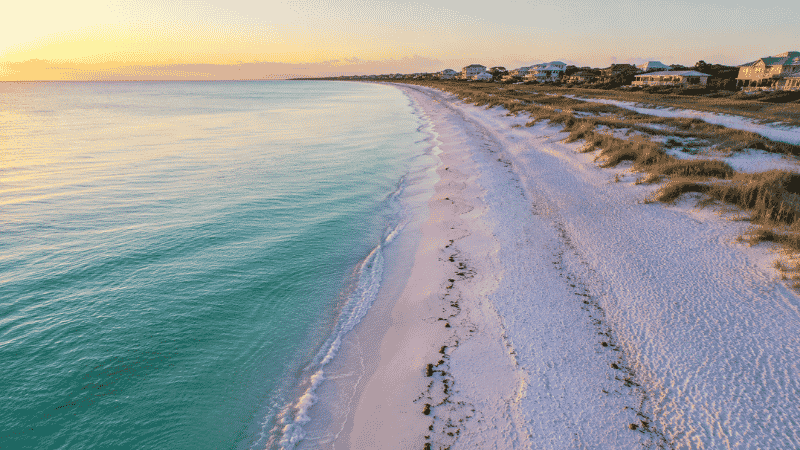
You’ve opened seventeen browser tabs. Siesta Key, Clearwater, Destin, Miami Beach — they all look stunning in the photos. The water is impossibly blue, the sand is impossibly white, and everyone in the pictures is impossibly relaxed.
Then you try to actually plan the trip, and suddenly you’re buried in conflicting advice, resort fee surprises, and parking lot horror stories from Reddit threads dated 2019.
Here’s the thing: Florida has over 1,350 miles of coastline and more than 800 beaches. That’s not a blessing — that’s a decision paralysis trap. Most Florida beach guides will give you a pretty list and call it a day. This one won’t.
I’m Marco Rivera, and I’ve spent years driving up and down Florida’s coastline — both coasts — not on press trips, but on real trips where I’ve circled parking lots, paid $30 resort fees for a beach towel I didn’t need, and discovered that the “hidden gem” I read about had 400 other people who read the same article.
This guide cuts through the noise. By the end, you’ll know exactly which Florida beach fits your travel style, when to go, what to bring, and how to avoid the mistakes that turn a dream trip into a sweaty, sunburned disaster.
Key Takeaways
- Florida has two completely different coastlines — Gulf and Atlantic — and choosing the wrong one for your goals will ruin your trip
- Siesta Key Beach has been ranked the #1 beach in the US multiple times; its sand is 99% pure quartz and stays cool even at 100°F
- Peak summer weekends at Clearwater Beach mean parking lots fill by 9 AM — arriving after 10 AM means circling for 45+ minutes
- The best window for fewer crowds and lower prices is mid-September through mid-November
- Bringing a portable beach shade shelter, reef-safe sunscreen, and a proper insulated cooler are the three gear decisions that separate a great beach day from a miserable one
First, Understand Florida’s Two Completely Different Coastlines
This is the step that most Florida beach guides skip entirely — and it’s the most important one.
Florida is a peninsula. That means it has two coasts, and they are not the same beach twice.
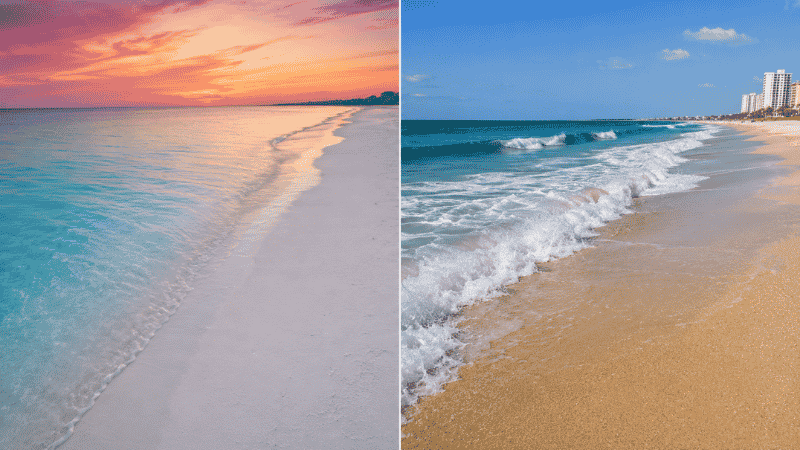
Gulf Coast: Calm Water, Powder Sand, and the Best Sunsets of Your Life
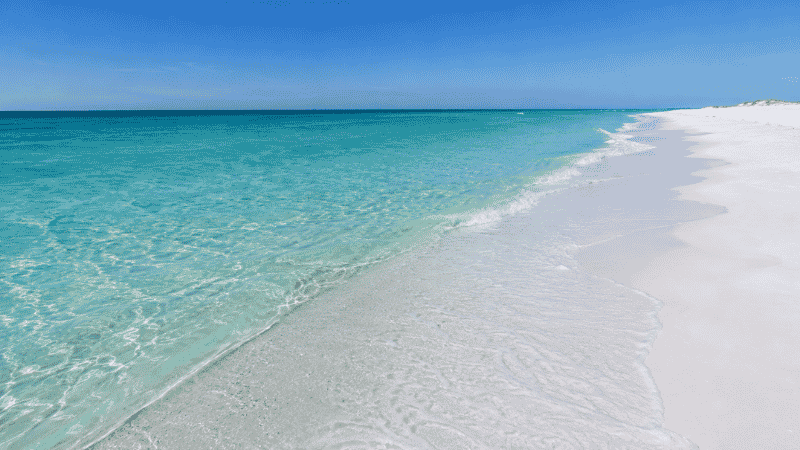
The Gulf of Mexico sits on Florida’s west side, and it behaves like a giant bathtub compared to the Atlantic. The water is warmer, calmer, and that iconic turquoise-to-emerald color you see in photos. The sand on the Gulf Coast — particularly from Sarasota up through the Panhandle — is made of quartz crystals washed down from the Appalachian Mountains over thousands of years. It’s powdery soft, bright white, and stays cool underfoot even on the hottest days.
Gulf Coast beaches face west, which means you get sunsets directly over the water. If a sunset on the beach is on your bucket list, you want the Gulf Coast.
The trade-off: the Gulf is generally shallower, which means smaller waves. If you’re a surfer or you love big ocean energy, the Gulf might feel too tame.
Best for: Families, swimmers, sunset chasers, first-time Florida beach visitors, anyone who wants that “postcard” Florida beach experience.
Atlantic Coast: Bigger Waves, Surf Culture, and a Completely Different Vibe
Florida’s east coast faces the Atlantic Ocean, and the difference is immediately obvious. The waves are bigger, the water runs slightly cooler, and the sand tends toward golden-beige rather than bright white. The Atlantic side has a more active, energetic atmosphere — think surf culture, beach volleyball, and people actually in the water rather than floating peacefully on inflatables.
Miami Beach is on the Atlantic side, and that tells you a lot about the general energy: urban, social, built-for-people-watching. Cocoa Beach is the surf capital. St. Augustine Beach has a historic-town-meets-coast vibe that’s genuinely unlike anywhere else in the state.
Atlantic beaches face east, so you get sunrises over the water — equally spectacular, but at 6 AM instead of 7:30 PM.
Best for: Surfers, people who want beach + city access, early risers, travelers who want Florida beach + cultural experience combined.
Best Beaches on Florida’s Gulf Coast
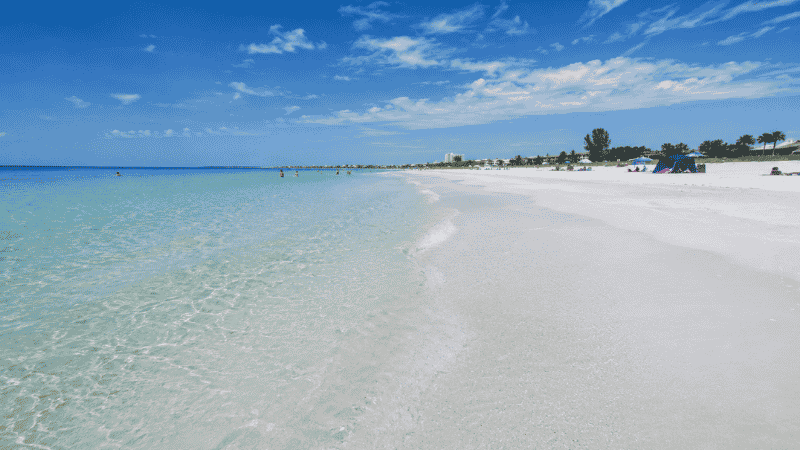
Siesta Key Beach — The One That Actually Lives Up to the Hype
Siesta Key Beach near Sarasota is consistently ranked the #1 beach in the United States by Tripadvisor, and for once, the ranking isn’t wrong. The sand here is composed of 99% pure quartz crystals, which means two things: it’s incredibly soft underfoot, and it stays cool even on days when the air temperature hits 100°F. You can walk barefoot across this sand at noon in August without flinching — that alone makes it worth the trip.
The water is shallow and calm, with a gradual slope that makes it genuinely safe for kids and weaker swimmers. The beach is over 200 feet wide at its widest point, which means even on a crowded Saturday, you can find a patch of sand that feels like your own.
The parking reality check: The main public lot is free — one of the rare top-tier Florida beaches where parking doesn’t cost you an arm and a leg. But “free” means it fills up fast. On summer weekends, that lot is gone by 8:30 AM. If you arrive at 10 AM, you’re circling side streets or paying for a shuttle. Aim to arrive before 8 AM in peak season, or visit on a weekday.
Best time to visit: May, or September through October. Crowds drop significantly after Labor Day, but the water stays warm well into October.
Don’t miss: The Sunday evening drum circle at the north end of the beach — it starts an hour before sunset, it’s free, it’s been happening for decades, and it’s the most genuinely Florida thing you’ll experience all trip.
Clearwater Beach — The Resort Experience Done Right (If You Know What You’re Signing Up For)
Clearwater Beach is not a hidden gem. It’s one of the most visited beaches in America, and that’s exactly what it’s designed for. The resort infrastructure here is excellent — beach chair rentals, waterfront restaurants within walking distance, parasailing, dolphin tours, and Pier 60’s famous nightly sunset celebration with street performers and local artisans.
The sand is soft and white (not quite Siesta Key powder, but genuinely beautiful), the water is calm and clear, and lifeguards are posted regularly during peak hours.
What Clearwater Beach is is a well-oiled machine for beach tourism. If you want convenience, walkability, and a beach day where everything is handled for you — this is your place. If you want quiet and isolation, look elsewhere.
Parking honest truth: The Pier 60 parking garage charges $3/hour and fills by mid-morning on summer weekends. Metered street parking exists but disappears fast. Budget $15–25 for parking on a peak day, or stay at a walkable hotel and skip the car entirely. The Jolley Trolley runs along the beach corridor and costs $2.25 per ride — use it.
Pro tip: The north end of Clearwater Beach (away from Pier 60) gets significantly fewer crowds. Same sand, same water, half the people.
Caladesi Island State Park — Florida’s Best Kept Secret (That Requires a Ferry)
Caladesi Island is only accessible by ferry or private boat, and that’s exactly why it’s magic. No cars, no resort hotel towers blocking the sky, no souvenir shops — just 3 miles of pristine white sand, crystal-clear Gulf water, and the kind of quiet that’s getting harder and harder to find in South Florida.
The ferry departs from Honeymoon Island State Park. The round-trip runs $16 per adult, and there’s a capacity limit on the island — 100 people at a time — which means it never gets overwhelmingly crowded even on peak weekends.
After sustaining hurricane damage in 2024, Caladesi fully reopened in 2025, and the beach is as spectacular as ever.
Bring everything you need: There’s a small concession stand on the island but no pharmacy, no gear rental shop, no sunscreen wall. Pack your shade shelter, pack your reef-safe sunscreen, pack your water and snacks before you get on the ferry. Running out of sunscreen on an island you can’t drive away from is a mistake you only make once.
Best for: Anyone who wants to see what Florida beaches looked like before the development boom. Worth every bit of the extra effort.
Destin — Emerald Water That Doesn’t Look Real
First-timers to Destin almost always have the same reaction: they stand at the water’s edge and look at the color and think the photos must be filtered. They’re not. The water in Destin is a shade of emerald-green that genuinely looks tropical, and the sand is sugar-white and fine-grained. Destin is in the Florida Panhandle, about an hour east of Pensacola, and the combination of quartz sand and the particular depth and clarity of the Gulf water here creates something that photographers struggle to capture accurately.
Destin has grown significantly in recent years, so the days of finding empty stretches are largely gone on summer weekends. But the water quality and the visual experience remain exceptional.
The Destin vs. 30A question: If you want more development, restaurants, and resort infrastructure, stay in Destin proper. If you want a quieter, more upscale coastal town experience, the 30A corridor (communities like Rosemary Beach and Seaside) runs about 15 miles east and feels completely different — quieter, more residential, higher-end. Both share the same emerald water.
Best Beaches on Florida’s Atlantic Coast
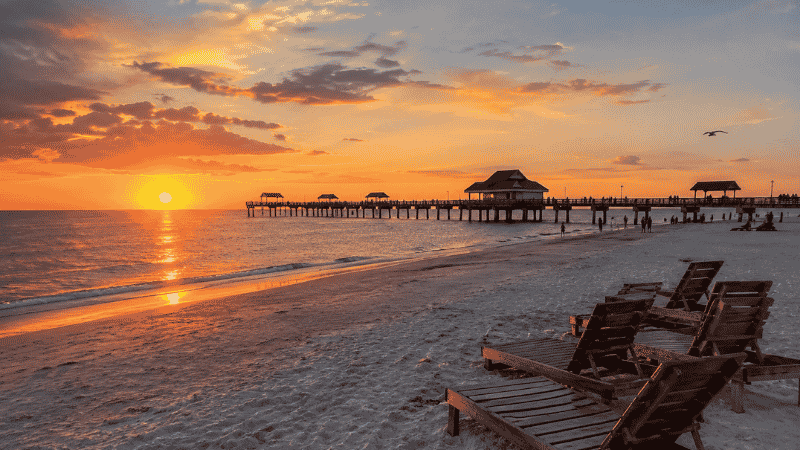
Cocoa Beach — Surf Capital of the East Coast
Cocoa Beach is 45 minutes from Orlando, which makes it the default beach day for theme park visitors — but don’t let that fool you into thinking it’s a tourist trap. Cocoa Beach has a genuine surf culture that goes back decades, and the famous Ron Jon Surf Shop here isn’t a novelty store, it’s a 24-hour landmark that’s been outfitting surfers since 1963.
The waves are real. Not Hawaiian pipeline real, but consistent enough for beginners to learn and intermediates to enjoy. Surf lessons are widely available right on the beach.
What Cocoa Beach is not: It’s not a relaxing, floating-in-calm-turquoise-water beach. If that’s what you want, you’re on the wrong coast.
St. Augustine Beach — Where History Meets the Ocean
St. Augustine is the oldest city in the United States, and its beach carries some of that old-Florida character. The beach itself is wide, the surf is moderate, and the town behind it gives you something to do in the evenings besides scroll your phone in a hotel room. Cobblestone streets, Spanish colonial architecture, and genuinely good seafood restaurants are all within a short drive.
The Saturday farmers market a few steps from the beach is worth building your visit schedule around.
Best for: Travelers who want beach plus genuine cultural depth — not just a beach with a hotel zone.
Best Florida Beach for Your Travel Style
Not every beach works for every traveler. Here’s how to match yourself quickly:
If you want the calmest, clearest water for swimming: Siesta Key or Caladesi Island (Gulf Coast). The water is warmer, shallower, and gentle enough for anyone.
If you want great snorkeling: Head to the Florida Keys — John Pennekamp Coral Reef State Park is the only underwater state park in the continental US. Gulf Coast beaches have beautiful water but limited reef structure for snorkeling.
If you want to avoid crowds at all costs: Caladesi Island (ferry keeps numbers down), or visit any Gulf Coast beach on a weekday in September or October.
If this is your first Florida beach trip: Clearwater Beach or Siesta Key. Both deliver the full Florida beach experience with good infrastructure, lifeguards, and easy logistics.
If you’re bringing kids: Siesta Key’s shallow, calm water and cool-to-the-touch sand make it the best choice for families with young children.
What to Know Before You Go — The Practical Stuff
Best Time to Visit Florida Beaches
Florida beach season is almost year-round, but timing matters more than most guides admit.
Peak season (June–August): Warmest water, most crowded, highest prices. Parking lots fill early, resort rates spike, and afternoon thunderstorms are near-daily between 3–5 PM. If you go in summer, arrive at the beach before 9 AM and plan to clear out before the afternoon storm window.
Shoulder season (April–May, September–October): The sweet spot. Water is still warm (high 70s to low 80s°F on the Gulf), crowds drop noticeably, and prices come down. September and October are genuinely underrated — locals know this and take advantage of it.
Winter (November–February): Air temperatures range from 60–75°F depending on the region. The Panhandle gets too cool for swimming, but South Florida beaches remain pleasant. Snowbird season means hotels fill up in areas like Naples and Sarasota, so book early.
Parking — The Honest Truth
Florida beach parking is a source of real suffering that most travel guides gloss over with a polite “arrive early.” Here’s what actually happens:
- Siesta Key: The free main lot fills by 8:30 AM on summer weekends. After that, you’re on the street or in a private lot.
- Clearwater Beach: The Pier 60 garage fills by mid-morning. Budget $15–25 for a full day.
- Destin: Parking varies by beach access point, ranging from free county lots (fill early) to paid lots at $20+ per day.
The best parking strategy: Stay within walking distance of the beach and eliminate the problem entirely. Many beachfront hotels and vacation rentals charge resort fees, but if those fees include beach access and parking, they can actually save you money compared to driving in.
What to Pack — Gear That Actually Makes a Difference
The difference between a great beach day and a miserable one often comes down to three pieces of gear:
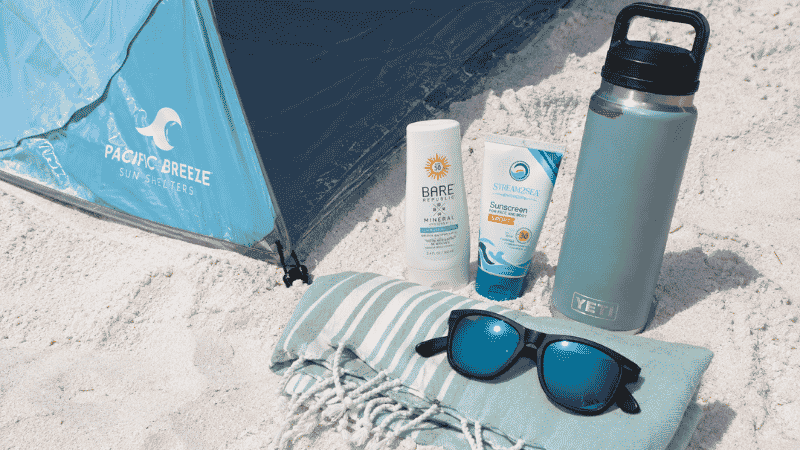
A proper beach shade shelter: Not a flimsy umbrella that blows away at the first wind gust. A pop-up sun shelter with sand anchors blocks UV from multiple angles and gives you a real home base on the sand. Non-negotiable on full beach days, especially if you have kids.
Reef-safe mineral sunscreen: Florida’s coastal ecosystem — particularly around the Keys — is under pressure from chemical sunscreen ingredients. Mineral zinc-based formulas protect you without the reef impact. Apply 30 minutes before hitting the beach, and reapply every 2 hours or immediately after getting out of the water. A full day for a family of four goes through more sunscreen than most people expect — bring more than you think you need.
A real insulated water bottle or cooler: Plastic water bottles become warm by the time you’re parked, let alone set up on the sand. A vacuum-insulated water bottle keeps ice for hours. Fill it the night before and it will still have ice when the 2 PM heat peaks.
Frequently Asked Questions
What is the #1 beach in Florida? Siesta Key Beach in Sarasota is consistently ranked the best beach in Florida — and often the best beach in the entire United States. Its 99% quartz sand, calm Gulf water, and free parking make it a genuinely exceptional destination.
Which Florida coast has clearer water? The Gulf Coast generally has clearer, calmer, warmer water than the Atlantic Coast. The Atlantic side has bigger waves, which keeps the water more stirred up and slightly cooler.
What is the best time of year to visit Florida beaches? Mid-September through October is the best combination of warm water, reduced crowds, and lower prices. April and May are also excellent. Peak summer (July–August) brings the most crowds and the highest prices.
Are Florida beaches free? Most of Florida’s public beaches are free to access, though parking often costs money. Some state park beaches charge an entry fee per vehicle ($4–$8 typically). Private beach access through resorts usually requires being a guest or paying a day pass fee.
Which Florida beach is best for kids? Siesta Key is the top choice for families with young children: the water is calm and shallow, the sand stays cool, lifeguards are on duty, and facilities (bathrooms, concessions, playground) are solid. Clearwater Beach is a strong second option.
How early do I need to arrive at popular Florida beaches in summer? At top beaches like Siesta Key and Clearwater, aim to arrive before 9 AM on summer weekends if you want a guaranteed parking spot. By 10 AM, lots at both beaches are typically at capacity.
Do I need reef-safe sunscreen in Florida? While Florida doesn’t currently have the same reef-safe sunscreen laws as Hawaii, using mineral zinc-based sunscreen is strongly recommended — especially if you’re visiting the Florida Keys, where coral reefs are under significant environmental stress.
The Bottom Line
Florida has a beach for every kind of traveler — the trick is knowing which one matches what you actually want from your trip, not what looks best in an Instagram photo.
- For calm water, soft sand, and the full Florida postcard experience: Siesta Key or Clearwater Beach on the Gulf Coast.
- For emerald water and that wow-this-doesn’t-look-real feeling: Destin or the 30A corridor in the Panhandle.
- For quiet and discovery, away from the crowds: Caladesi Island, accessible only by ferry.
- For surf culture and beach-meets-city energy: Cocoa Beach or Miami’s South Beach on the Atlantic Coast.
Whatever you choose, the three things that will make or break your day are the same everywhere: arrive early, bring proper shade, and pack more sunscreen than you think you need.
The sand is waiting. Go find your shore.
Planning your Florida beach trip? Read next:
- [Best Time to Visit Florida Beaches — Month by Month Guide]
- [Florida Beach Parking Survival Guide — How to Not Spend 45 Minutes Circling]
- [Best Beach Gear 2026 — What We Actually Bring on Every Trip]
References
- Visit Florida Official Tourism Data: visitflorida.com
- Tripadvisor Travelers’ Choice Best Beaches 2026
- Florida Department of Environmental Protection — Beach Water Quality Monitoring
- Pinellas County Parks — Shell Key Preserve official information
- Florida State Parks — Caladesi Island State Park
Hi, this is a comment.
To get started with moderating, editing, and deleting comments, please visit the Comments screen in the dashboard.
Commenter avatars come from Gravatar.