
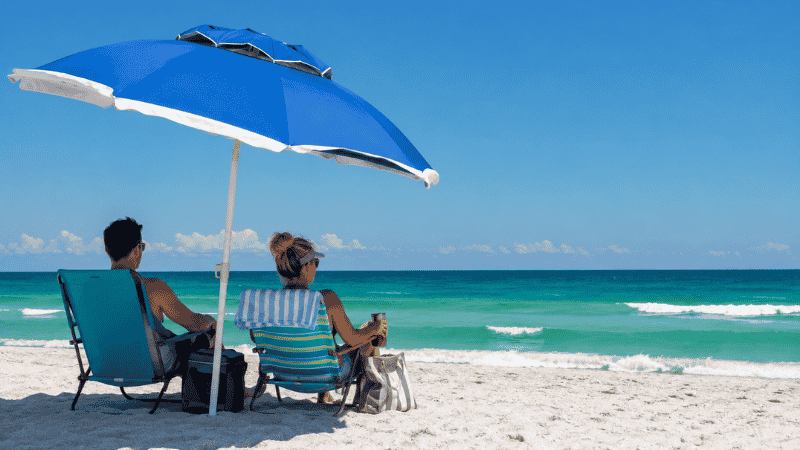
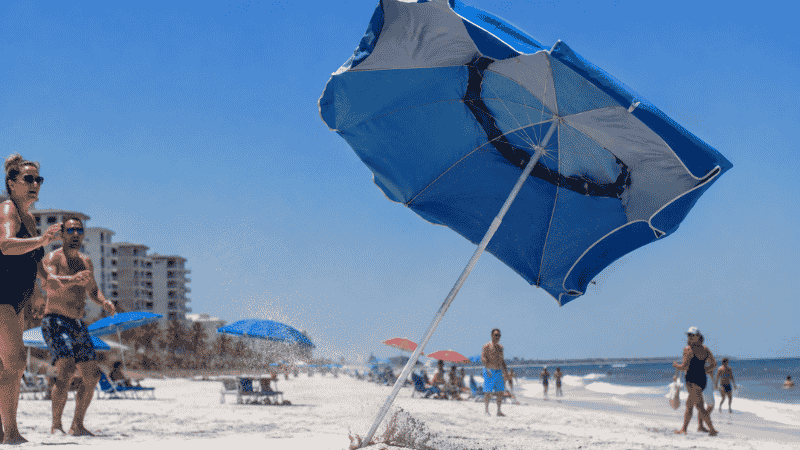
You’ve seen it happen. You’re settled on the sand, chair angled just right, cooler within arm’s reach — and then a gust hits the umbrella next to you and it’s suddenly airborne, skating across the beach until it spears someone else’s setup or worse, hits someone. Beach umbrellas becoming projectiles is not a freak accident. It’s the predictable outcome of a flimsy pole, a pushed-in anchor, and a canopy that acts like a sail in any real coastal wind.
Most people buy beach umbrellas based on color, price, or what they can grab at a big-box store. Then they wonder why it tips over, inverts, or flies away every time the sea breeze comes up. The problem isn’t bad luck — it’s that the features that make an umbrella actually work on a Florida Gulf Coast beach (vented canopy, spiral anchor, fiberglass ribs, UPF 50+ rated fabric) are almost never the features that are obvious from a photo.
This guide cuts through the clutter. I’ll explain the five things that separate a beach umbrella that stays put from one that doesn’t, walk through the honest trade-offs between umbrella types, and give you a clear recommendation based on who you are and how you actually use the beach.
Key Takeaways
- A vented canopy is the single most important wind-resistance feature — it allows air to pass through rather than lift the umbrella
- Spiral screw-in anchors hold significantly better than straight push-in poles — aim for at least 12–18 inches deep in soft sand
- UPF 50+ fabric blocks over 98% of UV rays — standard unrated polyester provides minimal sun protection even when you’re sitting under it
- 7–7.5 feet is the sweet spot for most beach umbrellas — large enough to shade 2–3 people, manageable enough in coastal wind
- A beach umbrella flying into the sand at 20+ mph has been classified as a serious injury hazard by the ASTM — proper anchoring is a safety issue, not just a convenience one
The 5 Features That Actually Matter in a Beach Umbrella
Before looking at any specific product, understanding what makes an umbrella perform is worth five minutes of your time. Most buying decisions that go wrong happen because people optimize for price or appearance when they should be optimizing for anchor system and canopy design.
1. Anchor System — The Most Important Decision You’ll Make
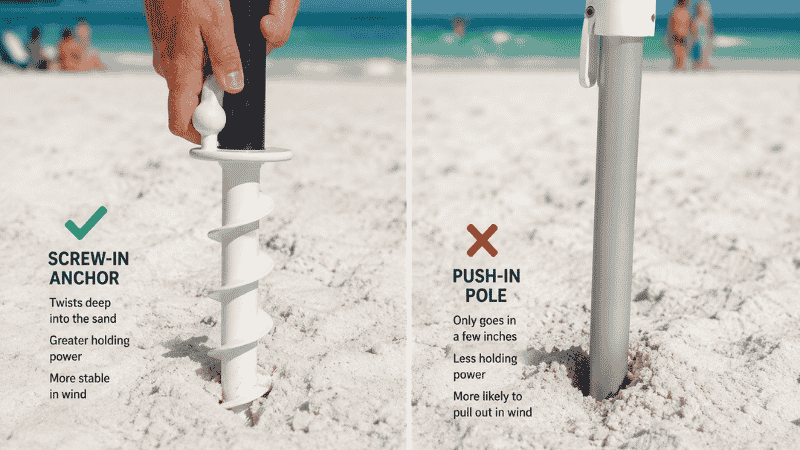
The standard beach umbrella anchor is a pointed metal pole that you push or twist into the sand. It works acceptably in damp, compact sand at low tide. In dry, loose sand — which is what you have at most Florida Gulf Coast beaches on a hot afternoon — it holds almost nothing.
A spiral screw-in anchor works on a completely different principle. Instead of relying on friction against a straight pole, it threads through the sand like a corkscrew, distributing holding force across the full length of the helix. In side-by-side testing, spiral anchors outperform straight push-in anchors dramatically in loose sand conditions.
What to look for: An integrated spiral anchor built into the pole base (no separate accessory to lose), or a separate screw anchor compatible with your umbrella’s pole diameter. Anchor depth matters — 12 inches is the minimum, 18 inches is better in dry sand.
ASTM safety note: The American Society for Testing and Materials (ASTM F3681-24) established wind-testing standards for beach umbrellas following multiple documented injury incidents. Umbrellas tested to this standard have demonstrated holding capacity under real coastal wind conditions. Some manufacturers now label their umbrellas as ASTM-compliant — this is a meaningful differentiator, not marketing language.
2. Vented Canopy — The Wind-Resistance Feature Nobody Talks About
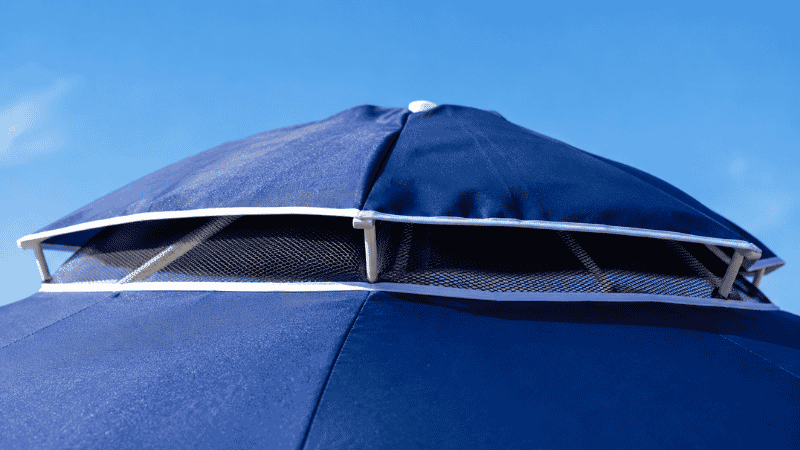
A non-vented canopy acts like a sail. When wind hits it, the air pressure builds underneath and either tips the umbrella or flips the canopy inside out. A vented canopy — typically a mesh or fabric vent sewn into the top of the canopy — allows air to escape upward, dramatically reducing the lift force.
This is the most important single feature for Florida beach conditions, where afternoon sea breezes of 15–25 mph are completely normal and gusts can spike higher. An umbrella without ventilation will work fine in still air and fail in real beach conditions.
What to look for: A visible vent opening at the peak of the canopy, not just a decorative design element. Double-layer vents (a mesh beneath a top cap) tend to be more effective than single-layer openings.
3. UPF Rating — Not All Shade Is Equal
An umbrella canopy without a UPF rating provides shade from direct sunlight but may allow significant UV radiation to pass through the fabric. The American Cancer Society notes that even while in the shade, UV radiation can reach you from reflective surfaces (sand, water) and through lower-density fabrics.
UPF 50+ fabric blocks over 98% of UV rays. UPF 30 blocks about 96.7%. Standard unrated polyester — which covers most budget beach umbrellas — provides highly variable and generally lower protection.
Silver-coated canopy undersides add an additional benefit: they reflect infrared radiation, keeping the air temperature under the umbrella noticeably cooler than ambient. In Florida summer conditions, this temperature difference can be meaningful.
4. Canopy Size — Bigger Is Not Always Better
A larger canopy provides more shade but catches more wind. The physics here are straightforward: a bigger sail surface generates more lift force at the same wind speed.
For 1–2 people: 6–7 foot canopy. Easier to manage in wind, sufficient shade for a standard beach chair setup.
For 2–4 people: 7.5–8 foot canopy. The standard family size. Works well in moderate coastal wind with a proper anchor.
For 4+ people: Consider a beach tent or canopy shelter instead of an umbrella — you’ll get better coverage and more stability for large groups than any single umbrella can provide.
5. Rib Material — Fiberglass vs. Aluminum
Fiberglass ribs flex under wind load without breaking. When a gust hits, they bend and return to shape rather than holding rigid and inverting the canopy. They’re slightly heavier than aluminum but handle coastal conditions significantly better.
Aluminum ribs are lighter and appropriate for occasional use in light wind. They’re more prone to bending permanently or contributing to canopy inversion in stronger gusts.
For Florida beaches where afternoon wind is a regular feature, fiberglass ribs are worth the slight weight premium.
Beach Umbrella vs. Beach Tent vs. Beach Canopy — Which Do You Actually Need?
This is the question most buying guides skip, and it’s the one that would save the most people from the wrong purchase.
When a Beach Umbrella Is the Right Choice
A traditional beach umbrella makes sense when:
- You’re a solo traveler or couple who wants shade for 1–3 people
- Portability matters — you’re walking distance to the beach or don’t have a wagon
- You want to be able to reposition shade as the sun moves (tilting mechanism)
- You’re not planning an all-day 8-hour beach session in peak Florida summer heat
A well-chosen umbrella weighs 4–7 lbs, sets up in under 2 minutes, and packs down to a carry bag that works over one shoulder. It’s genuinely portable in a way that a canopy tent isn’t.
When a Beach Tent or Canopy Is the Better Choice
Consider a pop-up beach shade shelter instead of an umbrella when:
- You have young children who need shade from multiple angles (umbrellas don’t block lateral sun)
- You’re staying 6+ hours in peak Florida summer heat
- You have 3+ people who all need consistent shade
- Wind is a regular concern — a properly staked shelter is more stable than any umbrella in strong gusts
The trade-off is setup time, pack size, and the footprint it takes on the sand. For a full family beach day on a Gulf Coast beach in July, a shelter often makes more practical sense than an umbrella.
The Hybrid Option: Sport-Brella Style Umbrellas
Some umbrellas (Sport-Brella being the most well-known) split the difference — they rest at an angle rather than straight up, use stakes rather than a spiral pole anchor, and have side panels that block lateral sun. They’re more stable than traditional umbrellas in wind (the stake system works better than a pole anchor in most sand conditions) and provide better coverage from multiple sun angles.
The trade-off is that they’re larger to pack and set up than a standard umbrella, and they look different from what most people picture when they think “beach umbrella.” If you’ve been frustrated by traditional umbrellas tipping over and you’re not ready to commit to a full beach tent, a Sport-Brella style umbrella is worth considering.
How to Set Up a Beach Umbrella Correctly
Most beach umbrella failures — tipping, flying, canopy inversion — are setup failures rather than product failures. The correct technique makes a meaningful difference:
Step 1: Choose your location. Set up away from other beach-goers’ equipment. If your umbrella does come loose, you don’t want it heading toward children or other people’s setups.
Step 2: Angle into the wind. Point the pole slightly into the prevailing wind direction, not straight up. This reduces the wind’s ability to get underneath the canopy.
Step 3: Anchor deep. For a spiral anchor, twist until the helix is fully buried — minimum 12 inches, ideally 18 inches in dry loose sand. Don’t stop at the first sign of resistance.
Step 4: Use the tilt mechanism correctly. Tilt the canopy into the wind slightly rather than straight overhead. This further reduces wind lift and keeps you in shade more effectively as the sun moves.
Step 5: Monitor and readjust. An umbrella properly set up doesn’t stay that way all day. Check it every hour or so — sand shifts, wind direction changes, and the anchor can work loose in dry conditions.
Best Beach Umbrella for Each Type of Beach Visitor
Rather than a single ranked list, here’s the honest breakdown by use case — because the right umbrella depends entirely on how you use the beach.
Best for Families (2–4 People): Vented 7.5–8 ft with Spiral Anchor
What to look for: 7.5–8 ft canopy, UPF 50+ rated fabric, integrated spiral screw anchor, vented canopy, fiberglass ribs, tilt mechanism.
Why this works: The spiral anchor handles the loose dry sand common on Gulf Coast beaches. The vent reduces wind load in the afternoon sea breeze. The tilt keeps shade on the kids as the sun moves from morning to afternoon.
Budget: $60–$100 covers this spec from multiple brands. Below $50, anchor quality typically drops. Above $120 you’re paying for brand or aesthetics.
Best for Solo / Couples: Lightweight 6–7 ft, Portability Priority
What to look for: Under 5 lbs total weight, compact carry bag, UPF 50+, basic vented canopy.
Why this works: Two people don’t need an 8-foot canopy. A lighter, more portable umbrella is genuinely easier to carry to and from the beach without a wagon, and it catches less wind in the process.
Budget: $40–$70 for solid options in this category.
Best for Windy Conditions: ASTM-Tested or Sport-Brella Style
What to look for: ASTM F3681-24 wind-test compliance, OR Sport-Brella / stake-based hybrid design, OR commercial-grade steel pole with sandbag weight option.
Why this works: Standard umbrellas aren’t designed for 25+ mph coastal gusts. If you’re visiting the Panhandle in afternoon sea breeze season or any exposed Atlantic-facing beach, standard anchoring isn’t enough.
Budget: $80–$160 for genuinely wind-resistant options.
Best Budget Option: Under $50 with UPF 50+ and Sand Anchor
What to look for: Verified UPF 50+ rating (not just “UV protection”), any anchor system (even a straight push-in), vented canopy if possible.
Why this works: A budget umbrella in calm conditions with proper setup will provide adequate shade for occasional beach visitors. The key is getting verified UPF 50+ — budget umbrellas without this rating aren’t providing meaningful sun protection even when you’re under them.
Honest assessment: If you’re going to a Florida Gulf Coast beach in summer afternoon conditions, a budget umbrella is more likely to frustrate you. It’s worth spending $20–$30 more for a spiral anchor and vented canopy.
If You Only Have 10 Minutes to Choose a Beach Umbrella
Skip the full research process and just confirm these three things before buying:
- Does it have a vented canopy? Look for a visible vent at the peak. If the product description doesn’t mention it, assume it doesn’t have one.
- Does it have a spiral or screw-in anchor? “Integrated anchor” language usually means a straight push-in. Look for “spiral,” “screw,” or “corkscrew” anchor specifically.
- Is it rated UPF 50+? Not “UV protection” — UPF 50+ specifically.
If yes to all three, it’s a reasonable purchase regardless of brand. If no to any of them, keep looking.
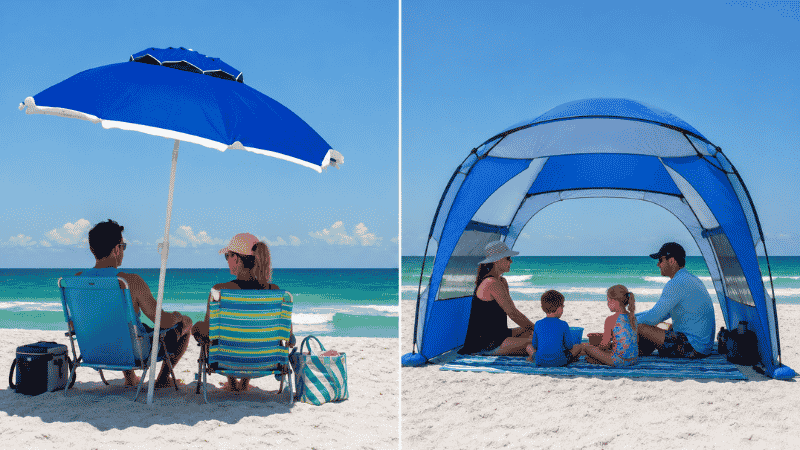
Beach Umbrella Safety — What Most Guides Don’t Mention
Beach umbrella injuries are more common than most people realize. A study referenced by the American College of Emergency Physicians documented multiple serious penetrating injuries from beach umbrella poles, leading to the ASTM developing wind-testing standards. In Florida specifically, several counties have ordinances requiring umbrellas to be properly anchored and unattended within certain proximity of other beach users.
The practical takeaways:
- Never leave a beach umbrella unattended and unanchored, even briefly
- In winds above 25 mph, take the umbrella down — even properly anchored umbrellas can fail in extreme conditions
- If your umbrella starts to tip repeatedly despite proper setup, take it down rather than fighting it — the beach isn’t worth a serious injury to someone nearby
Frequently Asked Questions
What is the best beach umbrella for wind? The most wind-resistant beach umbrellas combine a vented canopy (reduces lift), a spiral screw-in anchor (holds in loose sand), and fiberglass ribs (flex rather than invert in gusts). Models tested to ASTM F3681-24 wind standards offer verified performance rather than manufacturer claims. For extreme wind conditions (25+ mph), Sport-Brella style stake-anchored umbrellas or beach tents are more reliable than any traditional pole umbrella.
What size beach umbrella do I need? For 1–2 people: 6–7 feet. For 2–4 people: 7.5–8 feet. Larger umbrellas provide more shade but catch significantly more wind. A 7.5-foot vented umbrella with a good anchor is more useful in real coastal conditions than a 9-foot umbrella that tips constantly.
How do I keep a beach umbrella from blowing away? Use a spiral screw-in anchor (not a straight push-in pole), bury it at least 12–18 inches deep in dry sand, angle the pole slightly into the prevailing wind, and use the tilt mechanism to angle the canopy into the wind. Check and readjust every hour as conditions change.
Is UPF 50+ worth it for a beach umbrella? Yes. UPF 50+ fabric blocks over 98% of UV rays. Standard unrated polyester provides highly variable and generally lower protection — you can be sitting in “shade” and still receiving significant UV exposure. The American Cancer Society specifically notes that UV rays can penetrate fabric and reach you from reflective surfaces even in the shade.
What’s the difference between a beach umbrella and a beach tent? A beach umbrella provides shade from above via a canopy on a pole. A beach tent (or pop-up shelter) provides shade from above and from the sides. Tents are more stable in wind, provide better lateral UV protection, and work better for families with young children. Umbrellas are more portable and easier to set up. For a full day on a Florida beach in summer with kids, a tent often makes more practical sense.
How deep should I put a beach umbrella in the sand? A minimum of 12 inches for a spiral screw anchor, ideally 18 inches in dry loose sand. Straight push-in poles need to go deeper — at least 18 inches — and are still less secure than a proper spiral anchor at any depth. If your anchor keeps pulling loose, the sand is too dry and loose for that anchor design.
Are expensive beach umbrellas worth it? The $60–$100 range consistently outperforms the under-$40 range in anchor quality, vent design, and rib material. Above $120, you’re generally paying for brand recognition or aesthetics rather than meaningful performance improvements. The sweet spot for most buyers is $65–$95 for a vented, spiral-anchored, UPF 50+ umbrella.
The Bottom Line
The best beach umbrella isn’t the prettiest one or the cheapest one — it’s the one that’s still upright at 3 PM when the afternoon sea breeze comes up on a Florida Gulf Coast beach.
That umbrella has three things: a vented canopy that lets wind pass through rather than lift it, a spiral anchor that holds in loose dry sand, and UPF 50+ rated fabric that actually protects you from UV even while you’re sitting under it.
Everything else — size, color, brand, price — is secondary to those three features. Get those right, and your umbrella will do its job for seasons.
Getting ready for your Florida beach trip? Read next:
- Beach Vacation Packing List: What to Actually Bring
- Best Beaches in Florida: The Realist’s Guide to Choosing the Right Shore
- Things to Do at the Beach: 30 Ideas Beyond Lying on the Sand
- Jellyfish Sting Treatment & Beach Safety Guide
References
- American Society for Testing and Materials — ASTM F3681-24 Beach Umbrella Wind Safety Standard
- American Cancer Society — UV Radiation and Shade: Sun Safety Guidelines: cancer.org
- American College of Emergency Physicians — Beach Umbrella Injury Documentation
- Consumer Reports — Beach Umbrella Testing Methodology 2026: consumerreports.org
- UV Protection Factor (UPF) Standards — Skin Cancer Foundation: skincancer.org