
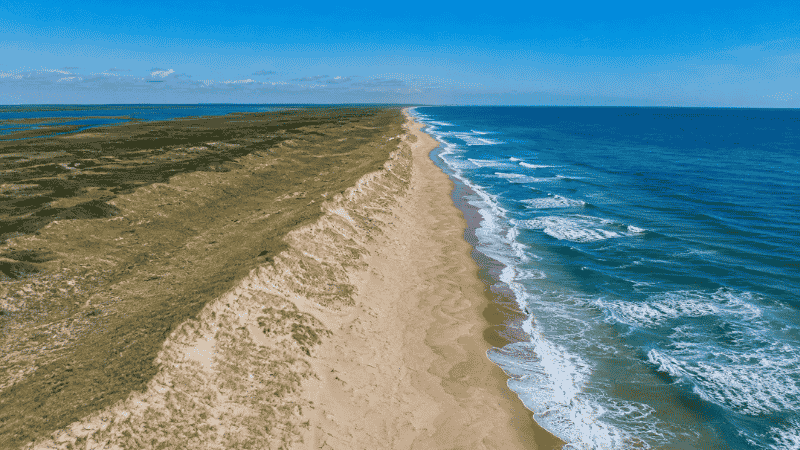
The Outer Banks doesn’t look like any other beach destination on the East Coast. There are no boardwalks lined with souvenir shops, no high-rise hotel towers blocking the horizon, no commercial strips that feel like every other beach town you’ve ever been to. What there is: 130 miles of wild Atlantic barrier island, some of the widest and most uncrowded beaches on the entire East Coast, wild mustang horses roaming the northern shoreline, historic lighthouses at every turn, and a pace of life that genuinely forces you to slow down.
The trade-off is that the Outer Banks rewards planning. The islands stretch from the remote northern beaches of Carova — accessible only by 4WD vehicle — south to Ocracoke Island, which requires a ferry to reach. The towns along the way have distinct characters: Duck is upscale and walkable, Kill Devil Hills is the surfer and family hub, Nags Head is the commercial center, and Hatteras Island is where the national seashore takes over and the beaches go properly wild.
This guide covers the best beaches in the Outer Banks, what makes each section different, when to go, how to get there, and the practical logistics that most OBX guides skip.
Key Takeaways
- The Outer Banks stretches over 130 miles of barrier islands along North Carolina’s coast — it’s not one beach, it’s a chain of distinct beach towns and wild national seashore
- Wild Spanish mustang horses roam the beaches of Corolla and Carova in the northern OBX — the only place in the continental US where you can watch wild horses on the beach
- Cape Hatteras National Seashore protects over 70 miles of undeveloped coastline — the longest stretch of protected Atlantic beach in the US
- The best time to visit is May–June or September–October — summer brings peak crowds and the highest rental prices, while shoulder season offers warmer water and significantly lower costs
- Ocracoke Island, only accessible by ferry, consistently ranks among the most pristine and least crowded beaches in the entire country
Understanding the Outer Banks — Five Distinct Sections
The Outer Banks isn’t one place. It’s a 130-mile string of barrier islands with five distinct sections that feel genuinely different from each other. Knowing which section fits your trip saves a lot of confusion.
Northern OBX: Corolla and Carova
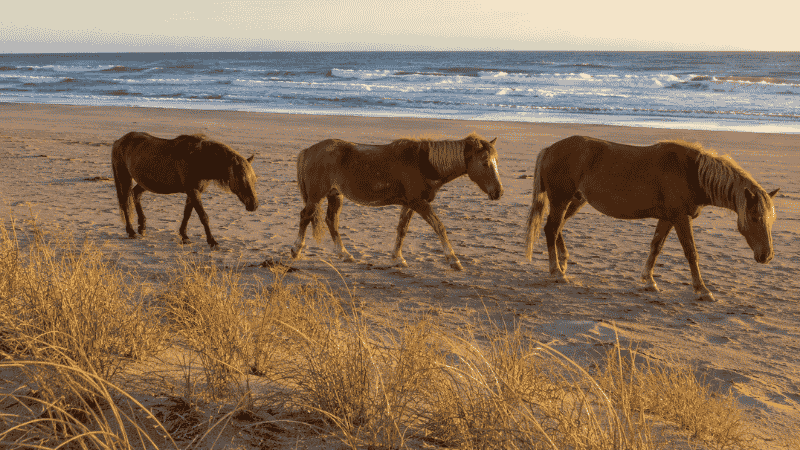
The northern end of the Outer Banks — Corolla and Carova — is the wildest and most remote section. Corolla is the northernmost town accessible by paved road. North of Corolla, the pavement ends and the beach becomes a 4WD highway: Carova is accessible only by driving on the sand, and the wild Spanish mustang horses that define the northern OBX roam freely through this stretch.
The Currituck Beach Lighthouse in Corolla is worth the 220-step climb — the view from the top gives you the full sweep of the barrier island, with the Atlantic on one side and the Currituck Sound on the other.
Best for: Wildlife viewing (wild horses), off-road beach driving, uncrowded beaches, photography.
Practical note: To reach Carova Beach and the wild horse territory, you need a 4WD vehicle with tires deflated to 20–25 PSI for sand driving. The horses are wild — the Corolla Wild Horse Fund asks visitors to stay at least 50 feet away and never feed them.
Duck and Southern Shores — Upscale and Walkable
Duck is the most polished town in the northern OBX — a compact main street with quality restaurants, boutique shops, and a waterfront boardwalk on the Currituck Sound. The beach here is wide and well-maintained, the crowds are lighter than the central OBX, and the general atmosphere is quieter and more upscale than the busier towns to the south.
Duck Beach is ideal for families — calm waters make it safe for swimming and kayaking, and the Duck Town Park offers boardwalks, playgrounds, and picnic areas. Visitors can enjoy scenic sunset views over the Currituck Sound from the waterfront boardwalk.
Southern Shores sits just south of Duck and has an even more residential feel — quiet streets, beach access points without large parking areas, and a pace that’s closer to a neighborhood than a tourist destination.
Best for: Couples, families who want a quieter base, anyone who prioritizes dining and walkability alongside the beach.
Kill Devil Hills and Kitty Hawk — The Surf and History Hub
Kill Devil Hills is the geographic and cultural center of the northern OBX. The Wright Brothers National Memorial sits here — the exact spot where Orville and Wilbur Wright made the first powered airplane flight in 1903. The dunes at Jockey’s Ridge State Park in Nags Head (the tallest natural sand dunes on the East Coast) are a short drive away.
Kitty Hawk, like Kill Devil Hills, receives some of the largest waves in all of the Northern Beaches — making this stretch the best surf territory in the northern OBX. The beach is wide, the waves are consistent enough for surfing and boogie boarding, and the town has enough dining and amenities to keep a family occupied for a full week.
Best for: Surfers, families who want activities beyond the beach, history enthusiasts, day trips to Jockey’s Ridge.
Nags Head — The Commercial Center
Nags Head is the most developed and most visited town in the Outer Banks. It has the most dining options, the most retail, and the most beach access points with facilities. It’s also the easiest place to find accommodation in a range of price points.
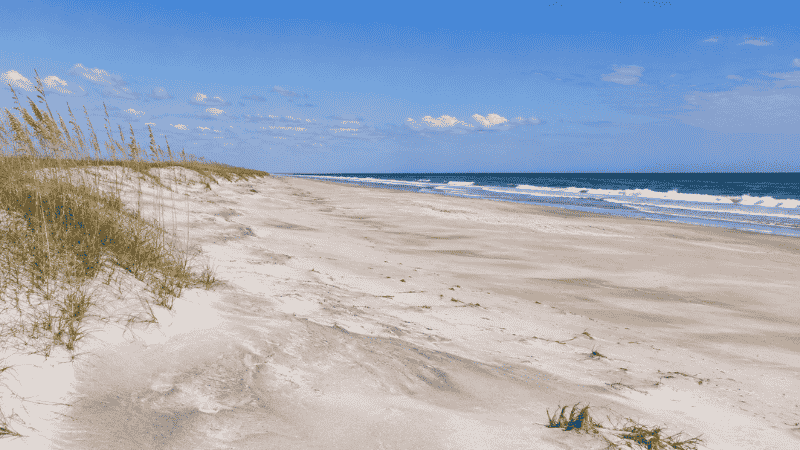
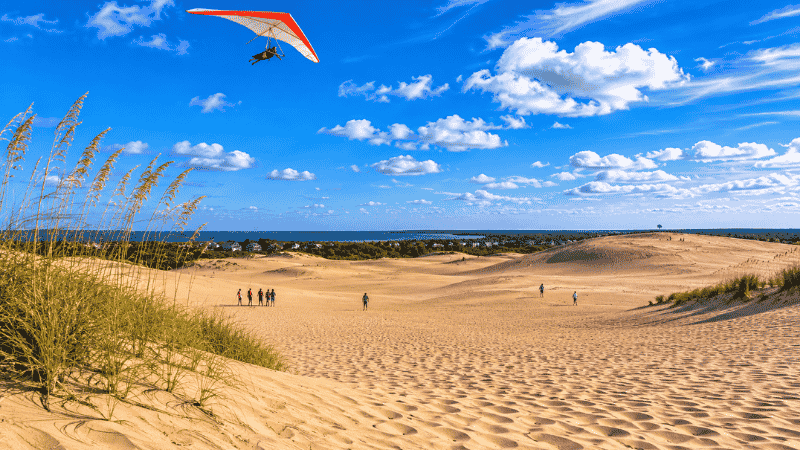
Nags Head is where most of the tourists go when visiting Outer Banks and has a ton of attractions and amenities that allow beach lovers to relax but without feeling cut off. You can go hang gliding in Jockey’s Ridge State Park, or visit the Wright Brothers National Memorial, for example. The beach itself is clean and has shower and restroom facilities. There’s a seasonal lifeguard who works in the summer months, and there are also plenty of free parking spots along the residential neighborhood behind the beach. The white sand slopes gradually into the ocean, which means young kids can paddle safely.
Best for: First-time OBX visitors, families who want maximum amenities and activities, anyone using Nags Head as a base for day trips.
Cape Hatteras National Seashore — The Wild OBX
South of Nags Head, the character of the Outer Banks changes completely. Cape Hatteras National Seashore begins, and with it comes over 70 miles of protected, undeveloped Atlantic coastline — the longest stretch of protected beach on the entire East Coast.
Cape Hatteras National Seashore offers some of the most scenic beaches in the Outer Banks. The protected shoreline stretches for miles and features wide sandy beaches, fishing areas, and iconic lighthouses.
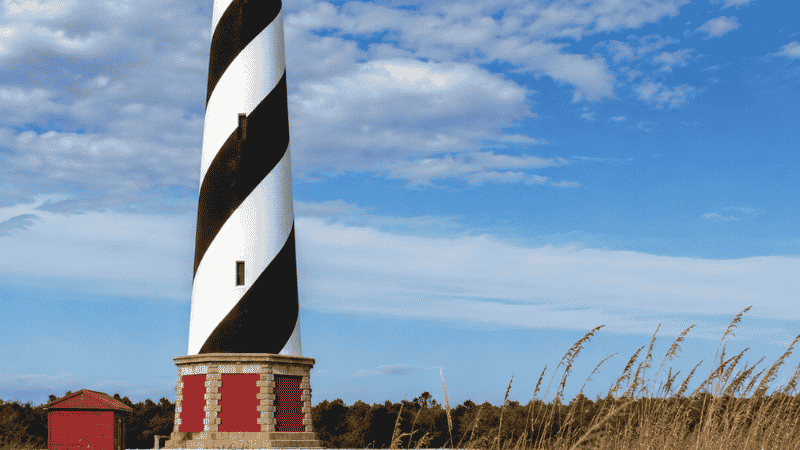
The Cape Hatteras Lighthouse — at 198 feet, the tallest brick lighthouse in the United States — is the defining landmark of this section. The beaches here are wider, wilder, and significantly less crowded than the northern OBX towns. Surf fishing along the national seashore is legendary.
Best for: Anyone who wants the wild, undeveloped OBX experience, fishing, surfing at the Point (the southern tip of Hatteras Island), lighthouse photography.
Ocracoke Island — The Most Remote Beach in OBX
Ocracoke Island sits at the southern end of the Outer Banks, accessible only by ferry — a 2.5-hour trip from the mainland or a shorter crossing from Hatteras Island. The ferry requirement keeps the crowds manageable in a way that the northern OBX towns can’t replicate.
Ocracoke Island offers some of the most untouched beaches in the Outer Banks. The village of Ocracoke is one of the most charming beach towns on the East Coast — no traffic lights, a history that goes back to the era of Blackbeard the pirate, and a beach that’s been called one of the most beautiful in the country by multiple national publications.
Best for: Anyone who wants the most authentic, uncrowded, unspoiled OBX experience. Day trips from Hatteras work; staying overnight is even better.
Ferry information: The Hatteras-Ocracoke ferry is free and runs year-round. The Swan Quarter and Cedar Island ferries (from the mainland) are toll ferries that require reservations in peak season.
Best Outer Banks Beaches by Type
Best for Families
Nags Head offers the best combination of family infrastructure — lifeguarded beach sections in summer, gradual sandy entry into the ocean, restroom and shower facilities, and enough activities nearby to fill a full week.
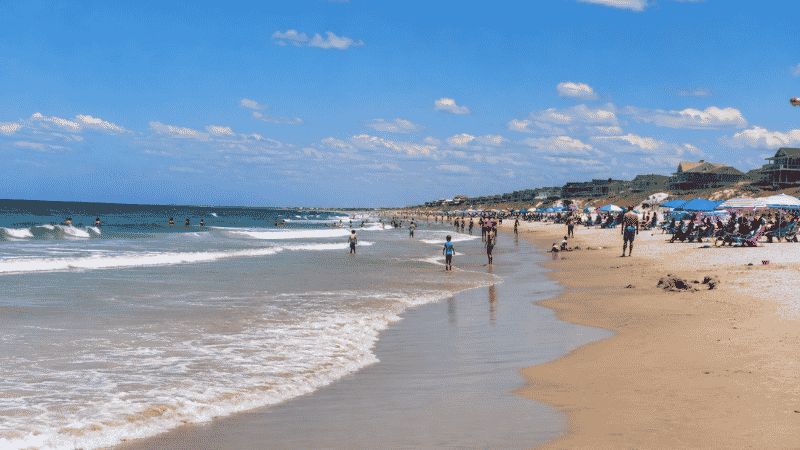
Duck is the quieter family option — calmer water, less traffic, the town park with playground, and a general atmosphere that’s relaxed rather than crowded.
Best for Surfing
Kill Devil Hills and Cape Hatteras Point are the premier surf spots. The Point at the southern tip of Hatteras Island is a legendary surf break where the Atlantic swells converge around the cape — consistent waves that attract serious surfers from up and down the East Coast.
Best for Wildlife
Corolla and Carova for the wild mustang horses — the most unique wildlife viewing experience on any beach in North America. Cape Hatteras National Seashore for shorebirds, sea turtles (nesting in summer), and the wild, unmanaged natural environment.
Best for Solitude
Ocracoke Island and the remote stretches of Cape Hatteras National Seashore between the access points. The national seashore has multiple vehicle access points where you can drive onto the beach (4WD recommended, deflate tires) and find genuine solitude even in summer.
Best for History
The entire OBX corridor has remarkable historical density: the Wright Brothers National Memorial in Kill Devil Hills, the Cape Hatteras Lighthouse, the Chicamacomico Life-Saving Station in Rodanthe, and the pirate history of Ocracoke village where Blackbeard met his end in 1718.
Best Time to Visit the Outer Banks
Peak Season (June–August)
Summer brings the full OBX experience — all activities running, restaurants fully staffed, beach conditions at their warmest (water temperature 75–80°F). It also brings peak crowds, peak rental prices, and traffic on the single highway (US-158 and NC-12) that runs the length of the islands.
Rental homes in the northern OBX towns run $3,000–$8,000+ per week in peak summer. Arrive at beach access points early — by 9 AM on summer weekends, the most popular spots are at capacity.
Shoulder Season (May–June, September–October)
The genuine sweet spot. Water is warm enough to swim comfortably in June (70°F+) and September (still 72–76°F). Crowds drop significantly after Labor Day. Rental prices fall 30–50% from peak. The weather is stable and often ideal.
September and October are particularly good for fishing — the fall bluefish and red drum runs along the Outer Banks are legendary among surf anglers. Hurricane season (June–November) requires awareness, but the majority of seasons pass without direct OBX impact.
Off-Season (November–March)
The Outer Banks in winter is a completely different experience — empty beaches, dramatic skies, migrating birds, and rental prices at their lowest. Many restaurants close or reduce hours. Swimming is too cold. But for photography, birding, and experiencing the wild OBX without another person in sight, winter is genuinely compelling.
Getting to the Outer Banks
The Outer Banks has no commercial airport. The nearest airports are:
Raleigh-Durham (RDU): 3 hours. The most common arrival point for visitors flying in.
Norfolk International (ORF): 1.5 hours to the northern OBX. The best option for visitors staying in Corolla, Duck, or Kitty Hawk.
Charlotte Douglas (CLT): 5 hours. Less practical.
Once you arrive, a car is essential — the Outer Banks has minimal public transportation. The single road system (US-158 crossing the Wright Memorial Bridge and NC-12 running the length of the islands) can produce significant traffic delays in summer, particularly on Saturday turnover day when rental periods change.
Arriving tip: If possible, arrive on a weekday rather than Saturday. The bridges onto the islands back up significantly on summer Saturday mornings as one week of renters departs and the next arrives simultaneously.
Driving on Outer Banks Beaches
One of the distinctive features of the OBX is the tradition of driving vehicles directly on the beach — something increasingly rare on the US coast. The national seashore sections allow permitted off-road vehicle (ORV) access, and the remote stretches north of Corolla are only accessible by driving on the sand.
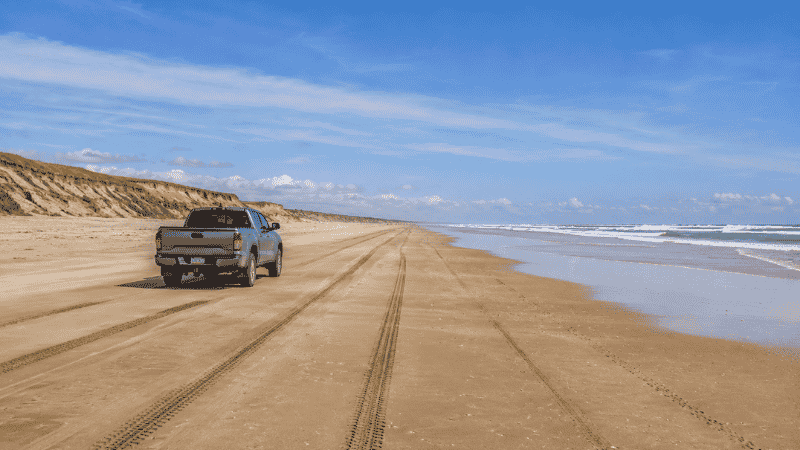
What you need: A 4WD or AWD vehicle. Deflate tires to 20–25 PSI for sand driving. A free or paid ORV permit from the National Park Service (required for Cape Hatteras National Seashore sections). A tow strap in case you get stuck.
The rules: Speed limit on the beach is 25 mph. Stay on the designated ORV corridors. Respect turtle nest closures (marked with signs in summer — nesting sea turtles have priority). Don’t drive on dunes.
Where: Corolla north to Carova (4WD only, no permit required). Cape Hatteras National Seashore ORV corridors (NPS permit required, available at nps.gov/caha). Selected access points throughout the national seashore.
Outer Banks Beach Safety
Rip Currents
The OBX Atlantic has stronger and more consistent rip currents than Florida’s Gulf Coast. The United States Lifesaving Association data consistently places Dare County beaches among the higher-activity rescue locations on the East Coast, due to the exposed Atlantic position and the frequent offshore storms that generate swells and currents.
What to know: Check the daily surf report and rip current forecast at weather.gov before beach visits. Swim only in lifeguarded areas if you’re not a confident ocean swimmer. The correct response to a rip current is to swim parallel to shore rather than toward shore — the same technique as any Atlantic beach. Never fight directly against the current.
Beach Flags
OBX beaches use the standard beach flag warning system: green (low hazard), yellow (medium hazard), red (high hazard), double red (water closed), purple (dangerous marine life). Flag conditions change throughout the day. Check before you enter.
Sun and Heat
The OBX summer sun is intense. UV index reaches 10–11 (Very High to Extreme) in July and August. Apply SPF 50+ sunscreen 30 minutes before beach exposure and reapply every 2 hours. The ocean breeze at the OBX can mask how hot and UV-intense conditions actually are — this is one of the most common causes of severe sunburn at OBX beaches.
One Week Outer Banks Itinerary
Day 1: Arrive, settle into your rental, explore the local town. Beach afternoon if you arrive early.
Day 2: Wild horse tour or 4WD drive north of Corolla. Currituck Beach Lighthouse. Afternoon beach time.
Day 3: Jockey’s Ridge State Park (hang gliding or sand boarding on the tallest dunes on the East Coast). Wright Brothers National Memorial. Nags Head beach evening.
Day 4: Drive south into Cape Hatteras National Seashore. Cape Hatteras Lighthouse. Swim or surf at the national seashore beaches. Hatteras village dinner.
Day 5: Ocracoke Island ferry. Full day on Ocracoke — beach, village exploration, lunch at a local restaurant. Return ferry in afternoon.
Day 6: Kayaking or paddleboarding on the sound side. Fresh seafood dinner — OBX is a serious seafood destination.
Day 7: Final beach morning. Departure.
Frequently Asked Questions
What is the best beach in the Outer Banks? It depends on what you’re looking for. Want a lively, amenity-filled atmosphere? Try Kill Devil Hills or Nags Head. Craving quiet, upscale charm? Duck or Southern Shores will deliver. For the wildest, most remote experience, Ocracoke Island and the Cape Hatteras National Seashore are unmatched. For the unique wild horse experience, Corolla and Carova in the northern OBX are the only option.
When is the best time to visit the Outer Banks? May–June and September–October offer the best combination of warm water, manageable crowds, and lower accommodation prices. Peak summer (July–August) delivers the full experience but at peak prices and crowds. September is particularly good for fishing and for the fall wildness that settles over the national seashore as summer visitors leave.
Are there wild horses at the Outer Banks? Yes — in the northern OBX, Corolla and Carova Beach feature windswept shores where you might spot wild Spanish mustang horses grazing near the surf. The horses are managed by the Corolla Wild Horse Fund and are protected. Visitors must stay at least 50 feet away and are prohibited from feeding them.
How far is the Outer Banks from major cities? From Raleigh: approximately 3 hours. From Virginia Beach: approximately 1.5–2 hours to the northern OBX. From Charlotte: approximately 5 hours. From Washington DC: approximately 4–4.5 hours to the northern OBX.
Can you drive on the beach at the Outer Banks? Yes, in designated areas. The remote beach north of Corolla to Carova requires 4WD and tire deflation but no permit. Cape Hatteras National Seashore requires a free or paid ORV permit from the National Park Service. Tire deflation to 20–25 PSI is required for safe sand driving.
Is the Outer Banks good for families? Excellent. Nags Head and Kill Devil Hills offer the most family infrastructure — lifeguarded beaches, easy water access, nearby activities. Duck is the quieter family option. The OBX as a whole is significantly less commercialized than comparable East Coast beach destinations like Myrtle Beach or Ocean City, giving it a more natural, relaxed family vacation character.
The Bottom Line
The Outer Banks is a chain of barrier islands famous for wild Atlantic beaches, rolling dunes, historic lighthouses, and laid-back beach towns. From Corolla and Duck in the north to Hatteras Island and Ocracoke in the south, OBX beaches range from family-friendly access points to remote, untamed shoreline.
That range is exactly what makes the OBX worth understanding before you go. A week in Duck is a fundamentally different experience from a week in Hatteras. Ocracoke is in its own category entirely. The wild northern beaches north of Corolla feel like a different world from Nags Head.
Pick the section that matches what you actually want from a beach vacation. Then book early — summer OBX rental inventory disappears faster than almost any other beach destination in the country, and the good properties at reasonable prices are gone by January for the following summer.
The beaches will do the rest.
Planning your North American beach trip? Read next:
- Best Gulf Coast Beaches: Complete Florida West Coast Guide
- Best Beaches in Florida: The Realist’s Guide
- What to Bring to the Beach: Complete Beach Gear Guide
- Jellyfish Sting Treatment & Beach Safety Guide
References
- National Park Service — Cape Hatteras National Seashore: nps.gov/caha
- Corolla Wild Horse Fund — Wild Horse Protection Guidelines: corollawildhorses.com
- North Carolina State Parks — Jockey’s Ridge State Park: ncparks.gov
- United States Lifesaving Association — Beach Safety Statistics: usla.org
- Outer Banks Visitors Bureau — Official Travel Guide: outerbanks.org