
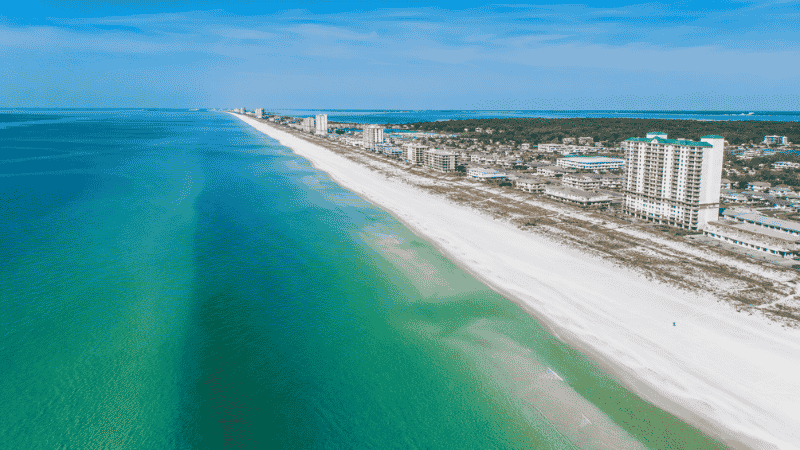
Panama City Beach gets a reputation it doesn’t entirely deserve. Spring break headlines from the 1990s left a cultural impression that doesn’t match what the place actually is for most of the year — 27 miles of sugar-white sand, emerald Gulf water that rivals anything in the Caribbean, a state park with world-class snorkeling, and a barrier island you can only reach by boat that still feels genuinely undiscovered even though everyone who’s been there has told someone about it.
If you’re planning a Panhandle trip and you’re not sure whether PCB belongs on your itinerary alongside Destin and 30A, this guide will settle that question. And if you’re already going, it will tell you which things are actually worth your time, which ones you can skip, and how to navigate the place without the logistical headaches that catch first-timers off guard.
The short answer: Shell Island and St. Andrews State Park alone justify the trip. Everything else is a bonus.
Key Takeaways
- Panama City Beach has 27 miles of coastline — the longest stretch of white sand beach in the Florida Panhandle
- Shell Island is a 700-acre undeveloped barrier island accessible only by ferry or boat — the snorkeling here rivals the Florida Keys for accessibility and wildlife variety
- St. Andrews State Park is consistently rated one of the top state parks in Florida, with jetty snorkeling, kayaking, fishing, and hiking trails, all for an $8 vehicle entry fee
- PCB vs Destin: Panama City Beach is more affordable and more family-entertainment focused; Destin has a slightly more upscale feel and the unique Crab Island experience. Both have the same emerald water
- The SkyWheel at Pier Park gives you the aerial view of the coastline that most visitors only see from a parasail — and costs a fraction of the price
The Beaches of Panama City Beach — What You’re Actually Getting
Panama City Beach’s coastline is the longest in the Florida Panhandle at 27 miles, and the sand here is the same quartz composition as Siesta Key and Destin — brilliant white, fine-grained, and cool enough to walk on barefoot even in peak summer. The Gulf water runs that distinctive emerald-to-turquoise color that makes first-timers reach for their phones and then wonder why the photos never quite capture it.
The main public beach stretches along Front Beach Road (Thomas Drive east of the roundabout). Beach access points are marked throughout, with paid parking lots at most major access points. The beach itself is wide and well-maintained — lifeguards are posted at designated areas during peak season.
The honest comparison to Destin: The beach quality is equivalent. The atmosphere at PCB is more developed and family-entertainment focused — Pier Park, water parks, go-kart tracks, mini golf, and a broader range of attractions exist here in a way they don’t in Destin. If you want pure emerald water with a quieter resort atmosphere, Destin edges it. If you want a full-family-entertainment experience alongside the beach, Panama City Beach has more options.
Shell Island — The Best Thing to Do in Panama City Beach
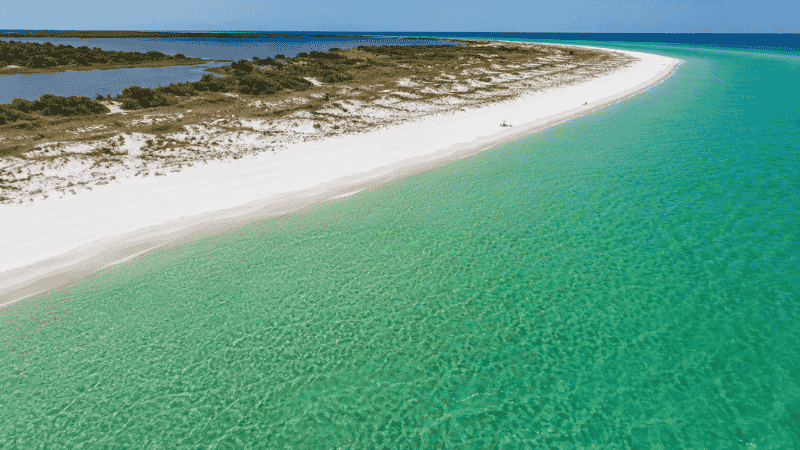
Shell Island is a 700-acre undeveloped barrier island that separates St. Andrews Bay from the Gulf of Mexico. It has no roads, no development, no concession stands, and no crowds — because the only way to get there is by boat or ferry. That single logistical barrier has kept it genuinely pristine while the rest of the Panhandle has been developed over the past decades.
The Gulf-facing side of Shell Island has white sand beaches with clear, shallow water ideal for swimming and snorkeling. The bay side has calmer water and better conditions for kayaking and paddleboarding. The whole island is a protected habitat for sea turtles, shorebirds, and a resident dolphin population that works the waters around the inlet.
How to Get to Shell Island
Shell Island Ferry from St. Andrews State Park: The most straightforward option. The ferry departs from within the state park and runs seasonally (typically May through Labor Day). Round-trip ticket costs are reasonable — check the current schedule at the St. Andrews State Park office. You’ll need to pay the state park entry fee ($8 per vehicle) in addition to the ferry.
Boat rental from PCB marinas: Renting a pontoon boat gives you more flexibility — you can anchor on the bay side for a calm swimming spot, run the Gulf side for open water, and stay as long as you want rather than catching a scheduled ferry back. Pontoon rentals start around $300–$400 for a half day from marinas near St. Andrews State Park.
Guided tours: Multiple operators run Shell Island snorkeling tours, dolphin tours that stop at Shell Island, and catamaran cruises that combine both. These are the right call if you don’t want to navigate yourself or if you want a guided snorkeling experience with gear provided.
Snorkeling at Shell Island
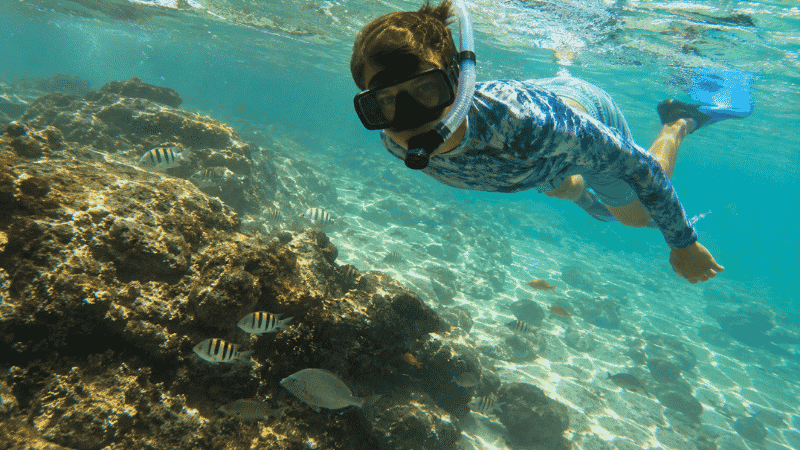
The snorkeling around Shell Island’s Gulf side and the inlet jetties is the best shore-accessible snorkeling in the Florida Panhandle. The jetty rocks at St. Andrews State Park create a reef-like habitat with excellent fish diversity — sheepshead, flounder, spadefish, and a variety of smaller reef species. The water clarity on calm days is exceptional.
You don’t need a guided tour to snorkel Shell Island if you have your own boat or come via ferry — just bring your own mask and snorkel, water shoes for the rocky jetty entry, and check conditions before you go (post-storm visibility drops significantly). The best snorkeling conditions are calm mornings before afternoon wind stirs up the water.
St. Andrews State Park — The Underrated Heart of Panama City Beach
St. Andrews State Park sits at the eastern tip of the Panama City Beach peninsula, where it meets the inlet separating the peninsula from Shell Island. It’s consistently rated one of the top state parks in Florida, and it earns that consistently — not through hype, but through genuine variety of experience in a relatively small area.
Entry is $8 per vehicle. What that gets you:
Jetty snorkeling: The rock jetties on both the bay side and Gulf side create exceptional snorkeling habitat. The Gulf-side jetty in particular has clear water and good fish density. This is the same quality snorkeling available from Shell Island, without the ferry cost.
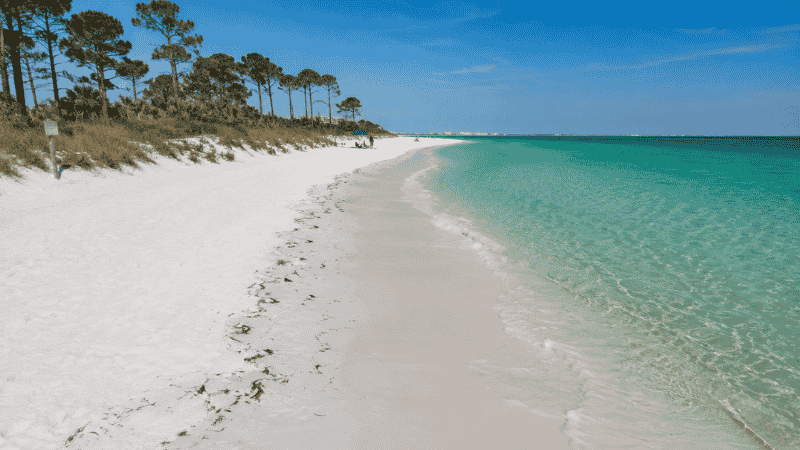
Swimming beach: St. Andrews has its own Gulf-facing beach within the park — same white sand, same emerald water, significantly fewer people than the main PCB beach areas. Lifeguards are on duty during peak season.
Kayaking: The bay side of the park has calm, protected water ideal for kayaking. Boat and kayak rentals are available within the park from a concession operator. The mangrove channels on the bay side are particularly good for wildlife viewing — herons, ospreys, occasionally manatees in summer.
Hiking and wildlife trails: The park has 1.5 miles of hiking trails through coastal scrub and pine flatwoods. It’s a genuinely different landscape from the beach itself and worth 45 minutes if you’re already in the park.
Fishing: St. Andrews has two fishing piers — one on the Gulf side, one on the bay — plus shore fishing access throughout the park. The pier fishing here is productive for a range of species.
The practical upside: St. Andrews State Park combines the Shell Island ferry access with its own beach, snorkeling, and water activities. If you’re trying to maximize a single day in Panama City Beach, starting at St. Andrews at 8 AM and taking the ferry to Shell Island mid-morning is the highest-value day you can build here.
Things to Do in Panama City Beach on the Water
Dolphin Tours and Cruises
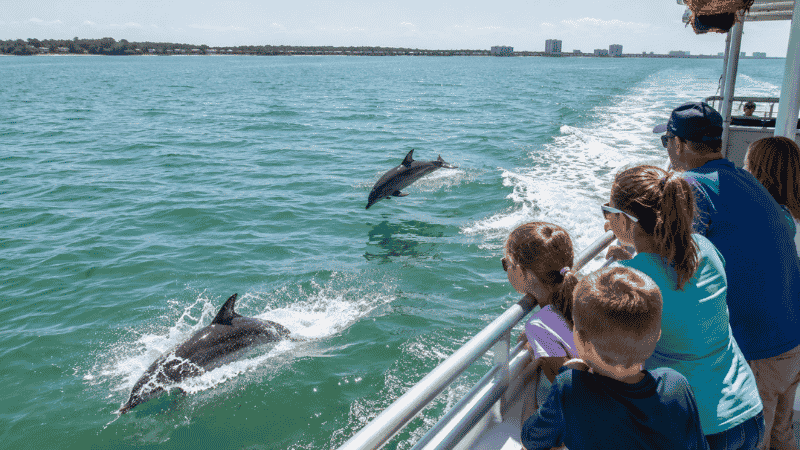
Panama City Beach has a healthy resident dolphin population in St. Andrews Bay and the waters around Shell Island. Multiple operators run dolphin tours daily — the standard format is a 90-minute to 2-hour boat tour through the bay and around Shell Island with near-guaranteed dolphin sightings. Most operators run morning and afternoon tours; prices run $25–$45 per adult.
The sunset dolphin cruise through St. Andrews Bay is worth the slight premium — the bay views at dusk are excellent and the dolphin activity tends to increase in the evening hours.
Parasailing
The 27-mile stretch of PCB coastline looks entirely different from 400 feet up. Parasailing operators launch from the beach at multiple points along Front Beach Road; the standard flight is 10–15 minutes in the air. Cost runs $75–$100 per person.
The budget alternative: The SkyWheel at Pier Park gives you a panoramic view of the coastline from a gondola for a fraction of the parasailing cost. Not the same aerial sensation, but genuinely impressive views of the Gulf and bay on a clear day.
Jet Ski Tours and Rentals
Jet ski rentals at PCB typically run $75–$100 per hour for a single ski. Several operators run guided jet ski tours around Shell Island — approximately 22 miles round trip — which is a better use of the money than an open rental if you want to see the area rather than just ride.
Fishing
Panama City Beach has two main approaches to fishing:
Pier fishing: Russell Fields City Pier and M.B. Miller County Pier both offer access to Gulf fishing without a boat. Daily fishing fees run $5–$8 per person. Species vary seasonally but include mackerel, bluefish, and whiting in summer.
Charter fishing: PCB has a substantial charter fleet operating from the marinas near St. Andrews State Park. Half-day inshore charters target flounder, redfish, and speckled trout in the bay; offshore charters go after grouper, snapper, and amberjack in the Gulf. Half-day party boats (head boats) start around $60–$80 per person and are the right entry point for first-time fishing visitors.
Pier Park — PCB’s Shopping and Entertainment Hub
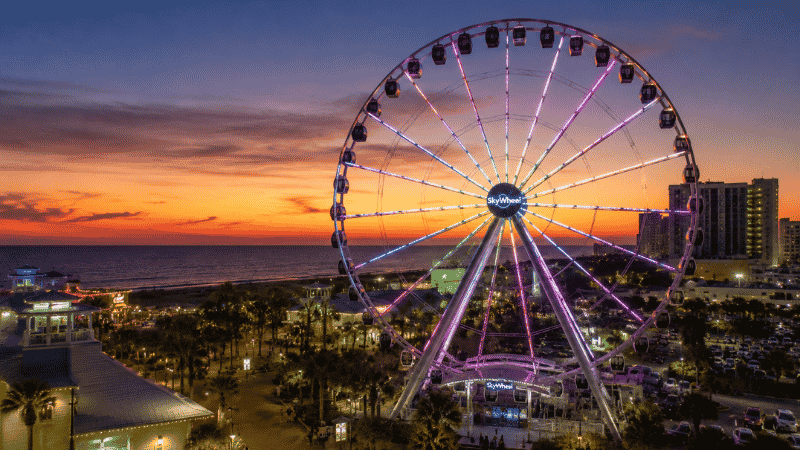
Pier Park is an open-air shopping, dining, and entertainment complex near the center of the PCB tourist corridor. With over 120 stores, multiple restaurants, a movie theater, and the SkyWheel observation wheel, it’s the social center of Panama City Beach when you’re not on the beach.
What Pier Park does well: It’s genuinely walkable and well-designed for an evening out after a beach day. The mix of national chains and local restaurants means you can find a good meal at a range of price points. Live events and seasonal programming fill the outdoor spaces regularly.
The SkyWheel: A 200-foot observation wheel at the entrance to Pier Park. Climate-controlled gondolas, panoramic views of the Gulf and bay, runs day and evening. Tickets around $15–$20 per person — a reasonable value for the view.
Honest assessment: Pier Park is more useful than most beach destination shopping complexes because of its genuine scale and the SkyWheel anchor attraction. If you have kids who need an activity that isn’t the beach, Pier Park delivers. If you’re looking for fine dining or boutique shopping, the options are limited.
Panama City Beach vs Destin — Which Should You Choose?
This is the question most Panhandle trip planners eventually face, and the honest answer depends on what you’re optimizing for.
Choose Panama City Beach if:
- You want more entertainment infrastructure alongside the beach (water parks, go-karts, Pier Park, more family attractions)
- Budget is a consideration — PCB accommodations run somewhat lower than Destin, particularly for vacation rentals
- Shell Island snorkeling is a priority — PCB’s proximity to St. Andrews State Park and Shell Island makes this more accessible here than from Destin
- You want a longer stretch of beach to explore
Choose Destin if:
- You want the Crab Island experience — the floating sandbar party in Destin Harbor is unique and has no real equivalent in PCB
- You prefer a slightly more upscale, less carnival-atmosphere resort environment
- Fishing is your primary activity — Destin’s offshore fishing access and charter options are marginally superior
Both have: The same emerald Gulf water, sugar-white quartz sand, dolphin tours, parasailing, fishing charters, and good seafood. The water quality is equivalent. The difference is primarily in atmosphere and the specific experiences that exist only in one place (Crab Island in Destin, Shell Island ferry access from St. Andrews in PCB).
Panama City Beach Parking — What to Know
Parking at PCB’s main beach areas costs $3–$5 per hour at metered lots along Front Beach Road. The lots fill quickly on summer weekends — aim to arrive before 9 AM for guaranteed access at the main beach areas.
St. Andrews State Park charges $8 per vehicle for park entry, which covers parking for the day and is significantly better value than the metered beach lots if you’re planning a full day at the park.
The practical tip: If you’re staying in PCB for multiple days, consider booking accommodations with direct beach access or parking included — the daily parking cost adds up quickly over a week-long trip.
Panama City Beach for Families — What Actually Works with Kids
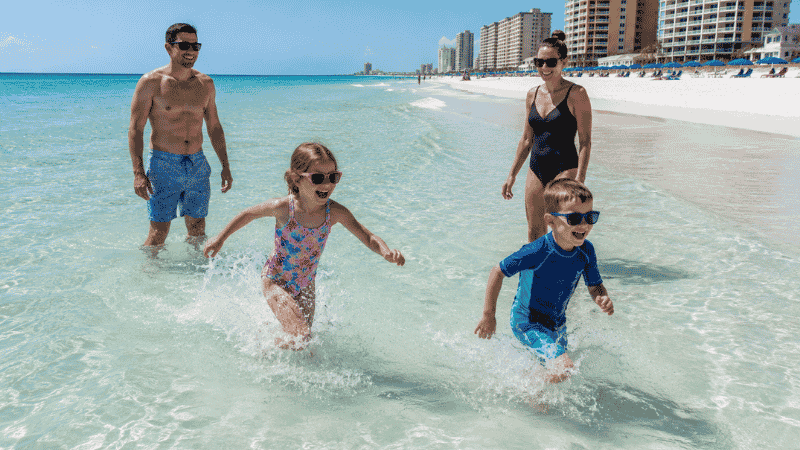
PCB is arguably more family-oriented than any other Florida Panhandle destination, partly because the entertainment infrastructure around the beach is more developed and partly because the beach itself — shallow, warm Gulf water with a gradual slope — is genuinely ideal for kids.
Shipwreck Island Waterpark runs seasonally (typically May through Labor Day) and is the major family water park in PCB. A full day here is the right move if you have kids who are more enthusiastic about water slides than open-ocean swimming.
Shell Island ferry tour: Kids 6 and up who are comfortable in the water will love the Shell Island snorkeling experience. The fish diversity at the jetties is excellent and the guided tour format keeps the experience manageable for families.
Pier Park: The SkyWheel, movie theater, and variety of restaurants make Pier Park a reliable option for evenings when the beach day is done and the kids need entertainment.
The beach itself: The Gulf water at PCB is calm, warm, and shallow — ideal for young swimmers. Lifeguarded beach areas within St. Andrews State Park are the safest option for families with young children.
Best Time to Visit Panama City Beach
April–May: Water is warming up (68–74°F), crowds are below summer peak, and prices are pre-season. Spring Break (mid-March) brings a younger, louder crowd — avoid that window if it’s not your scene, but April and May are genuinely excellent.
June–August: Peak season. Water is warmest (80–85°F), all activities and tours are fully operational, and the beach energy is at its highest. Expect peak prices and the need to arrive at beaches before 9 AM on weekends for parking.
September–October: The best-kept secret on the Panhandle. Water is still warm (78–82°F in September, cooling to 72°F by October), crowds thin significantly after Labor Day, and prices drop. Hurricane season is a consideration (peak risk in September) — purchase travel insurance with hurricane cancellation coverage if visiting in this window.
November–February: Off-season. Water is too cool for most swimming (60–68°F), but the beach walks are peaceful and prices are the lowest of the year. Good for couples who want the coastal atmosphere without the beach crowd.
Frequently Asked Questions
What is Panama City Beach most known for? Panama City Beach is known for its 27 miles of white sugar sand beaches and emerald Gulf water, Shell Island (a pristine undeveloped barrier island accessible only by boat), and St. Andrews State Park — one of Florida’s top-rated state parks with excellent snorkeling, kayaking, and wildlife. It’s also known for spring break, though the destination has significantly diversified toward family tourism.
Is Shell Island worth visiting? Yes — Shell Island is one of the best experiences in the Florida Panhandle. The undeveloped barrier island has excellent snorkeling (particularly around the jetty rocks), dolphin sightings, and a genuinely wild feel that’s hard to find anywhere on the Gulf Coast this accessible. Take the ferry from St. Andrews State Park or rent a boat for more flexibility.
How far is Panama City Beach from Destin? Approximately 45–60 minutes west on Highway 98, depending on traffic. The two destinations are frequently combined on Panhandle road trips.
What is the best beach in Panama City Beach? St. Andrews State Park beach offers the best combination of quality, facilities, and manageable crowds. The Gulf-facing beach within the park has the same white sand and emerald water as the main tourist beaches with significantly fewer people. Entry is $8 per vehicle.
Is Panama City Beach good for snorkeling? Yes — the jetty snorkeling at St. Andrews State Park and around Shell Island is the best shore-accessible snorkeling in the Florida Panhandle. The rock jetties create reef-like habitat with excellent fish diversity. Best conditions are calm mornings on days with no recent storms.
What is the SkyWheel at Panama City Beach? The SkyWheel is a 200-foot observation wheel at Pier Park with climate-controlled gondolas and panoramic views of the Gulf of Mexico and St. Andrews Bay. It runs day and evening and costs approximately $15–$20 per person — a more affordable alternative to parasailing for the aerial coastal view.
The Bottom Line
Panama City Beach earns its place on a Florida Panhandle itinerary not through the main beach corridor — which is fine but well-covered by competitors — but through Shell Island and St. Andrews State Park, which together represent some of the best nature-access experiences on the entire Gulf Coast.
Build your PCB day around St. Andrews State Park at 8 AM, ferry to Shell Island mid-morning, snorkel the jetties, and come back for an evening at Pier Park. That sequence covers the best of what PCB has to offer in a single well-planned day.
The emerald water is the same everywhere on the Panhandle. What makes PCB worth the stop is everything that exists within a mile of St. Andrews State Park’s entrance gate.
Planning your full Florida Panhandle trip? Read next:
- Things to Do in Destin Florida: The Real Emerald Coast Guide
- Best Time to Visit Destin Florida: The Honest Month-by-Month Guide
- Best Beaches in Florida: The Realist’s Guide to Choosing the Right Shore
- Beach Vacation Packing List: What to Actually Bring
References
- Florida State Parks — St. Andrews State Park Official Information: floridastateparks.org
- Visit Panama City Beach Convention & Visitors Bureau: visitpanamacitybeach.com
- Florida Fish and Wildlife Conservation Commission — Sea Turtle and Marine Life Guidelines
- NOAA — Gulf of Mexico Water Temperature Historical Averages
- National Hurricane Center — Atlantic Hurricane Season Statistics: nhc.noaa.gov