
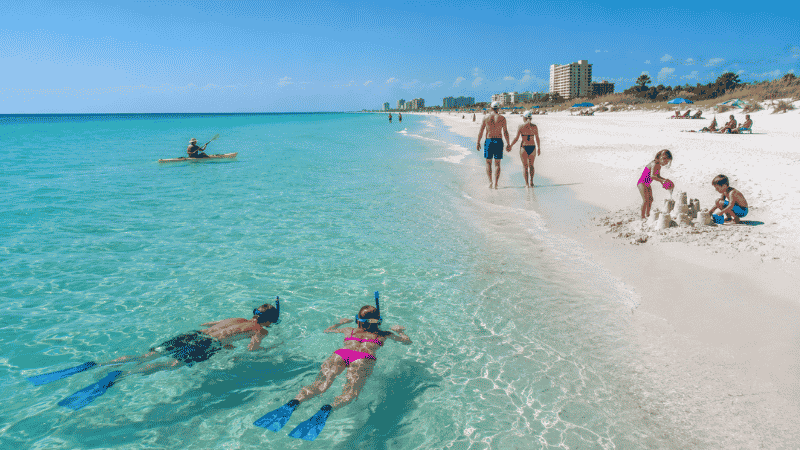
You’ve arrived. The cooler is packed. The towels are spread. The sun is doing exactly what it promised. And then — somewhere around hour two — someone in your group says it: “So… what do we actually do now?”
It happens more often than people admit. The beach sells itself as the destination, and it is. But a full day on the sand with no plan beyond “be here” can start to feel surprisingly shapeless, especially if you’ve got kids burning through energy, a partner who gets restless, or you’re simply the type of person who needs something to do with your hands that isn’t refreshing your phone.
The good news: the beach is one of the most activity-rich environments on earth, and most of the best things to do at the beach are free, require no advance booking, and can be picked up and put down on your timeline. The challenge is knowing what’s actually worth doing versus what sounds good in theory and falls apart in practice.
This guide covers 30 things to do at the beach — organized by energy level and type of person — with the honest details on what each one actually involves, what you need to pull it off, and when to do it for the best experience.
Key Takeaways
- The best beach activities for most people require almost no equipment — a frisbee, a mask and snorkel, or simply knowing where to walk adds more to a beach day than any gear purchase
- Shell collecting is most productive within 2 hours after low tide — timing your walk correctly triples what you’ll find compared to going at random
- Sunrise beach walks consistently rank as one of the top free beach experiences among repeat visitors — the light, the quiet, and the wildlife make it categorically different from any other time of day
- Beach games like volleyball and paddleball reduce perceived heat and sun exposure — active visitors report significantly lower discomfort than those sitting stationary in the same conditions
- Floating and saltwater swimming have documented benefits for joint pressure and muscle recovery — the buoyancy of saltwater reduces gravitational load on joints by up to 90%
Active Things to Do at the Beach
1. Swim in the Ocean — But Do It Right
Swimming is the obvious one, but most people undersell it by doing it wrong. The best ocean swimming happens in the first two hours of the morning before afternoon wind stirs up the water and the beach fills with people. The water is calmer, clearer, and the temperature — which peaked overnight — is at its warmest relative to the air.
For Gulf Coast beaches specifically, the shallow, warm water with a gradual slope means you can wade out 50–100 yards before it gets genuinely deep. That’s not a limitation — it’s an invitation to float, drift, and let saltwater do what it’s genuinely good for. The buoyancy of saltwater reduces the gravitational load on your joints by up to 90%, which is why floating in the ocean feels so effortless compared to freshwater pools.
Safety note: Learn to identify rip currents before you get in — a darker, choppier channel of water moving perpendicular to the shoreline is your signal to swim parallel to the beach rather than fighting toward shore. The United States Lifesaving Association estimates rip currents account for over 80% of lifeguard rescues on surf beaches.
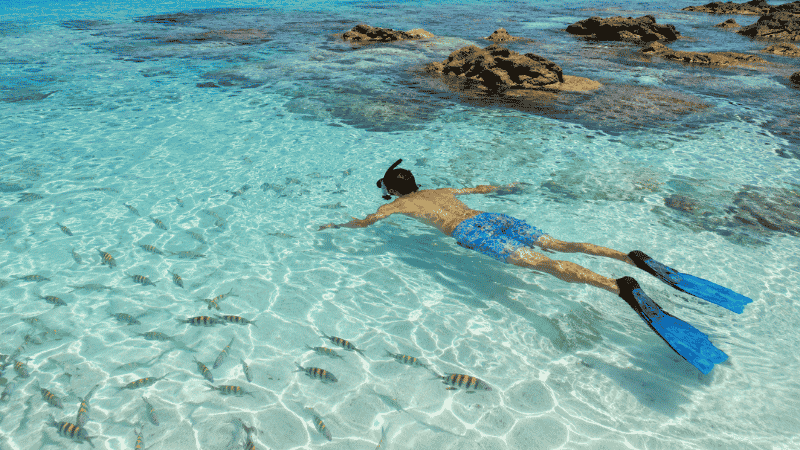
2. Snorkeling — The Activity That Changes How You See the Ocean
Snorkeling turns the surface of the water into a window. Everything happening below — the fish, the sand patterns, the occasional ray gliding through — becomes suddenly visible, and it changes your relationship with the beach completely. You stop seeing the water as the place where the fun is and start seeing it as the place where the world is.
For Gulf Coast beginners, the jetty rocks at St. Andrews State Park in Panama City Beach and Point of Rocks at Siesta Key in Sarasota are ideal starting points — clear water, good fish diversity, and no boat required. Bring a mask that seals properly (a drugstore mask will leak), breathe slowly through the snorkel, and stay near the surface rather than trying to dive. That’s genuinely all there is to it.
What you need: A properly fitting mask, a snorkel, and water shoes for rocky entries. Rent gear locally if you don’t own it.
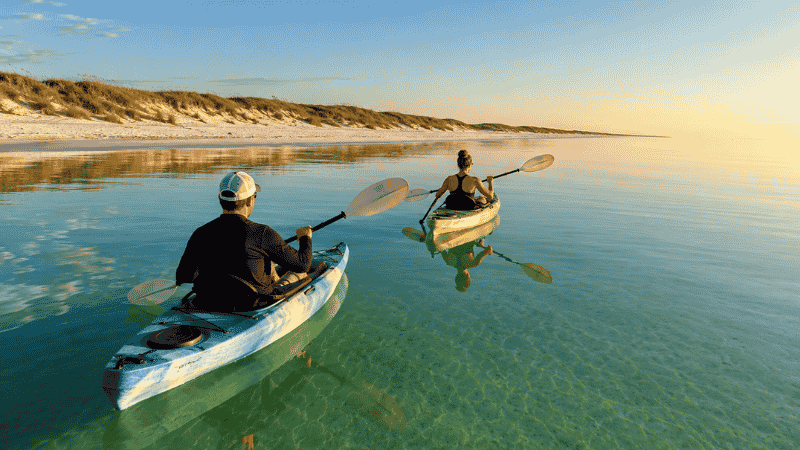
3. Kayaking and Paddleboarding
Both give you the water-level perspective that swimming doesn’t — you’re on top of the Gulf rather than in it, moving at your own pace, exploring coastline that the beach crowd never reaches. Gulf Coast water on a calm morning is ideal for both activities: flat, clear, warm, and forgiving for beginners.
Stand-up paddleboarding is slightly harder to learn than kayaking (balance takes 20–30 minutes to develop) but requires less upper body strength once you’re upright. Kayaking is more stable and covers distance faster. Both are available for rental at most Florida beach towns from outfitters near the water.
Best conditions: Calm mornings before the afternoon sea breeze picks up. On a breezy afternoon, paddleboarding becomes significantly harder and less enjoyable.
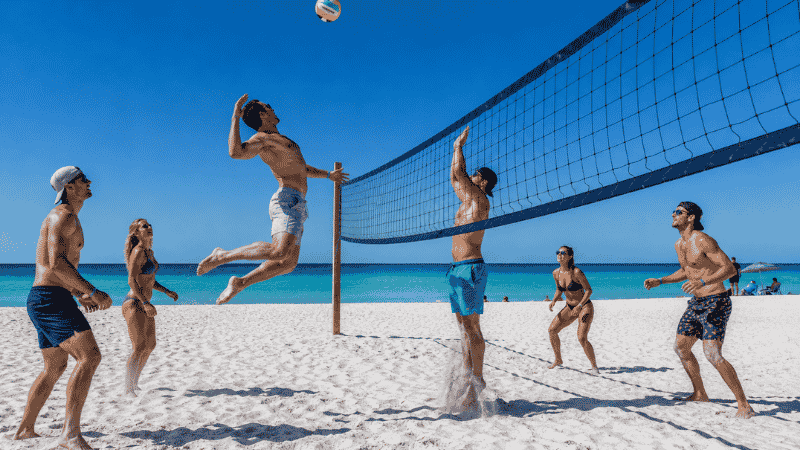
4. Beach Volleyball
Beach volleyball is the most social sport the beach has to offer. The rules are simple enough that you don’t need experience to join a pickup game, the sand makes falling forgiving, and most public beach volleyball courts welcome strangers. At Siesta Key, the main beach area has courts that run pickup games throughout the day in season.
If you’re not up for organized volleyball, a simple game of keep-it-up with two or three people and a ball requires nothing but the ball and some coordination.
5. Frisbee and Paddleball
Both are beach classics for good reason — they’re compact to carry, require no setup, and work for two people or a dozen. Paddleball (the wooden paddle and ball sets) is particularly good for ocean-edge play where the sand is firm and wet. Frisbee works better in calm conditions — even a moderate sea breeze makes throwing accurately genuinely difficult.
Worth knowing: Playing either actively in mid-morning heat is more tolerable than it sounds, because the activity keeps you moving through any stagnant warm air rather than sitting in it.
6. Run on the Beach — Harder Than It Looks
Running on sand burns significantly more calories than running on pavement at the same pace — some estimates put it at 1.6 times the energy expenditure. The soft surface also reduces impact stress on joints compared to road running, which makes it genuinely appealing for runners dealing with knee or ankle issues.
For the easiest running surface, stay on the wet sand near the water’s edge where the sand is compacted. Dry soft sand is a legitimate workout challenge and much harder to sustain for distance.
Water Activities Worth the Effort
7. Body Surfing
Body surfing — catching waves with your body rather than a board — is one of those activities that takes about 20 minutes to learn and then becomes immediately addictive. You need actual breaking waves (Gulf Coast beaches are usually too calm for body surfing; Atlantic-side beaches like Cocoa Beach work much better), patience to read the sets, and the willingness to get worked by a few waves before you get the timing right.
When it works: position yourself shoulder-deep, watch the incoming sets, start swimming hard toward shore as the wave approaches, and let the energy carry you. It costs nothing, requires nothing, and is one of the purest physical experiences the ocean offers.
8. Shell Collecting — Time It Correctly
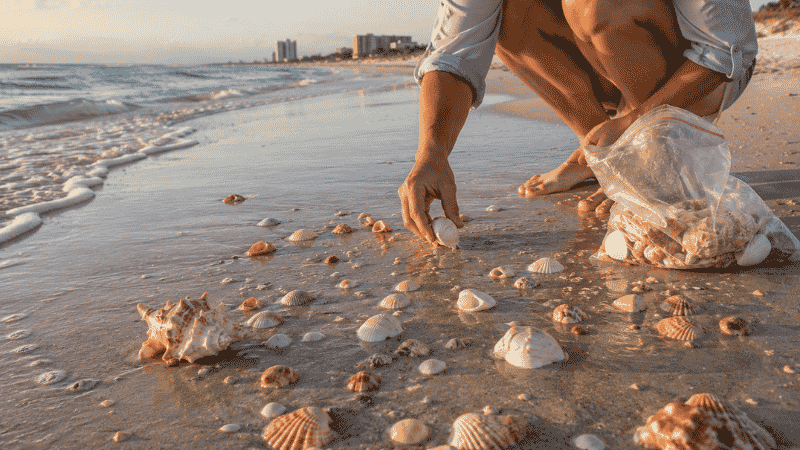
Shell collecting is more strategic than most people realize. The best time to find shells is within two hours after low tide, when the receding water has deposited shells on the beach and before other collectors and the next tide have moved them. Check the tide chart for your specific beach before you go — this single piece of timing information will triple what you find compared to going at random.
On Florida’s Gulf Coast, the best shelling beaches are Sanibel Island (consistently rated among the top shelling beaches in the world), Captiva Island, and the less-visited sections of Caladesi Island. The gulf-facing beaches of the Panhandle produce good shelling after storms, when the wave action churns up shells from deeper water.
What to look for: Lightning whelks (Florida’s state shell), moon snails, sand dollars (look for the living ones — they’re fuzzy and purple — and leave them in the water), and olive shells. A mesh bag or bucket lets you sort as you go without carrying everything in your hands.
9. Fishing from the Shore or Pier
Shore fishing on a Florida beach is more accessible than most people think — a basic rod and reel, some bait (sand fleas are highly effective and free — just dig in the wave wash zone), and a valid Florida fishing license (available online in minutes) is all you need.
Pier fishing is even more beginner-friendly. Russell Fields City Pier in Panama City Beach and the various piers along Florida’s Gulf Coast charge a small daily fee that covers the fishing access and often the rod rental. The elevated platform puts you over deeper water than you can reach from shore, and pier staff are almost universally helpful to first-timers about what bait and technique to use.
10. Kite Flying
Kite flying requires wind, which most beach days reliably provide. It’s an activity that crosses every age gap — a simple diamond kite runs under $20, requires no skill to launch in a decent breeze, and produces the kind of uncomplicated, look-at-that satisfaction that’s genuinely harder to find than it sounds.
Best conditions: A steady onshore breeze of 10–20 mph — enough to keep the kite up without fighting it. Launch into the wind, let out line gradually, and find a spot away from trees, power lines, and other kite-flyers.
Relaxing Things to Do at the Beach
11. Watch the Sunrise — Set Your Alarm Once
A beach sunrise is categorically different from a beach day. The light is low and warm, the beach is empty, the water is glassy, and shorebirds are working the tide line in numbers you won’t see at 11 AM. It requires one alarm and about 20 minutes of walking to a position facing east.
Atlantic-facing beaches (Cocoa Beach, St. Augustine, Miami) get the sunrise directly over the water. Gulf Coast beaches get a different kind of morning — the light comes from behind, the water turns from grey to gold, and the western sky often develops colors the east side doesn’t.
Do it once. That’s all it takes to become the kind of person who talks about beach sunrises for the rest of the trip.
12. Sunset Watching — With the Right Beach
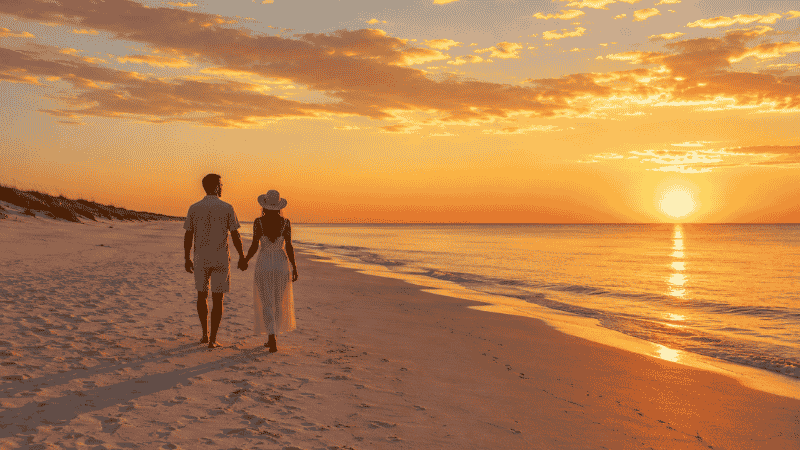
On the Gulf Coast (Siesta Key, Clearwater, Destin, Panama City Beach), the sun sets over the water from late September through March. In summer, the sun actually sets over land due to the southward-facing orientation of the Panhandle beaches. Check sunset direction before you commit to a Gulf Coast sunset plan in July — you might be watching the sun set behind condominiums.
The Siesta Key Drum Circle (every Sunday evening, starting one hour before sunset) is the best version of this activity in Florida — the drums, the crowd, the sunset, and the free entry combine into something genuinely memorable.
13. Beachcombing and Tide Pool Exploration
Slow-walking the water’s edge with your eyes down is one of those activities that sounds like doing nothing and feels like discovering a miniature world. Tide pools (Rocky sections of coast like Point of Rocks at Siesta Key) hold hermit crabs, small fish, anemones, and starfish visible at low tide.
Even on sand beaches without rocks, the tide line deposits interesting things: sea glass worn smooth by sand and wave action, unusual shells, coquina clam clusters that dig themselves back into the wet sand as the wave recedes, and occasionally a sand dollar or small horseshoe crab.
14. Beach Reading
This sounds too simple to include and it’s too important to leave out. The combination of external sensory input (sound of waves, warmth of sun, salt air) and a good book creates a state of focus that’s hard to replicate in any other environment. The beach’s natural rhythm gives you a built-in permission to stop, which most reading at home doesn’t.
Practical note: A physical book or e-reader in a waterproof case. Phone screens are nearly impossible to read in direct sunlight, and the notification pull defeats the whole point.
15. Float in the Water
Not swimming — floating. Find calm water, lean back, let the salt do the work. Saltwater’s buoyancy makes floating effortless in a way freshwater doesn’t — once you release the instinct to correct your position, your body stays up without effort. It’s a practice in exactly the kind of letting go that most people need more of than they’re getting.
Creative and Social Things to Do at the Beach
16. Build a Sandcastle — Take It Seriously
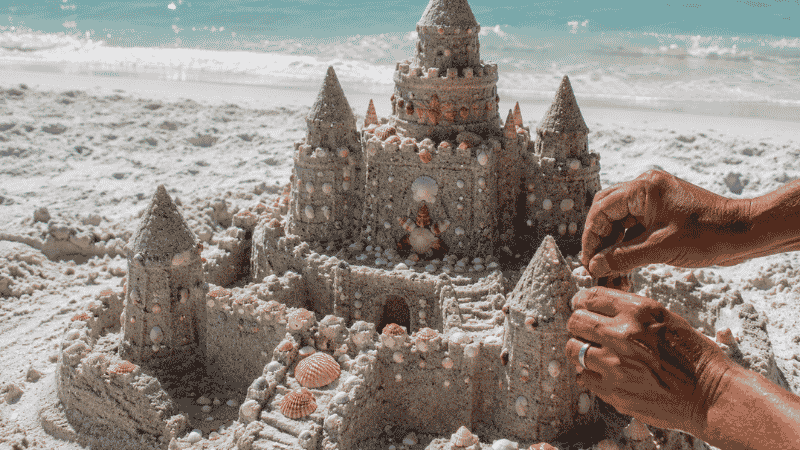
Most adult sandcastles are disappointing because they’re built with dry sand that won’t hold shape. The technique that actually works: use wet sand from 6–12 inches below the surface (dig a hole and use what’s inside), pack it firmly into forms rather than shaping it freehand, and work from the base up. A bucket, a few simple molds, and something to carve with (a plastic knife works fine) produce genuinely impressive results.
Building a sandcastle takes 45 minutes to an hour of sustained focus, which makes it one of the better activities for adults who want something hands-on without committing to a full physical activity.
17. Beach Photography — Golden Hour Only
The worst time to photograph beaches is between 10 AM and 3 PM, when overhead light washes out color and creates harsh shadows. The best times are the hour after sunrise and the hour before sunset — what photographers call golden hour — when the low angle of the sun produces warm, directional light that makes everything look significantly better than it actually is.
Gulf Coast beach photography during golden hour captures the emerald water at its most saturated, the sand at its warmest-looking, and any people in the frame in the most flattering light available. You don’t need a professional camera — the automatic mode of any modern smartphone does excellent work in these conditions.
18. Beach Yoga or Stretching
The sand’s give underfoot changes familiar yoga poses — balance poses require significantly more engagement, and ground poses feel different on a yielding surface. It’s a genuine practice variant rather than just the same yoga with a prettier background.
Morning beach yoga before the crowd arrives (7–8 AM) in summer is the right environment — cool enough to hold poses without overheating, quiet enough to concentrate, and the light makes the whole experience feel more meditative than it would at noon.
19. Beach Games for Groups
Beyond volleyball, several group games work exceptionally well on the beach:
Spikeball: A small trampoline-style net played at ground level by two teams of two. Takes 10 minutes to learn, plays competitively for hours. Compact to carry.
Cornhole: Bags into a hole — classic for a reason. Sets are large to carry but most beach rental shops have them.
KanJam: Flying disc game with frisbee and two cylindrical targets. Fast to set up, easy to learn, satisfying to get good at.
Beach bocce: Works on hard wet sand near the water’s edge. Set is compact and inexpensive.
20. Watch Marine Wildlife
Florida’s beaches are genuinely good for wildlife observation if you know when and where to look. Dolphins work the surf zone along most Gulf Coast beaches in the early morning — scan the water from the shoreline and you’ll often see fins within 20 minutes. Pelicans fish the same zone throughout the day. Shorebirds — willets, sandpipers, ruddy turnstones — work the tide line constantly.
Loggerhead sea turtles nest on Florida beaches from May through October, primarily at night. Nesting sites are marked with signs and cones — give them wide berth. Hatchlings emerge primarily at night, and many beaches have organized turtle watch programs that allow supervised viewing.
Things to Do at the Beach with Kids
21. Wave Jumping
Stand in waist-deep water and time the incoming waves. Jump as each wave arrives to clear the peak, or brace and let it push you toward shore. It’s one of those activities that children discover immediately and adults need permission to re-discover. No equipment, no instruction required.
22. Sand Digging
Young children will excavate the beach with genuine focus for 45 minutes if you give them a bucket and a shovel and let them work. Digging near the water’s edge where the sand is wet produces the most satisfying engineering results — channels, moats, dams that the incoming waves test and eventually defeat.
23. Collecting and Sorting
Kids between 4 and 10 reliably spend extended happy time collecting interesting rocks, shells, and sea glass and sorting them by color, size, or type. Provide a bucket, stay nearby, and the beach itself provides the entertainment.
24. Boogie Boarding
Boogie boards (foam boards designed for wave riding while lying prone) are the right entry point for children who want to ride waves without the complexity of surfing. Rentals are available at most beach towns for a few dollars per hour. The skill threshold is low, the learning curve is fast, and it produces the kind of confident excitement that kids will talk about for weeks.
25. Splash Zone Play
Very young children (18 months to 4 years) are often most happy in the 6-inch-deep wave wash zone at the very edge of the water — where tiny waves run up the sand and recede. No swimming, no depth, just moving water and wet sand. Set up your chair nearby and let them work.
Things to Do at the Beach When the Weather Turns
26. Storm Watch from Safe Cover
Florida afternoon thunderstorms over the Gulf are visually spectacular from a covered position. A beachside restaurant with an open porch, a covered pavilion, or your rental’s balcony gives you the full show — lightning over water, the green-grey storm light on the Gulf, the sound arriving after the flash — without the risk of being on the exposed sand.
When to leave the beach: Florida beach lightning alert systems sound sirens when lightning is detected within a certain radius. When the siren sounds, clear the beach and seek shelter in a substantial building or hard-topped vehicle. Return to the beach only after 30 minutes following the last thunder.
27. Explore the Beach Town
Every significant Florida beach destination has something worth exploring beyond the sand. Siesta Key Village, Pier Park in Panama City Beach, the Destin Harbor Boardwalk — these places have a different character in the afternoon rain than they do on a sunny day. Less crowded, more local, occasionally better for the restaurants when the beach crowd is sheltering.
Frequently Asked Questions
What are the best things to do at the beach for adults? Snorkeling, kayaking, and paddleboarding give adults the most satisfying physical engagement with the beach environment. For a slower pace, shell collecting at low tide, sunrise walks, and beach volleyball are consistently top-rated by repeat beach visitors. The most underrated adult beach activity is simply floating in the ocean — saltwater buoyancy makes it effortless and the sensory decompression is genuinely restorative.
What can you do at the beach besides swim? Snorkel, kayak, paddleboard, fish from the shore or pier, collect shells, fly a kite, play beach volleyball or frisbee, build sandcastles, watch wildlife, do beach yoga, boogie board, explore the tide zone at low tide, or watch the sunrise and sunset. Most of these activities are free or low-cost and require minimal equipment.
What is the best time of day to go to the beach? Early morning (7–10 AM) for the best combination of cooler temperatures, smaller crowds, and the best light for photography and wildlife viewing. Sunrise specifically offers a completely different beach experience from any other time of day. Avoid 11 AM–3 PM in summer for anything active — UV index peaks during this window and heat is most intense.
What should I bring to the beach to stay entertained? A frisbee or paddleball set, a mask and snorkel, a good book or e-reader, a waterproof camera or phone case, and a mesh bag for shell collecting covers most beach activity scenarios without overpacking. For families with kids, add a boogie board and a set of sand digging tools.
What are fun beach activities for families? Wave jumping, boogie boarding, sandcastle building, shell collecting, and splash zone play for younger children. Snorkeling works well for kids 8 and up who are comfortable in the water. Beach volleyball and frisbee bring the whole group together. Pier fishing is beginner-friendly for any age.
What are good beach games to play? Spikeball, KanJam, cornhole, beach bocce, and paddleball are the consistently top-rated beach games for groups. Beach volleyball requires a net (usually provided at public courts) but no equipment beyond a ball. For something lower-key, Sandy Tic Tac Toe drawn in the sand with a stick requires literally nothing and works for any age.
Is snorkeling at the beach safe for beginners? Yes, when done in calm, shallow water with a properly fitting mask. The most common beginner issues are masks that leak (fit properly and test before entering the water) and breathing anxiety (slow, deliberate breaths eliminate this quickly). Snorkeling in shore-accessible spots like Point of Rocks at Siesta Key or the St. Andrews State Park jetties in Panama City Beach is appropriate for complete beginners with no previous experience.
The Bottom Line
A beach day with a plan — even a loose one — is a better beach day than one that goes shapeless after the first swim. The best things to do at the beach are almost universally the simple ones: get in the water, walk the tide line at low tide, watch something wild happen, play something with your hands, and stay long enough to see the light change.
The beach does most of the work. Your job is just to show up with a few ideas and the flexibility to follow what’s actually happening rather than what you planned.
Ready to plan your beach trip? Read next:
- Best Beaches in Florida: The Realist’s Guide to Choosing the Right Shore
- Things to Do in Siesta Key: The Real Guide Beyond the Beach
- Things to Do in Destin Florida: The Real Emerald Coast Guide
- Things to Do in Panama City Beach: The Real Guide
- Beach Vacation Packing List: What to Actually Bring
References
- United States Lifesaving Association — Rip Current Statistics and Safety Guidelines: usla.org
- National Oceanic and Atmospheric Administration (NOAA) — Beach and Ocean Safety: noaa.gov
- American College of Sports Medicine — Exercise in the Heat: Heat Illness Prevention Guidelines
- Florida Fish and Wildlife Conservation Commission — Sea Turtle Nesting Information: myfwc.com
- CDC — Water Safety and Drowning Prevention: cdc.gov/drowning