
It happens fast. One moment you’re floating in that perfect emerald water, thinking this is exactly why you planned this trip — and then something hits your arm or leg and the burning starts. It’s not a cut, it’s not a cramp. It’s a jellyfish sting, and now you’re wading toward shore with one arm held out, trying to remember what you’ve heard about this, which may or may not have included something about urine that is definitely not correct.
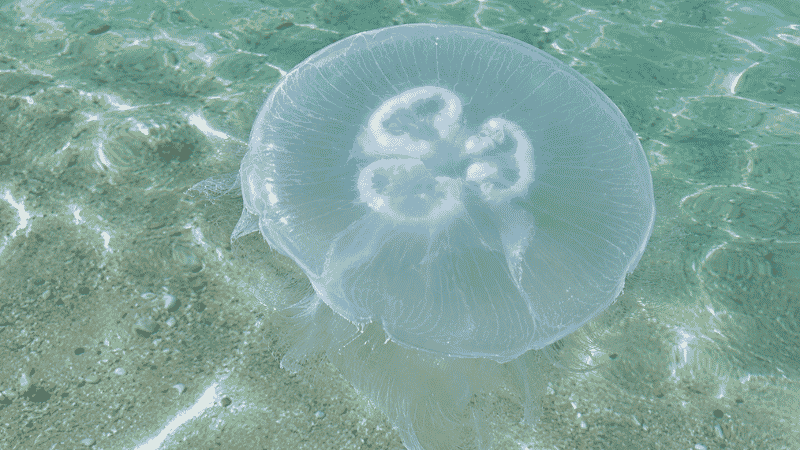
Here’s the reality about jellyfish stings: they’re common, they’re painful, and they’re almost never dangerous. The vast majority of jellyfish encounters on Florida’s Gulf Coast are box jellyfish and moon jellyfish stings that cause real discomfort for 20–45 minutes and then subside with proper first aid. Knowing what to do in the first five minutes makes a meaningful difference in how the next hour feels.
This guide covers jellyfish sting treatment step by step, the beach flag warning system that tells you what’s in the water before you get in, rip current survival, sunburn treatment, and when any of these situations requires more than first aid. Read it before your beach trip, not after.
Key Takeaways
- Rinse a jellyfish sting with seawater first — never fresh water, which causes unfired nematocysts to release more venom
- Hot water immersion (110–113°F for 20–45 minutes) is the most effective pain relief for jellyfish stings, validated by the Mayo Clinic and emergency medicine guidelines
- The urine myth is false — urine does not neutralize jellyfish venom and may worsen the sting
- A red flag on the beach means dangerous surf or currents — not just “be careful,” but genuinely stay out of the water
- Rip currents cause over 80% of lifeguard rescues on surf beaches — swimming parallel to shore (not toward shore) is the correct escape response
- Sunburn damage begins within 15 minutes of UV exposure — sunscreen applied after you arrive is already too late for the first exposure window
Beach Flag Meanings — Read These Before You Get in the Water
Every staffed beach in Florida flies colored flags that communicate current water conditions. These aren’t suggestions — they’re the lifeguard team’s assessment of actual conditions at that moment. Most beach injuries and drownings involve people who either didn’t know the flag system or chose to ignore it.

What Each Beach Flag Color Means
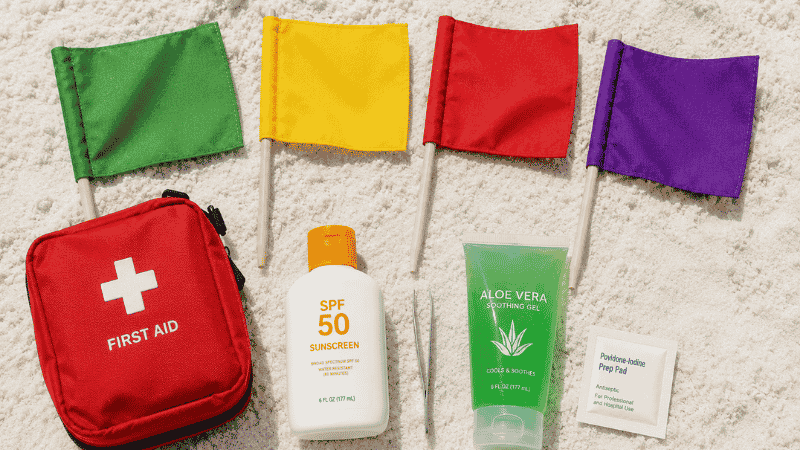
Green flag: Low hazard. Calm conditions. The water is safe for most swimmers.
Yellow flag: Medium hazard. Moderate surf or currents. Swim with caution — this is not the day for anyone who isn’t a confident swimmer to go beyond waist depth.
Red flag (single): High hazard. Dangerous surf, strong currents, or both. Strong swimmers can still enter at their own risk, but should stay close to shore and near lifeguard stations.
Red flag (double): Water closed to the public. No swimming. This is not a guideline — it’s a directive, and ignoring it can result in a fine and puts rescue personnel at risk if you get into trouble.
Purple flag: Dangerous marine life present. This typically means jellyfish, stingrays, or other marine hazards have been observed in the water. Can fly alongside any of the above color flags.
What most people get wrong: A single red flag doesn’t mean “rough but probably fine.” It means lifeguards have assessed conditions as genuinely dangerous. The number of drownings that happen on red-flag days in Florida every summer is not small. Check the flags every time you arrive — conditions can change from morning to afternoon as tides shift and weather builds.
Jellyfish Sting Treatment — The Correct Step-by-Step
Step 1: Get Out of the Water Calmly
Jellyfish tentacles can extend several feet from the body — if you’ve been stung, there may be more tentacle contact happening as you move through the water. Get to shore without thrashing, which can increase tentacle contact.
Step 2: Rinse with Seawater — Not Fresh Water
This is the most common mistake made in the first minute after a sting. Rinsing with fresh water — from a water bottle, a beach shower, or a faucet — causes unfired nematocysts (the stinging cells still on your skin) to discharge additional venom. Use seawater only for the initial rinse.
Step 3: Remove Visible Tentacles — Carefully
Use tweezers, a credit card edge, or a stick to remove any visible tentacle material from the skin. Do not use your bare fingers — tentacle fragments can sting through contact with unaffected skin. If you don’t have tweezers, use the back edge of a card or a folded piece of clothing as a barrier.
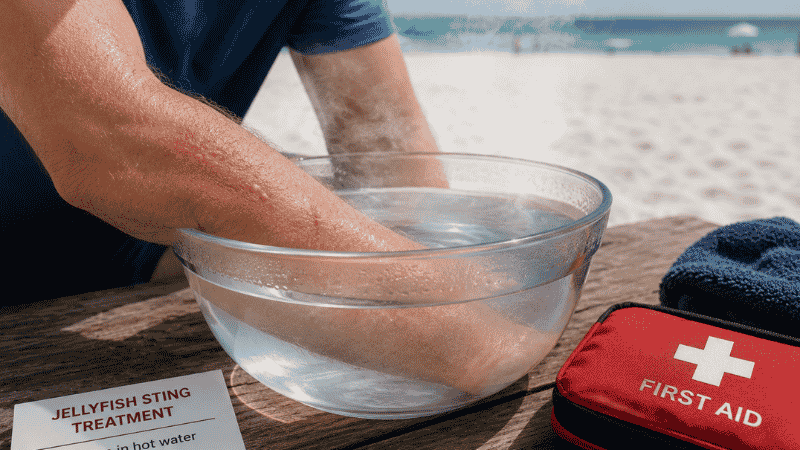
Step 4: Hot Water Immersion — The Most Effective Treatment
According to Mayo Clinic treatment guidelines and emergency medicine research, immersing the affected area in hot water at 110–113°F (43–45°C) for 20–45 minutes is the most effective first-line pain treatment for most jellyfish stings. The heat deactivates the protein-based venom components and reduces pain significantly faster than cold or room-temperature treatment.
The water should feel hot but not scalding — roughly the temperature of a hot shower that’s slightly uncomfortable to hold your hand under. Most beach shower facilities run hot enough. If you’re not near a shower, instant heat packs from a beach first aid kit can be applied to the area.
What about vinegar? Vinegar (acetic acid) is recommended for certain jellyfish species — particularly box jellyfish found in the Indo-Pacific — but research on its effectiveness for the moon jellyfish and Atlantic sea nettles common on Florida beaches is mixed. The American College of Emergency Physicians currently recommends hot water immersion as the primary treatment for most Atlantic jellyfish stings. Vinegar is not harmful to apply and may help neutralize unfired nematocysts in some species, so keeping a small bottle in your beach first aid kit is reasonable.
What does NOT work:
- Urine (does not neutralize venom, widely debunked)
- Cold water or ice (increases pain and may not deactivate venom proteins)
- Sand rubbing (spreads nematocysts and causes more stinging)
- Meat tenderizer (limited evidence, not recommended by current medical guidelines)
Step 5: Apply Hydrocortisone Cream
After hot water treatment, applying 0.5–1% hydrocortisone cream to the affected area reduces inflammation and itching. This is available over the counter and worth having in your beach bag if you’re spending extended time in jellyfish-present waters.
Oral antihistamines (diphenhydramine/Benadryl) can help manage itching and any mild allergic response. Take with food.
Step 6: Pain Relief
Over-the-counter pain relievers (ibuprofen or acetaminophen) taken at the standard dose help manage residual pain after hot water treatment. Most Gulf Coast jellyfish stings are significantly more comfortable within 45–60 minutes of proper treatment.
When a Jellyfish Sting Requires Emergency Medical Attention
Most jellyfish stings are uncomfortable, not dangerous. However, seek emergency medical care immediately if you or someone with you experiences:
- Difficulty breathing or swallowing — can indicate a severe allergic reaction (anaphylaxis)
- Chest pain or tightness
- Nausea, vomiting, or dizziness beyond mild discomfort
- Heart palpitations or irregular heartbeat
- A sting covering a large percentage of the body
- A sting to the face, eyes, or mouth
- Loss of consciousness or altered awareness
- Symptoms in a young child or infant — children’s smaller body mass makes venom effects proportionally more significant
If in any doubt about the severity of a reaction, call 911 or go to an emergency room. Jellyfish sting anaphylaxis is rare but real and moves quickly.
Rip Current Safety — How to Survive the Beach’s Most Dangerous Hazard
Rip currents are the leading cause of beach drownings in the United States. The United States Lifesaving Association estimates that rip currents account for over 80% of all lifeguard rescues on surf beaches. They are not whirlpools, they don’t pull you underwater, and they are survivable with the right response — but only if you know what that response is before you need it.
How to Spot a Rip Current
A rip current is a narrow channel of water moving fast and perpendicular to the shore, typically through a break in a sandbar. Look for:
- Discolored water: Darker, murkier, or differently colored than surrounding water
- Choppy, disrupted surface: The water looks agitated compared to adjacent areas
- Foam or debris moving seaward: If floating material is moving toward the ocean in a concentrated channel, that’s a rip
- A gap in the breaking waves: Waves break consistently except in one spot — that spot is often the location of a rip current flowing out through the sandbar
What to Do If You’re Caught in a Rip Current
Do not swim directly toward shore against the current. A rip current can move at 8 feet per second — faster than an Olympic swimmer. Fighting it directly exhausts you without making progress and is how drownings happen.
The correct response:
- Stay calm. Rip currents don’t pull you under — they pull you away from shore. As long as you’re floating, you’re not drowning.
- Swim parallel to the shore to exit the current. Rip currents are typically 20–100 feet wide — swimming laterally moves you out of the channel.
- Once out of the current, swim diagonally toward shore at an angle rather than straight in.
- If you can’t escape, float and signal for help. Wave one arm and call out. Conserving energy while floating is safer than exhausting yourself.
If you see someone caught in a rip current: Don’t enter the water to rescue them unless you are a trained lifesaver — rescuer drownings are common. Throw them anything that floats (a cooler, a beach ball, a foam noodle) and call for lifeguard help immediately.
Sunburn Treatment — What Actually Works After the Damage Is Done

Prevention First: The Timing Problem
Sunburn damage begins within 15 minutes of UV exposure on unprotected skin. This means applying sunscreen after you’ve parked the car, walked to the beach, and set up your chairs — 20–30 minutes of exposure — has already allowed the initial damage to occur.
The correct approach: apply sunscreen 30 minutes before going outside, not after you arrive. For SPF 50+ mineral sunscreen on a Florida summer beach, reapply every 2 hours and immediately after getting out of the water.
Sunburn Treatment Steps
If sunburn has already happened, the goal of treatment is to reduce inflammation, retain skin moisture, and manage pain while the skin heals.
Cool the skin: A cool (not ice cold) shower or bath helps reduce surface heat and soothes discomfort. Do not apply ice directly to sunburned skin — it can cause additional tissue damage.
Aloe vera gel: Products containing at least 98% aloe vera content (not green-tinted lotion with trace aloe) genuinely reduce sunburn inflammation and provide cooling relief. For maximum effect, refrigerate the aloe gel before application. Apply generously and repeat every few hours.
Stay hydrated: Sunburn draws fluid toward the skin surface and away from the rest of the body. Drink more water than usual — the CDC recommends increasing fluid intake significantly during heat exposure, and sunburned skin accelerates that need.
Avoid further sun exposure: Sunburned skin has significantly reduced UV protection. Keep affected areas covered or out of direct sun for at least 48 hours after a significant burn.
Pain relief: Ibuprofen reduces both pain and inflammation associated with sunburn more effectively than acetaminophen, according to dermatological guidance. Take at the standard OTC dose with food.
Moisturize consistently: As sunburned skin begins to heal and peel, daily application of an unscented moisturizer (not petroleum jelly, which traps heat) keeps the skin from drying and cracking.
When Sunburn Requires Medical Attention
Seek medical care for sunburn if you experience:
- Blistering over a large body surface area
- Fever above 103°F (39.4°C)
- Severe headache, confusion, or nausea — potential heat stroke symptoms
- Signs of infection in blisters (increasing pain, pus, red streaks)
- Sunburn in a young infant (under 1 year) — always requires medical evaluation
Stingray Safety — How to Shuffle Your Feet
Stingrays are common on Florida’s Gulf Coast beaches, particularly in summer when they move into shallow warm water. They don’t attack — they react defensively when stepped on. The stingray shuffle (dragging your feet rather than lifting and stepping as you enter the water) alerts them to move away before you put your foot down on them.
If stung by a stingray: Remove the barb if visible (with tweezers, not bare hands), rinse the wound with seawater, then immerse in water as hot as tolerable (110°F+) for 30–90 minutes. Stingray venom is protein-based and heat-deactivates similarly to jellyfish venom. Seek medical care for deep puncture wounds, retained barb pieces, or any signs of infection.
Your Beach Safety First Aid Kit
A minimal, targeted beach first aid kit for Florida conditions:
- Small tweezers — jellyfish tentacle and stingray barb removal
- Instant heat packs (2–3) — jellyfish and stingray venom treatment
- White vinegar (travel bottle) — supplemental jellyfish sting treatment
- 0.5–1% hydrocortisone cream — post-sting inflammation
- Aloe vera gel (refrigerate before beach) — sunburn treatment
- Oral antihistamine (Benadryl) — allergic response management
- Ibuprofen — pain and inflammation
- Waterproof bandages — regular bandages don’t adhere to wet, sandy skin
- Reef-safe SPF 50+ mineral sunscreen — more than you think you’ll need
Frequently Asked Questions
What is the correct jellyfish sting treatment? Rinse with seawater (not fresh water), remove visible tentacles with tweezers, then immerse the affected area in hot water at 110–113°F for 20–45 minutes. Apply hydrocortisone cream after hot water treatment. Do not use urine, ice, or sand — all worsen the sting. Current Mayo Clinic and emergency medicine guidelines support hot water immersion as the primary treatment.
Does urine help a jellyfish sting? No. This is a persistent myth with no scientific basis. Urine is hypotonic and can actually cause unfired nematocysts to discharge more venom. It does not neutralize jellyfish venom in any meaningful way. Use hot water immersion instead.
What do beach flag colors mean? Green = low hazard (safe conditions). Yellow = medium hazard (moderate surf, swim with caution). Single red = high hazard (dangerous surf or currents, strong swimmers only close to shore). Double red = water closed, no swimming. Purple = dangerous marine life present. Check flags every time you arrive — conditions change throughout the day.
How do you escape a rip current? Don’t swim directly toward shore against the current. Stay calm, float if needed, and swim parallel to the shoreline to exit the narrow current channel. Once clear of the current, swim diagonally back to shore. Signal for help if you can’t make progress.
What’s the fastest way to treat sunburn at the beach? Cool the skin with a cool shower, apply refrigerated aloe vera gel generously, take ibuprofen for pain and inflammation, drink extra water, and stay out of direct sun. Prevention is far more effective — apply SPF 50+ mineral sunscreen 30 minutes before sun exposure and reapply every 2 hours.
Are jellyfish stings dangerous? Most jellyfish stings on Florida’s Gulf Coast cause pain and discomfort for 20–60 minutes but are not medically dangerous. Seek emergency care immediately for difficulty breathing, chest pain, heart palpitations, widespread stinging, or any signs of severe allergic reaction. Stings to the face or eyes also warrant medical evaluation.
What is the stingray shuffle? Dragging your feet (shuffling) rather than lifting and stepping as you enter ocean water — particularly on Gulf Coast beaches in summer. This alerts stingrays resting on the sandy bottom to move before you step on them. Stingrays don’t attack; they sting reflexively when stepped on. The shuffle prevents the encounter from happening.
The Bottom Line
Beach safety isn’t about fear — it’s about knowing a few specific things before you need them. The beach flag system tells you what’s in the water before you get in. Knowing the rip current response (parallel, not toward shore) could save your life or someone else’s. Knowing that hot water beats cold for a jellyfish sting makes a painful 45 minutes much shorter.
None of this takes the fun out of a beach trip. It just means that when the unexpected happens — and at some point on enough beach trips it will — you know what to do in the first five minutes, which is when it matters most.
Planning your Florida beach trip? Read next:
- Beach Vacation Packing List: What to Actually Bring
- Things to Do at the Beach: 30 Ideas Beyond Lying on the Sand
- Best Beaches in Florida: The Realist’s Guide to Choosing the Right Shore
- Things to Do in Siesta Key: The Real Guide Beyond the Beach
References
- Mayo Clinic — Jellyfish Stings: Diagnosis and Treatment: mayoclinic.org
- American College of Emergency Physicians — Marine Envenomation Treatment Guidelines
- United States Lifesaving Association — Rip Current Statistics and Safety: usla.org
- CDC — Sun Safety and Sunburn Prevention: cdc.gov/cancer/skin/basic_info/sun-safety
- National Ocean Service (NOAA) — Rip Current Science and Safety: oceanservice.noaa.gov
- Florida Department of Health — Beach Safety and Marine Hazards