
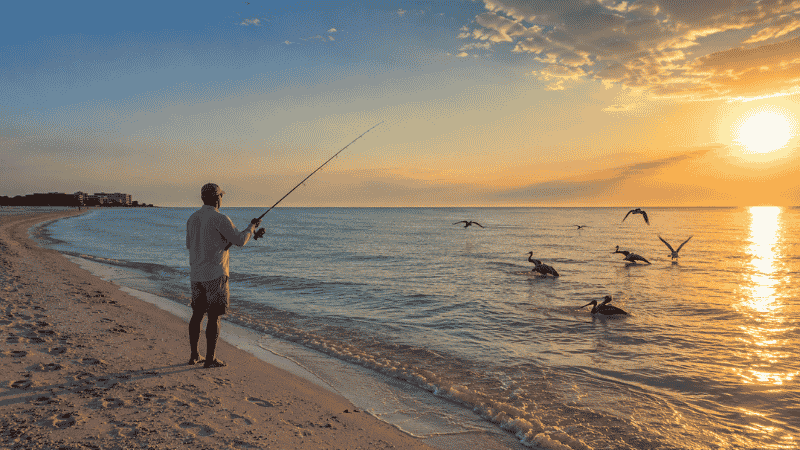
You’re standing on the beach at 7 AM, rod in hand, watching the sun come up over the Gulf. Pelicans are diving into the water thirty yards out — which means baitfish, which means predators, which means exactly the situation you want to be in. The only problem is you’ve never done this before and you’re not entirely sure what you’re doing.
Beach fishing for beginners has a reputation for being complicated — the gear lists are long, the terminology is intimidating, and most guides are written by people who’ve been doing it for decades and have forgotten what it felt like to be completely new. The truth is simpler: you need a rod, a reel, the right bait for where you are, and a basic understanding of where fish actually are relative to the shore.
This guide covers everything a first-time beach angler in Florida needs to know: the minimal gear setup that actually works, how to read the water to find fish, the four species that beginners can catch most consistently, pier fishing as an easier alternative, and the specific regulations you need to know before you drop a line.
Key Takeaways
- The simplest functional setup for beach fishing beginners is a 7–8 foot medium-heavy rod with a 3000–4000 series spinning reel, 15–20 lb braided main line, and a 20–30 lb fluorocarbon leader — total cost around $80–$150 for reliable entry-level gear
- Sand fleas (mole crabs) are the best free bait for Florida beach fishing — dig them from the wave wash zone with your feet or a sand flea rake, and pompano and whiting will bite them more reliably than frozen shrimp
- The trough — the slight depression in the sand running parallel to shore just past the first wave break — is where most Florida beach fish feed; casting 20–40 feet out puts your bait right in it
- A Florida fishing license is required for anyone 16 and older fishing from shore — it can be purchased online at myfwc.com in minutes and is legally required before you cast
- Pier fishing is significantly easier for beginners than surf fishing — the elevated position, calmer water, and helpful community of regulars makes it the best first fishing experience for most newcomers
Florida Beach Fishing License — Read This First
Before anything else: Florida requires a fishing license for anyone 16 years of age or older fishing in Florida waters, including from the beach and from public piers. The only exceptions are fishing from a licensed pier (some piers include license coverage in the entry fee — check before you go) and specific free fishing days designated by the state.
A Florida Resident Annual Freshwater/Saltwater combo license costs around $32.50. A 3-day non-resident license runs about $17. Both are available online at myfwc.com, at bait and tackle shops, and at many outdoor retailers. Download the app or take a screenshot of your license — you need to be able to show it.
Not having a license when asked by a Florida Fish and Wildlife officer results in a fine that will cost significantly more than the license. Get it before you go.
The Minimal Beach Fishing Setup That Actually Works
Most beginner gear lists are overwhelming because they include everything you might eventually want rather than what you actually need to start catching fish. Here’s the honest minimum.
Rod and Reel
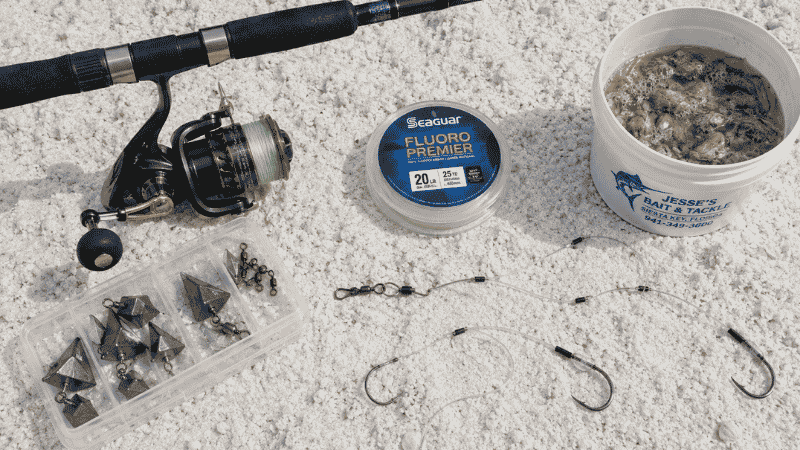
Rod: A 7–8 foot medium-heavy spinning rod. This length handles most Florida beach fishing scenarios — close-in trough fishing for pompano and whiting, and longer casts for larger species. Longer (9–12 foot) rods are useful for casting greater distances, but a 7–8 footer is the right starting point.
Reel: A 3000–4000 series spinning reel. The series number refers to the size — a 3000 or 4000 is appropriate for the 15–20 lb line you’ll be using in Florida beach fishing. Match the reel size to the rod — an oversized reel on a light rod is uncomfortable and inefficient.
Budget reality: Entry-level combos (rod and reel together) from Ugly Stik, Penn, or Shimano start around $60–$80 and are genuinely functional. The rod and reel is not where beginners should overspend — the difference between an $80 combo and a $300 combo matters much less than knowing where to cast and what bait to use.
Line and Leader
Main line: 15–20 lb braided line. Braid has no stretch, which means you feel the bite immediately, and it casts significantly further than monofilament at the same pound test. Load your reel with braid before your first trip — most entry-level combos come with monofilament, which works but is less sensitive.
Leader: 20–30 lb fluorocarbon leader, 18–24 inches long, connected to the main braid with a small swivel. Fluorocarbon is nearly invisible underwater, which matters in the clear Gulf water. The swivel prevents line twist, which is the main source of frustration in spinning reel fishing.
Why you need the leader: The braid is visible in clear water. The leader is not. Many Florida species — snook, redfish, pompano — are leader-shy in clear conditions and will ignore or spit a bait tied directly to braid.
Terminal Tackle
For beginners targeting pompano and whiting — the two most reliably catchable species from Florida beaches — you need:
Pompano/whiting rig: A two-hook bottom rig with 1/0 circle hooks and a 1–2 oz pyramid sinker. These are sold pre-tied at every bait shop in Florida as “pompano rigs” — ask for them specifically. The pyramid sinker holds bottom in wave action better than any other shape.
Circle hooks: Circle hooks are now required for most saltwater fishing in Florida involving live or dead bait. They’re also better for catch-and-release fishing because they hook the fish in the corner of the mouth rather than the gut. The technique is different from J-hooks: don’t set the hook with a sharp strike. When you feel the bite, reel down on the fish and the circle hook sets itself as the fish turns away.
Swivels: Small barrel swivels, size 7–10, prevent line twist when using spinning gear. Always use a swivel between your main line and leader.
How to Read the Water — Where the Fish Actually Are
This is the skill that separates experienced beach anglers from beginners who cast randomly and wonder why they’re not catching anything.
The Trough
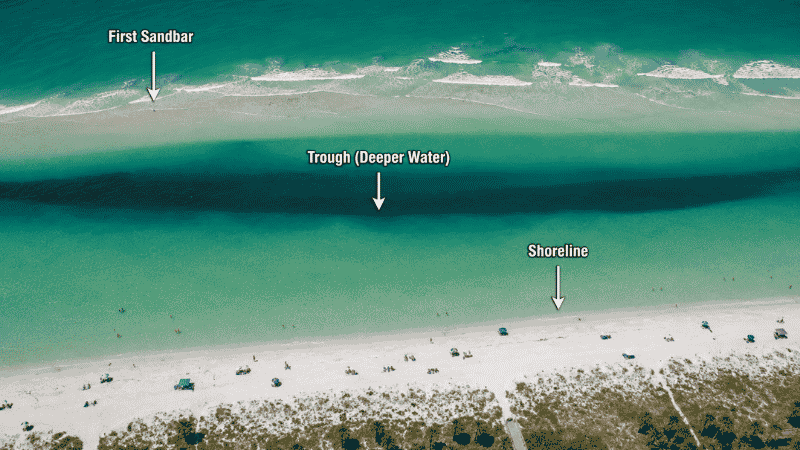
The trough is a depression in the sand that runs parallel to the shoreline, typically located between the shore and the first sandbar. When waves break over the sandbar, water rushes into the trough, creating a feeding lane where small crabs, sand fleas, and baitfish concentrate — and where predatory fish like pompano, whiting, redfish, and snook wait to eat them.
Finding the trough: Look for the slightly darker band of water running parallel to shore between where the waves break and the beach. The trough is often only 10–30 feet from where you’re standing. You don’t need to cast 100 yards — casting 20–40 feet out is often more productive than casting as far as possible.
The most common beginner mistake: Casting as far as they can when the fish are 25 feet from shore. Watch where the birds are diving and where waves are breaking differently — these signals show you where structure and baitfish are.
Tide and Time
Best time: The two hours before and after high tide are consistently the most productive windows for Florida beach fishing. High tide pushes predators closer to shore as they cross the sandbars looking for food. Low tide exposes the sandbars and concentrates fish in deeper channels.
Best time of day: First light (30 minutes before sunrise to 2 hours after) and the last hour before sunset are peak feeding periods for most Florida beach species. Midday in summer — when beach temperatures are at their highest — is generally the slowest fishing period.
After a storm: A day or two after a Gulf storm is often excellent fishing. The wave action churns up sand fleas, crabs, and baitfish, concentrating feeding activity along the shoreline.
Water Color and Clarity
Clear water: Visible down several feet. Good for sight fishing and for species like snook and redfish that use their vision to hunt. Use natural-colored baits and longer, lighter leaders. Fish early morning or evening when light conditions favor the angler.
Stained or murky water: Reduced visibility. Fish rely more on smell and vibration than sight. Good for natural baits like cut bait, shrimp, and sand fleas. Brighter lure colors (chartreuse, pink, white) produce better than natural colors in murky conditions.
Beach Fishing Bait Guide — What Actually Catches Fish in Florida
Sand Fleas (Mole Crabs) — The Best Free Bait
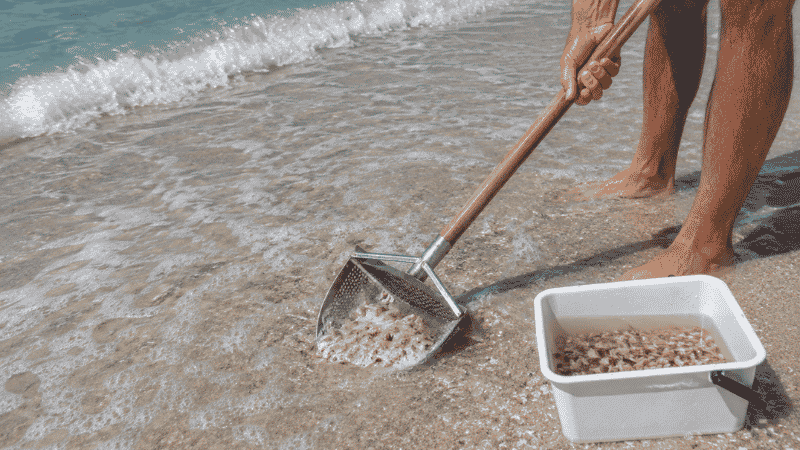
Sand fleas are small crabs that live in the wave wash zone — the wet sand where waves run up and recede. They’re the primary food source for pompano and whiting, and live sand fleas outperform frozen shrimp for these species by a significant margin.
How to collect them: Stand in the wave wash zone and feel for movement under your feet as a wave recedes. Push a sand flea rake (available at any beach tackle shop for $10–$15) into the sand and sieve it through the receding wave. Live sand fleas in a bucket with wet sand stay alive for hours.
How to rig them: Hook through the last segment of the shell (the fan-shaped telson) to keep them alive and kicking on the hook. A live, kicking sand flea is more attractive to pompano than a static piece of shrimp.
Shrimp
Frozen shrimp from a bait shop works for most Florida beach species — it’s the universal beginner bait because it’s available everywhere and fish will eat it. It’s less effective than live sand fleas for pompano specifically, but good for whiting, flounder, and redfish.
Fresh vs. frozen: Fresh shrimp is significantly better than frozen. If a bait shop near the beach sells fresh shrimp, use it. Frozen works but loses scent faster.
Rigging: On a circle hook, thread the hook through the shrimp’s tail section, running it through the hard fan rather than the meat — this keeps it on the hook through casting.
Cut Bait
Chunks of cut mullet, ladyfish, or pinfish work for larger species — sharks, bluefish, jack crevalle, and larger redfish. Cut bait releases oil and scent in the water, attracting fish from greater distances.
The difference: Sand fleas and shrimp target smaller, more accessible species. Cut bait targets larger, less predictable species. For a first beach fishing trip, stick with sand fleas or shrimp.
Four Species Beginners Can Catch Most Consistently
Pompano — The Most Sought-After Beach Species
Florida pompano are the most popular target for beach anglers on the Gulf Coast. They’re fun to catch, beautiful, and excellent table fare. They’re also seasonal — they follow water temperatures between 62°F and 75°F, moving north in spring and south in fall.
Where: In the trough, 15–40 feet from shore, over sandy bottom.
When: Spring (March–May) and fall (October–November) produce the most consistent pompano fishing. Summer is too warm in the shallows; winter is too cold.
Bait: Sand fleas are #1. Frozen shrimp is a distant second. Banana-style pompano jigs in pink, orange, or yellow also work — bounce them slowly along the sandy bottom with a 20-second pause between hops.
Rig: Pre-tied pompano rig with 1/0 circle hooks and a pyramid sinker. Cast 20–40 feet out, keep the line tight, and wait.
Whiting (Southern Kingfish)
Whiting are smaller than pompano but more reliably present year-round and are excellent for beginners. They feed in the same trough on the same baits as pompano, so you’re often catching both species on the same setup.
What to know: Whiting have small mouths — 1/0 circle hooks are correct. They bite decisively and fight well for their size. Excellent eating.
Redfish (Red Drum)
Redfish are one of Florida’s most popular inshore species and are catchable from the beach, particularly during fall and early winter when they’re in their bull redfish migration phase. Trophy-sized “bull reds” (30+ inches) frequently cruise Florida beaches in October and November.
Bait: Cut bait or live finger mullet are the most effective. Redfish have a downward-pointing mouth designed for bottom feeding — present your bait on the bottom.
Rig: A Carolina rig (sliding egg sinker above a swivel, 18-inch leader, 3/0 circle hook) keeps the bait on the bottom while allowing natural movement.
Bluefish and Spanish Mackerel
When bluefish or Spanish mackerel are running, they’ll hit almost anything shiny and moving quickly. Schools of them often push baitfish to the surface and create visible feeding frenzies — diving birds and splashing on the surface are your signals.
Setup: A heavier rod with a silver spoon or a metal jig. Cast into the feeding activity and retrieve quickly. Both species have very sharp teeth — a short wire leader prevents cutoffs.
Note: Both species bite hard and fight aggressively, making them genuinely exciting catches for beginners — but they don’t have the table quality of pompano or redfish.
Pier Fishing for Beginners — The Easier Alternative
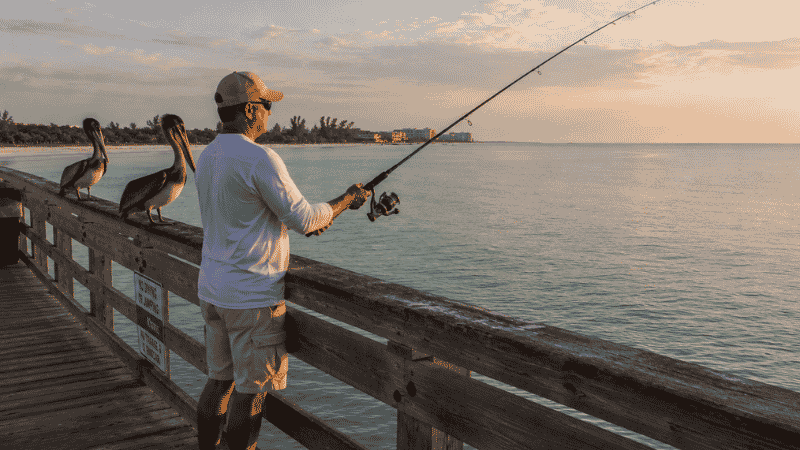
If beach fishing feels overwhelming, pier fishing is the better starting point. Florida’s public fishing piers offer several advantages over surf fishing:
Why piers are easier: The elevated position puts you over deeper water without needing to cast far. The structure of the pier itself attracts fish. There’s a built-in community of experienced anglers who will show a genuine beginner the correct bait and technique for that specific location.
Best Florida Gulf Coast fishing piers for beginners:
- Rod & Reel Pier, Anna Maria Island — casual Old Florida atmosphere, consistently good pompano and snook fishing, small café on site
- Russell Fields City Pier, Panama City Beach — 1,500 feet into the Gulf, excellent for mackerel, bluefish, and seasonal amberjack
- Okaloosa Island Pier, Fort Walton Beach — active pier fishing community, good for pompano and redfish
- Skyway Fishing Pier, St. Pete — built on the old Sunshine Skyway Bridge, one of the most productive fishing piers in Florida for a wide variety of species
Pier etiquette: Don’t crowd other anglers. If your line gets tangled with someone else’s, stay calm and work it out patiently. Watch where you’re casting relative to other lines. Learn from the regulars — pier fishermen are generally happy to share knowledge with someone who asks respectfully.
Beach Fishing Setup — The Minimal Kit for Your First Trip
Rod and reel combo: 7–8 foot medium-heavy spinning combo, 3000–4000 series ($60–$100)
Line: 15 lb braided main line, 20 lb fluorocarbon leader ($15–$25 total)
Pre-tied pompano rigs: 2–3 packs from any bait shop ($3–$5/pack)
Pyramid sinkers: 1–2 oz, 6–10 of them ($5)
Small swivels: Size 7–10 barrel swivels ($3)
Bait: Sand fleas (free, collected on site) or frozen shrimp ($5–$8)
License: Florida saltwater fishing license ($17–$32 depending on residency)
Total for a functional first beach fishing setup: Under $150, often significantly less if you find a good combo on sale.
If You Only Have 30 Minutes Before the Tide Changes
Get to the trough quickly and fish efficiently:
- Rig your pompano rig with a 1 oz pyramid sinker and bait with sand fleas or shrimp
- Cast 25–35 feet — you’re targeting the trough, not the horizon
- Keep the line taut but not tight — you want to feel the bite, not yank the bait out of the zone
- Leave the rod in a rod holder if you have one, or hold it loosely — don’t hold it tight with your hand wrapped around it waiting to strike
- When you feel the pull, reel down (don’t strike) and let the circle hook do its job
That’s it. This setup catches pompano and whiting in Florida beach conditions reliably.
Beach Fishing Safety
Stingrays: Florida beaches have stingrays, particularly in summer. They rest buried in the shallow sandy bottom and will sting if stepped on. The stingray shuffle — dragging your feet rather than lifting and stepping — alerts them to move before you step on them. If stung, immerse the affected area in water as hot as can be tolerated for 30–90 minutes. The heat deactivates the protein-based venom. Seek medical attention for deep puncture wounds.
Sun protection: Long-sleeved UPF fishing shirts, polarized sunglasses, and a hat. Florida’s UV index in summer reaches 10–11 (Extreme). Reef-safe SPF 50+ sunscreen on exposed skin, reapplied every 2 hours.
Hook safety: Always know where your hook is before casting. Watch behind you on the backswing. Carry needle-nose pliers to remove hooks — from fish and from accidental skin hooks.
Lightning: Florida leads the US in lightning strikes. When you hear thunder or see lightning, leave the beach immediately. A fishing rod is an effective lightning rod. Do not stand on a beach or pier holding a graphite rod in an electrical storm.
Frequently Asked Questions
Do I need a fishing license to fish from the beach in Florida? Yes. Anyone 16 or older fishing in Florida saltwater (including from the beach and most piers) needs a Florida saltwater fishing license. Available online at myfwc.com or at any bait shop. Some piers include license coverage in their entry fee — verify before assuming. The fine for fishing without a license significantly exceeds the license cost.
What is the best bait for beach fishing in Florida? Sand fleas (mole crabs) collected from the wave wash zone are the most effective bait for pompano and whiting — the most consistently catchable Florida beach species. Frozen shrimp is the reliable universal backup. Cut mullet or pinfish works for larger species like redfish and bluefish.
How far do I need to cast for beach fishing? Often much closer than beginners expect. The trough — where most Florida beach fish feed — is typically 15–40 feet from shore. Casting 100+ yards is rarely necessary and usually less productive than presenting bait in the trough.
What is the best time to go beach fishing in Florida? The two hours before and after high tide, combined with first light (30 minutes before sunrise to 2 hours after) or the hour before sunset. Midday fishing in summer is generally slow. Spring and fall produce the best pompano fishing; year-round opportunities exist for whiting, redfish, and other species.
Is pier fishing or beach fishing better for beginners? Pier fishing is easier for beginners — the elevated position puts you over deeper water without a long cast, the pier structure attracts fish, and experienced regulars will often share knowledge. Beach fishing is more accessible (no pier entry fee) and allows more freedom of movement. Both are appropriate starting points.
What fish can I catch from the beach in Florida? Pompano, whiting (Southern kingfish), redfish (red drum), bluefish, Spanish mackerel, flounder, snook (seasonal, catch-and-release only in some periods), sharks, and jack crevalle are all regularly caught from Florida Gulf Coast beaches. Pompano and whiting are the most reliably catchable for beginners.
The Bottom Line
Beach fishing for beginners in Florida doesn’t require expensive gear, years of experience, or technical expertise. It requires a basic setup, the right bait for the conditions, an understanding of where the trough is, and the discipline to arrive at low light rather than midday.
The pelicans diving at 7 AM are telling you something. The darker band of water 30 feet from shore is telling you something. The wave wash zone where sand fleas are moving in and out with every wave is telling you something.
Once you learn to read those signals, the rest follows naturally.
Planning your Florida beach trip? Read next:
- Things to Do at the Beach: 30 Ideas Beyond Lying on the Sand
- Things to Do in Anna Maria Island: Florida’s Gulf Coast Secret
- Things to Do in Destin Florida: The Real Emerald Coast Guide
- What to Bring to the Beach: Complete Florida Beach Gear Guide
References
- Florida Fish and Wildlife Conservation Commission — Saltwater Fishing License Requirements and Regulations: myfwc.com
- Florida Fish and Wildlife Conservation Commission — Circle Hook Requirements: myfwc.com/fishing
- National Oceanic and Atmospheric Administration (NOAA) — Tide Predictions for Florida: tidesandcurrents.noaa.gov
- American Red Cross — Lightning Safety Guidelines: redcross.org
- Florida Department of Health — Stingray Injury Treatment Guidelines