
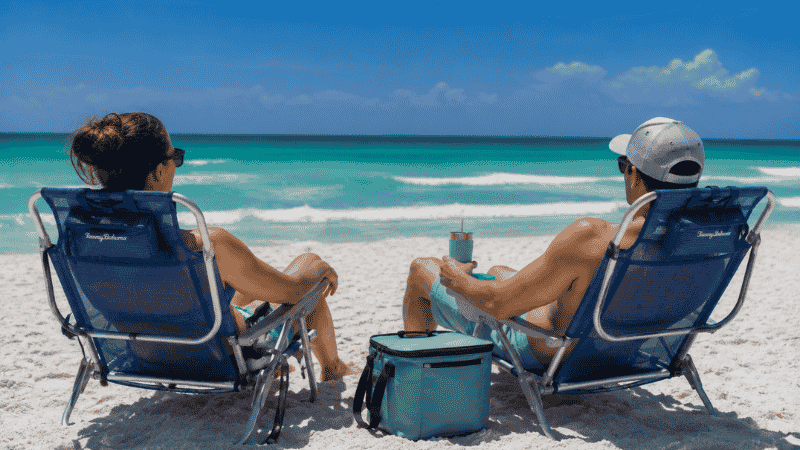
There’s a specific kind of suffering that happens around hour three of a beach day in a bad chair. Your lower back has started a quiet protest. The armrests — if there are any — are at a height designed for no human body in existence. You’ve tried reclining twice and the mechanism has defeated you both times. And now you’re watching everyone around you who brought the right chair looking genuinely relaxed while you’re essentially sitting on the ground in a fabric sling that’s slowly folding you in half.
Beach chair decisions get made wrong because people optimize for the wrong things. They buy the cheapest option, or the one that folds down the smallest, or the one that looks good in the product photo — and then they find out on the sand that cheap fabric traps heat, the smallest-folding chair is also the hardest to get out of, and the good-looking chair doesn’t recline.
The best beach chair isn’t the most expensive one, or the most popular brand, or the one your neighbor has. It’s the one that matches how you actually use the beach — how long you stay, how far you carry it, whether you read or sleep or watch kids, whether you have back issues, and what the sand conditions are like where you go.
This guide covers all of it: the five features that determine whether a beach chair works, honest recommendations by use case, and the specific mistakes that cause most bad beach chair purchases.
Key Takeaways
- The #1 beach chair mistake is buying based on folded size — the smallest-folding chairs are often the hardest to get in and out of and the least comfortable for extended sitting
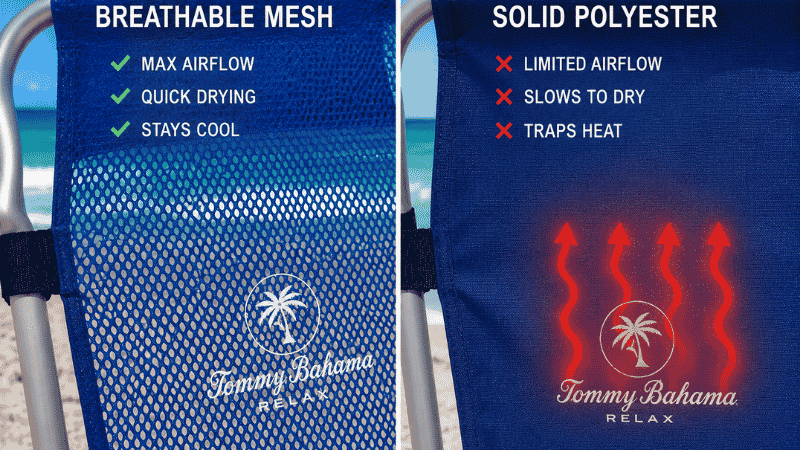
- Mesh fabric is significantly more comfortable than polyester on hot Florida beaches — it breathes, doesn’t trap heat against your body, and dries faster after water contact
- Seat height matters more than most people realize — low-slung sand chairs (8–10 inches) are easier to relax fully in but harder to get up from; standard height chairs (16–18 inches) are better for people with knee or back issues
- A beach chair with canopy (built-in shade) reduces UV exposure even when no umbrella or tent is set up — worth the slight weight premium for anyone spending 4+ hours on the beach
- The Tommy Bahama backpack beach chair remains the benchmark for the portable mid-range category — widely available, genuinely functional, and the standard against which most alternatives are measured
The 5 Features That Determine Whether a Beach Chair Works
1. Portability — The Feature Everyone Underestimates
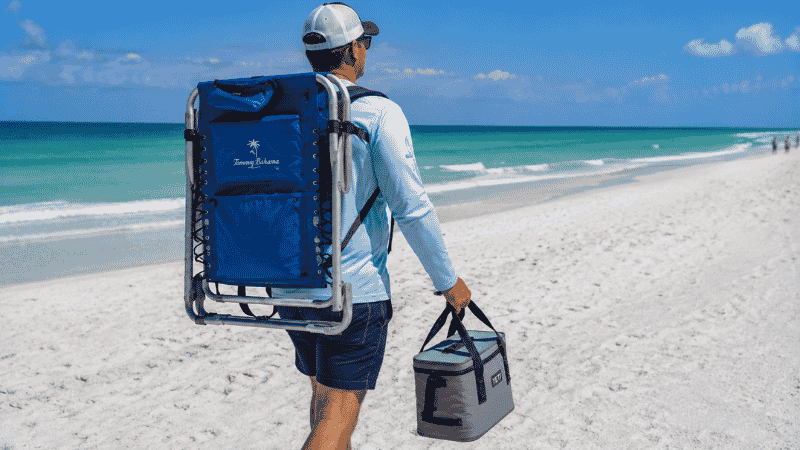
A beach chair that’s too heavy or too awkward to carry doesn’t make it to the beach consistently. This sounds obvious, but it’s the most common source of post-purchase regret.
Weight: Under 5 lbs is genuinely portable for most people. 5–8 lbs is manageable for shorter carries. Above 8 lbs requires either a beach wagon or a very short walk from the parking lot.
Carry system: A chair with backpack straps distributes weight across your shoulders and leaves your hands free for other things — cooler, bag, kids. A shoulder strap puts all the weight on one side. A built-in carry handle is the worst option for any real distance. Check which system comes standard with the chair you’re buying — some brands charge extra for backpack straps.
Folded dimensions: Importantly, the smallest folded size does not mean the most portable. A chair that folds to 4 inches wide but is 42 inches long is harder to carry than a chair that folds to 8 inches wide and 30 inches long. Think about how you’ll actually carry it, not just how small it gets.
2. Fabric — Mesh vs. Polyester, and Why It Matters in Florida
Mesh fabric allows airflow through the seat and back, which means it doesn’t trap heat against your skin on a Florida summer afternoon. It also dries faster after water contact, which matters if you’re going in and out of the water. The trade-off is that mesh chairs tend to cost slightly more and can stretch out over time with heavy use.
Polyester/nylon fabric is more common in budget chairs and holds its shape better long-term. The downside: on a Florida beach in July, sitting in a polyester chair for several hours in direct sun creates a heat-trap effect against your back that mesh completely avoids.
For anyone spending full beach days in Florida summer heat, mesh is worth the price premium.
UV resistance: Look for fabric rated as UV-resistant or UPF-treated — beach chairs spend significant time in direct sun, and untreated fabric fades and degrades faster in UV exposure.
3. Reclining System — Most Are Annoying, a Few Are Excellent
A beach chair that doesn’t recline properly is a source of genuine frustration across thousands of product reviews. The two mechanisms in common use:
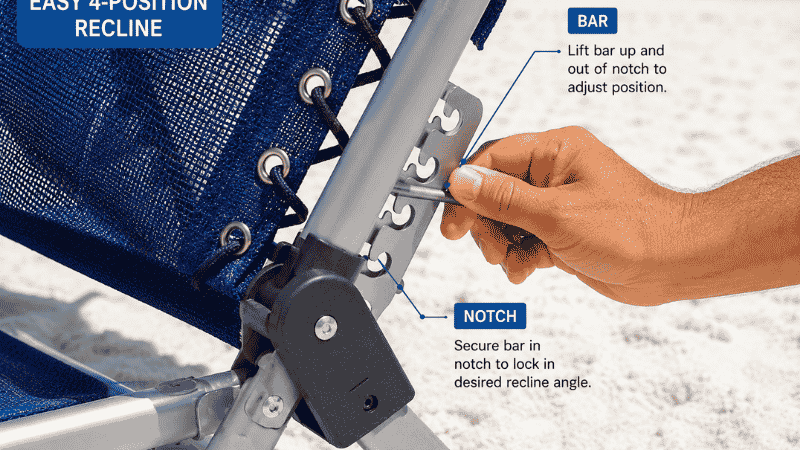
Bar and notch system: A metal bar hooks into notched positions on the back legs, allowing several preset recline angles. Simple, reliable, and works even when sandy. The downside is limited adjustment range and occasional difficulty repositioning with one hand.
Lever or push-button system: More convenient one-handed operation, but more failure points. Sand gets into the mechanism. Saltwater corrodes the hardware. Over time, these systems are more likely to stick or fail than the simple bar-and-notch.
Full recline (flat): Some chairs recline to completely flat — useful for napping, less useful for reading. If full flat recline matters to you, confirm the chair actually achieves it (many marketed as “full recline” stop at a significant angle).
The real test: Can you adjust recline with one hand while holding a drink? If yes, the mechanism is good. If it takes two hands and some creative maneuvering, it’s annoying.
4. Seat Height — Low vs. Standard, and Who Each Suits
Low/sand chairs (seat height 8–11 inches): Create the classic beach lounging position — close to the ground, angled back, legs stretched out in front. Comfortable for reading and sleeping. Harder to get up from, which matters for anyone with knee pain, hip issues, or anyone over 50 who doesn’t want to make a production out of standing up. Better for younger, more mobile users who want the full beach recline experience.
Standard height chairs (seat height 14–18 inches): Easier to get in and out of. Better for people with back or knee issues. Less of the classic “beach lounging” feeling, more like sitting in a normal chair that happens to be on the sand. Better for longer sitting sessions where getting up repeatedly is part of the experience.
Chair-and-a-half / wide chairs: Worth considering for larger adults — a standard beach chair seat is often 18–20 inches wide, which is fine for average builds but uncomfortable for larger frames. Several brands make wider versions (22–24 inches) without significant weight penalty.
5. Durability — What Actually Destroys Beach Chairs
The beach environment is uniquely destructive: salt air corrodes metal frames, sand works into every moving part, UV exposure degrades fabric and plastic, and the repeated wet-dry cycles from ocean use stress every joint and seam.
Frame material: Aluminum frames resist corrosion significantly better than steel in coastal environments. Look specifically for “marine-grade aluminum” or “rust-resistant” designations for chairs used near saltwater. Steel frames will rust with repeated ocean use regardless of paint coating.
Cup holders: Neoprene or mesh cup holders outlast plastic ones by years. Plastic cup holders crack in UV exposure and break when chairs are folded repeatedly with force.
Stitching at stress points: Check the stitching where the fabric attaches to the frame, where carry straps attach, and where the recline mechanism connects. These are the first failure points on lower-quality chairs.
Best Beach Chair by Use Case
Best Overall Mid-Range: Tommy Bahama Backpack Beach Chair
The Tommy Bahama backpack beach chair is the benchmark of the mid-range category for good reason. Backpack straps make it genuinely hands-free to carry. The bar-and-notch recline works reliably in sandy conditions. The fabric holds up to repeated beach use without the heat-trap issues of cheaper polyester chairs. At 5.5 lbs, it’s portable without being featherlight.
It’s not the most comfortable chair ever made, and the seat height is on the lower side which makes getting up slightly effortful. But for the combination of portability, reliability, and price point, it remains the standard. The reason it appears on nearly every “best beach chair” list isn’t brand loyalty — it’s that it consistently does what a beach chair needs to do without significant failure points.
Who it’s for: Anyone who wants a reliable, portable, mid-range chair that doesn’t require research. The safe default choice.
Budget: $60–$80 depending on retailer and configuration.
Best Comfort Upgrade: Yeti Hondo Beach Chair
The Yeti Hondo is the most comfortable production beach chair available, and it’s not particularly close. The springy mesh seat allows your body to sink in rather than sitting on top of a taut surface, creating a feel that reviewers consistently describe as noticeably different from anything else at any price point. It’s extraordinarily durable — the frame handles sand and salt abuse that would damage lesser chairs, and it can be fully submerged in wave action without damage.
The honest trade-offs: it weighs 8.5 lbs, which is heavy for a beach chair and makes it a genuine effort to carry without the optional backpack straps ($30 extra). It’s $300, which is a significant commitment for a beach chair. And it’s large when folded.
For the right buyer — someone who spends full beach days 20+ times per year and values comfort above all else — it’s worth every dollar. For someone who goes to the beach five times a summer, it’s probably not the right spend.
Who it’s for: Serious beach frequenters who want the best experience and can accept the weight and price.
Budget: $300 + $30 for backpack straps.
Best Lightweight Option: Under 4 lbs
For solo travelers, anyone walking significant distances to the beach, or people who need to carry multiple chairs, weight becomes the primary specification. Several chairs in the 3–4 lb range provide acceptable comfort and durability for the weight savings.
What to look for in this category: Aluminum frame (not fiberglass, which is lighter but less durable), mesh fabric (not polyester, which is heavier when wet), and a simple bar-and-notch recline rather than a lever system (fewer moving parts = less failure).
Honest expectation: Under 4 lbs means compromises in comfort, seat width, and frame rigidity compared to heavier options. These chairs are right for people who prioritize portability above all else, not for people who want maximum comfort.
Budget: $35–$70 for quality lightweight options.
Best Beach Chair with Canopy
A beach chair with a built-in canopy provides personal UV coverage without requiring a separate umbrella or tent. For solo travelers, couples without children, or anyone who doesn’t want to deal with a separate shade setup, a canopy chair is genuinely practical.
What to look for: UPF 50+ rated canopy fabric, a canopy that extends far enough forward to actually shade your face (not just your head), and a canopy that adjusts angle as the sun moves. The canopy should not add more than 1.5 lbs to the chair’s total weight.
Trade-offs: Canopy chairs are bulkier when folded and often heavier than equivalent chairs without canopies. They also typically cost $20–$40 more. On a beach with a tent or umbrella already set up, the canopy is redundant.
Who it’s for: Solo beachgoers, people who want UV protection without managing a separate shade system, travelers staying at hotels without beach umbrella service.
Budget: $60–$120 depending on chair quality and canopy system.
Best Beach Chair for Back Pain
Standard beach chairs — particularly the low-slung varieties — provide almost no lumbar support. For anyone with lower back issues, this turns a beach day into a back pain day.
What to look for: Higher seat height (16+ inches makes getting up significantly easier), adjustable lumbar support or a built-in lumbar pad, and a recline range that includes a moderately upright position (not just flat or close to it). Some chairs include a headrest pillow which reduces neck strain during reading.
Also consider: A beach chair with a footrest, which takes pressure off the lower back by allowing a more neutral seated position.
Who it’s for: Anyone with chronic lower back pain, hip flexor issues, or anyone who has noticed that beach chairs consistently cause back discomfort.
Budget: $70–$150 for chairs specifically designed with lumbar considerations.
Best Budget Beach Chair: Under $40
Budget beach chairs under $40 are worth buying for occasional use — a few times per summer, calm beach conditions, shorter sessions. They are not worth buying if you’re visiting Florida beaches regularly in summer conditions.
What separates acceptable from bad in this range: Aluminum frame (not steel, which rusts), mesh or quality polyester fabric, and a recline mechanism that works without elaborate gymnastics. Below $25, the recline systems become genuinely unreliable.
Honest expectation: Budget chairs will show wear faster, the cup holders will crack sooner, and the fabric will fade more quickly in UV exposure. They work fine for what they are — occasional use chairs at a price that makes sense for that use frequency.
Beach Chair vs. Beach Blanket — Do You Need a Chair at All?
Some beach visitors — particularly younger, more flexible people who aren’t staying all day — do perfectly well on a quality beach blanket or towel without a chair. This is worth acknowledging because it’s genuinely the right call for some people.
Beach blanket makes sense when:
- You’re at the beach for 2 hours or less
- You’re primarily in the water and only periodically on the sand
- You’re traveling light and weight is the primary concern
- You genuinely prefer lying flat to sitting
Beach chair makes sense when:
- You’re staying 3+ hours
- You want to read, eat, or do anything requiring an upright position
- You have back, hip, or knee issues that make getting up from the ground difficult
- You’re on a Florida summer beach where the sand surface temperature can exceed 150°F — being above the sand surface in a chair matters
If You Only Have 10 Minutes to Choose
Three questions to narrow the field instantly:
1. How far do you carry it? Under 5 minutes walk → Weight is less critical, prioritize comfort. 5+ minutes walk → Under 6 lbs, backpack straps essential.
2. How long do you stay? Under 3 hours → Budget options work fine. Full beach days → Invest in mesh fabric and a proper recline system.
3. Do you have back or knee issues? Yes → Standard height chair (16+ inches), lumbar support, avoid low-slung sand chairs. No → Any height works, choose based on comfort preference.
What Destroys Beach Chairs Fastest — And How to Extend Their Life
The primary killers of beach chairs in Florida conditions:
Salt air corrosion: Rinse aluminum frames with fresh water after beach days near the ocean. Don’t store chairs in a garage where salt air can concentrate without any fresh air movement.
Sand in the mechanism: Shake chairs out thoroughly before folding. Sand in bar-and-notch recline systems is usually harmless. Sand in lever mechanisms causes sticking and premature wear.
UV degradation: Store chairs out of direct sun when not in use. UV exposure breaks down polyester and nylon fabric significantly faster than normal wear. A chair stored in a garage lasts years longer than one left outside.
Wet storage: Don’t store chairs folded when wet — moisture trapped in the folded fabric and joints accelerates corrosion and mold. Open them up to dry before storing.
Frequently Asked Questions
What is the most comfortable beach chair? The Yeti Hondo Beach Chair is the most comfortable production beach chair currently available — its springy mesh creates a genuinely different sitting experience than standard beach chairs. For a mid-range option, chairs with mesh fabric and multiple recline positions outperform polyester chairs in hot Florida conditions regardless of price.
What is the best lightweight beach chair? Look for chairs under 4 lbs with aluminum frames and mesh fabric. Several brands produce chairs in the 3–3.5 lb range that provide acceptable beach performance. Expect comfort trade-offs compared to heavier chairs — portability and comfort exist in genuine tension in beach chair design.
Are beach chairs with canopies worth it? Yes, for solo beachgoers or anyone who doesn’t want to manage a separate umbrella or tent. A built-in UPF 50+ canopy provides real UV coverage without additional setup. The trade-off is added bulk and weight. For families with a tent or umbrella already set up, the canopy is redundant.
How do I choose a beach chair for bad knees or back pain? Look for seat height of 16 inches or higher (makes standing up significantly easier), adjustable lumbar support, and a recline range that includes a moderately upright position. Avoid low-slung sand chairs, which require considerable hip flexor and knee engagement to stand up from.
What is the best beach chair for heavy people? Look specifically for weight capacity ratings (most standard beach chairs are rated 250–300 lbs) and wider seat dimensions (22+ inches). Several brands make wide-format beach chairs with higher weight ratings without significant weight or price penalties. Check both the weight rating and the seat width — some high-capacity chairs have standard-width seats that are uncomfortable regardless of the weight rating.
How long should a beach chair last? A well-maintained quality beach chair (aluminum frame, UV-resistant fabric, stored out of direct sun when not in use) should last 5–8 seasons of regular use. Budget chairs with steel frames or unprotected polyester fabric in Florida conditions typically show significant wear within 2–3 seasons. Rinse with fresh water after ocean use to significantly extend frame life.
Do I need backpack straps on a beach chair? For any carry distance over 3–5 minutes, yes. Backpack straps distribute weight across both shoulders and leave your hands free for other gear. Over 200 yards of carry, a chair with a single shoulder strap or carry handle becomes noticeably more effortful than one with backpack straps. Some chairs include backpack straps standard; others charge extra.
The Bottom Line
The best beach chair for most Florida beach visitors is a mesh-fabric, aluminum-frame chair with backpack straps, a reliable bar-and-notch recline, and a seat height that matches how easily they can get up from a low position. The Tommy Bahama backpack chair covers this spec for most people at a reasonable price point.
If comfort is the primary goal and budget isn’t the constraint, the Yeti Hondo is the honest answer — it’s meaningfully more comfortable than anything else available at any price.
If back or knee issues are a factor, seat height and lumbar support move to the top of the priority list — a chair that’s comfortable for a 25-year-old may be genuinely painful for someone with hip flexor issues.
Buy the chair that matches how you actually use the beach. Then take care of it: rinse it, dry it, store it out of direct sun. A good beach chair should last you the better part of a decade.
Getting ready for your Florida beach trip? Read next:
- Best Beach Umbrella 2026: What to Buy and What Actually Works
- Best Beach Tent 2026: Four Types Explained and What to Actually Buy
- Beach Vacation Packing List: What to Actually Bring
- Best Beaches in Florida: The Realist’s Guide to Choosing the Right Shore
References
- Dwell Magazine — “My Friends and I Sat in 11 Beach Chairs to Find the Next Tommy Bahama” (Lindsey Weber, 2025)
- American Academy of Orthopaedic Surgeons — Ergonomic Seating and Lower Back Health
- Skin Cancer Foundation — UV Exposure and Fabric Protection Standards: skincancer.org
- Consumer Reports — Beach Chair Testing and Ratings Methodology
- American College of Sports Medicine — Heat Exposure Guidelines for Outdoor Activity