
Planning a beach trip to the Dominican Republic sounds easy—until you start comparing recommendations. One article tells you to stay in Bávaro, another swears Bayahibe is the better choice, while someone else insists Macao Beach is unmissable. The problem is that they’re all judging the beaches by different standards.
The Dominican Republic isn’t one beach. It’s dozens of very different coastal environments stitched into a single country, and the “best” one depends entirely on who’s going. A honeymoon couple chasing dramatic surf wants something totally different from a family with a toddler who just wants to splash in ankle-deep, glassy water for three hours without anyone crying.
This guide walks through the real differences — water clarity, wave strength, sargassum exposure, crowd levels, facilities, and how easy each beach actually is to get to — so you can pick the right one for your family instead of just the prettiest one in someone’s Instagram feed. By the end, you’ll know exactly which Dominican Republic beaches fit your kids’ ages, your comfort with crowds, and how much hassle you’re willing to deal with to get there.
Overview: The Quick Answer
There’s no single “best” Dominican Republic beach — but there is a best one for you, and it comes down to matching water conditions to your family’s needs.
Fast picks, if you’re in a hurry:
- Best overall for classic family beach days: Playa Bávaro
- Best for calm, clear water with younger kids: Cap Cana
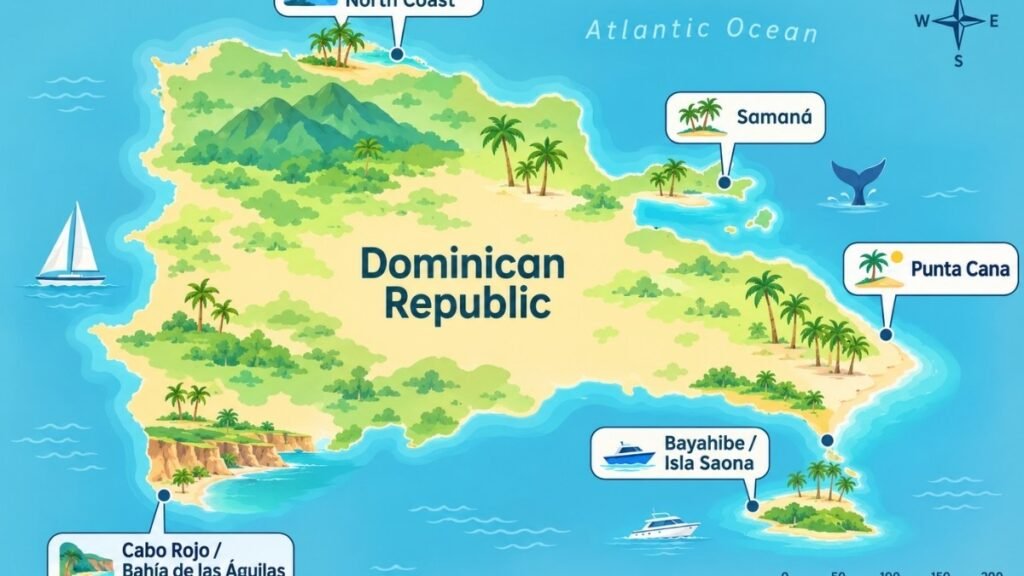
- Best for a quieter, resort-free vibe: Dominicus Beach / Bayahibe
- Best for surfing and bigger waves: Macao Beach
- Best North Coast pick for family facilities: Playa Dorada
- Best for snorkeling with kids: Cayo Arena / Paradise Island
- Best for a remote, wild feel: Playa Rincón
- Best for a full-day family excursion: Isla Saona
- Best for total escape from development: Bahía de las Águilas
One caveat before you screenshot this list and call it done: sargassum (seaweed), wave conditions, and even water clarity change with the seasons and sometimes week to week. A beach that was calm and gorgeous in someone’s June trip report might be windy and choppy in yours. Treat this list as a strong starting framework, not a guarantee — and always check recent local conditions before you commit a whole vacation day to one spot.
Throughout this guide, we’ll rate each beach on five things that actually matter to parents: Kid-Friendliness, Water & Wave Conditions, Safety Considerations, Facilities, and Best For.
Which Dominican Republic Beach Is Best for Your Family?
Before comparing individual beaches, it helps to figure out what kind of beach day you’re actually looking for — because “best beach” means something different depending on your kids’ ages and your tolerance for crowds.
Here’s a mistake that trips up a lot of first-time visitors: assuming the clearest, prettiest water is automatically the safest water. It isn’t. Some of the most photogenic beaches in Punta Cana also have strong currents just past the shallows, or heavy boat traffic close to shore. Wave height, current strength, boat activity, available shade, and nearby restrooms all deserve their own separate check — a beach can win on looks and still be a poor fit for a family with young kids.
Best Beaches for Families with Babies and Toddlers
For this age group, prioritize:
- Calm, shallow water with a gentle, gradual entry
- Shade (natural or rentable umbrellas)
- Nearby restrooms and food options
- A short walk from your accommodation — toddler meltdowns don’t wait for boat transfers
Skip anything primarily known for surf, or beaches that require a bumpy boat ride to reach.
Best Beaches for Families with Older Kids
Once kids can swim and follow safety instructions, you’ve got more room to play:
- Beginner-friendly snorkeling spots
- Supervised water sports and paddle activities
- Guided excursions with proper safety briefings
The goal here is balancing genuine adventure with a level of supervision that still matches your comfort level.
Best Beaches for Travelers Who Want to Avoid Crowds
Dominicus Beach, several quieter North Coast pockets, and more remote stretches of coastline offer a noticeably calmer scene. The trade-off is fewer amenities — you’ll want to bring more of your own supplies the less developed a beach is.
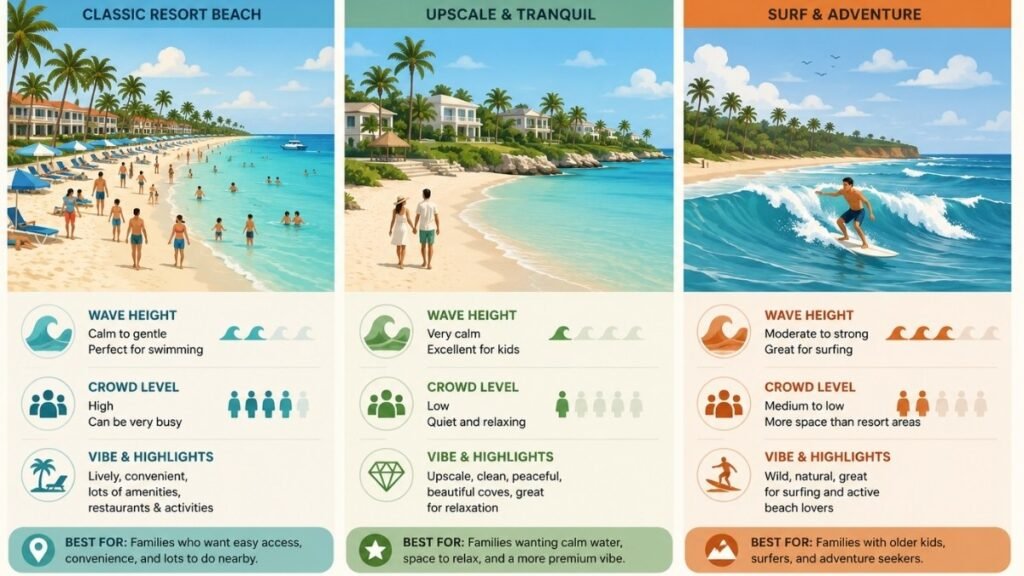
| Beach type | Best for | Water conditions | Main trade-off |
|---|---|---|---|
| Resort beachfront | Convenience, young kids | Usually calm, groomed | Can be crowded, boat traffic near shore |
| Remote/undeveloped | Scenery, fewer crowds | Variable, check locally | Few or no facilities |
| Surf beach | Older kids, active families | Moderate to strong waves | Not ideal for toddlers or weak swimmers |
| Bay/protected cove | Snorkeling, calm swimming | Usually gentle | Longer travel time to reach |
Key takeaway: The best Dominican Republic beach depends less on how it photographs and more on whether the water, waves, facilities, and access actually match your family.
The Best Beaches in Punta Cana for Swimming and Family Beach Days
Punta Cana gets lumped together in a lot of travel searches, but its beaches genuinely differ from one stretch of sand to the next — sometimes within the same few miles.
Playa Bávaro
Best for: Classic family beach days, easy swimming, resort convenience.
Bávaro is the postcard image most people have in mind — soft white sand and that classic Caribbean turquoise. But “Bávaro” covers a long stretch of coastline, and conditions genuinely shift from section to section. It’s worth asking your resort (or checking recent local reports) which specific stretch you’ll have access to.
Crowding, boat traffic near the shoreline, some erosion in spots, and seasonal sargassum are all realistic possibilities here. For families, that means:
- Keep a close eye on kids near boat channels
- Ask locally about which sections tend to be quieter
- Don’t assume the whole beach behaves like the one photo you saw online
Rating snapshot: Strong family suitability overall, with real location-specific variation.
Cap Cana
Best for: Calm water, quieter swimming, a more upscale beach feel.
Cap Cana generally offers a more protected, settled feel than the busier parts of Bávaro, which makes it a solid pick for families who want calm water without much drama. Access can be more resort-dependent here, so it’s worth confirming beforehand.
Macao Beach
Best for: Surfing, bigger waves, an active beach day.
Macao is genuinely beautiful, and it’s a real draw for surfers — but it’s also the clearest example on this list of why clear water and safe water aren’t the same thing. The waves here can be strong enough to knock over small children and unsteady swimmers.
If you’re bringing kids, treat Macao as a “watch from the beach or take a beginner lesson” spot rather than a free-swim location. Beginner surf lessons with an instructor are a very different experience from letting kids wade in unsupervised.
| Playa Bávaro | Cap Cana | Macao Beach | |
|---|---|---|---|
| Water calmness | Moderate | High | Low |
| Typical waves | Mild-moderate | Mild | Moderate-strong |
| Crowding | Higher | Moderate | Lower |
| Boat traffic | Higher | Lower | Low |
| Family suitability | Good, check section | Very good | Better for older kids/surf lessons |
| Best activities | Swimming, lounging | Calm swimming | Surfing |
| Main safety concern | Boat traffic, erosion | Minimal | Wave strength |
A genuinely useful mindset shift for first-timers: don’t treat “Punta Cana” as a single beach. It’s a whole coastline of very different micro-environments, and the beach right in front of your resort might behave completely differently than one ten minutes down the road.
Key takeaway: For families prioritizing calm swimming, Cap Cana and select sections of Bávaro are a more comfortable starting point than Macao.
The Best Beaches in Samaná for Nature, Adventure, and Family Exploration
Samaná trades some resort polish for something wilder — more natural scenery, more remote coves, and a few beaches you can only reach by boat.
Playa Rincón
Best for: Natural scenery, relaxed exploration, families comfortable with fewer facilities.
Rincón has an undeveloped, wide-open feel that’s hard to find closer to the resort corridors. Many families pair it with a stop at the nearby Caño Frío freshwater spot, which kids often love just as much as the ocean itself.
Because facilities are limited, plan ahead:
- Bring your own shade
- Pack more water than you think you’ll need
- Plan food in advance
- Bring insect repellent
Factor in travel time too — reaching Rincón usually takes longer than a typical resort beach day, so build that into your schedule rather than squeezing it in.
Playa Frontón
Best for: Adventure, snorkeling, dramatic scenery.
Frontón is only reachable by boat, and that transfer itself deserves a second thought when kids are involved. Boat conditions can get choppy, so before booking, it’s worth checking:
- Whether child life jackets are provided
- Current weather and sea conditions
- How prone your kids are to motion sickness on boats
Remote beach day essentials checklist:
- ☐ Drinking water (more than you think)
- ☐ Sun protection (reef-safe if snorkeling)
- ☐ Packed food
- ☐ Insect repellent
- ☐ Child flotation/safety equipment
- ☐ Dry bags for phones and valuables
It’s genuinely common for first-time visitors to underestimate how few amenities a remote beach like this has — no rows of loungers, no snack stands every hundred feet, sometimes no restroom at all. The scenery is the trade-off for that lack of development, and it’s worth going in with the right expectations.
Key takeaway: Samaná rewards families who value scenery and exploration, but its remote beaches genuinely require more preparation than a typical resort beach day.
The Best Beaches on the North Coast of the Dominican Republic
The North Coast — Puerto Plata, Cabarete, Sosúa, and the towns around them — offers a noticeably different vibe than the all-inclusive corridors further east, with a wider range of wind and wave conditions to match.
Playa Dorada
Best for: Family-friendly facilities and a straightforward beach day.
Golden sand paired with developed amenities makes Dorada a solid, low-stress pick for families who want shade, food, and bathrooms without much planning.
Cabarete
Best for: Kiteboarding, wind sports, active older kids and adults.
Cabarete is famous for a reason — the wind and wave action are exactly what make it a kiteboarding hotspot. That same wind, though, makes it a tougher fit for toddlers looking for calm, glassy water. This one’s better suited to families with older kids who want to try a lesson or two.
Playa Sosúa
Best for: A sheltered-feeling, accessible local beach experience.
Sosúa tends to draw a livelier local crowd, along with more vendor activity along the sand. A couple of practical notes: keep valuables close and packed away, and expect some persistent (but generally harmless) sales approaches — a polite, firm “no, thank you” usually does the job.
Playa Grande and Other North Coast Options
Worth knowing about as alternatives if you want something more scenic or less resort-dominated — just confirm current facilities and conditions before you go, since they vary more here than in the bigger resort zones.
| North Coast beach | Best for | Wave/wind profile | Family suitability | Facilities |
|---|---|---|---|---|
| Playa Dorada | Easy family days | Mild | High | Good |
| Cabarete | Wind sports, older kids | Windy, active | Moderate | Good, activity-focused |
| Playa Sosúa | Local beach access | Mild-moderate | Moderate | Good, busier |
| Playa Grande | Scenery, fewer resorts | Variable | Check locally | Variable |
Key takeaway: The North Coast offers more variety than a typical resort beach, but conditions are more active and facilities vary more than you’d find in Punta Cana.
The Best Beaches Around Bayahibe and Isla Saona for Calm Water and Family Excursions
If Punta Cana’s crowds and boat traffic aren’t your thing, the Bayahibe area is one of the strongest alternatives in the whole country — and it’s a favorite among families looking for calmer water without giving up organized, easy-to-book activities.
Dominicus Beach
Best for: Calm, relaxed swimming and resort-independent travel.
Dominicus works especially well for families staying in local accommodations rather than large all-inclusive resorts, offering a noticeably different pace than the bigger resort zones.
Bayahibe
Best for: Boat excursions, snorkeling, and jumping-off access to nearby natural attractions.
The main planning task here is choosing a reputable excursion operator — ask about child life jackets specifically, and keep an eye on transfer time and weather before booking anything with young kids.
Isla Saona
Best for: A full-day family excursion and that iconic postcard Caribbean look.
Saona day trips typically combine a boat transfer with shallow, sandbar-style swimming areas that are genuinely great for kids. One quick note on etiquette: if your excursion includes a stop near sea stars in shallow water, admire without touching or removing them — it protects the marine life and keeps the spot enjoyable for the families who visit after you.
| Bayahibe | Dominicus | Isla Saona | |
|---|---|---|---|
| Calmness | High | High | High (sandbar areas) |
| Family suitability | Good | Very good | Very good |
| Access | Boat/short transfer | Easy, land-based | Boat excursion |
| Best activities | Snorkeling, excursions | Relaxed swimming | Full-day outing |
| Main planning consideration | Operator reputation | Accommodation type | Transfer + sun exposure |
It’s easy to assume “family-friendly excursion” means an effortless day, but it still involves boat logistics, hours of sun exposure, and a longer day overall than a beach right outside your hotel room — worth pacing accordingly, especially with younger kids.
Key takeaway: Bayahibe and Dominicus offer some of the most practical alternatives for families who want calmer water and a change of pace from Punta Cana’s resort corridor.
The Best Beaches for Snorkeling and Shallow-Water Adventures
Shallow water and calm water aren’t automatically the same thing as safe snorkeling water — and that distinction matters a lot once kids are involved.
Cayo Arena / Paradise Island
Best for: Shallow-water snorkeling and a small-island day trip.
Getting here involves a boat transfer, so check sea conditions before committing, especially with young or first-time snorkelers. Age-appropriate, properly fitted gear makes a noticeable difference in how comfortable kids feel in the water.
Bayahibe and Isla Saona
Both work well as additional snorkeling and shallow-water options, generally paired with guided excursions. As always: look, don’t touch — coral and marine life are easily damaged and slow to recover.
Playa Frontón
A more adventurous snorkeling pick, with a boat transfer and entry conditions that ask a bit more of your group than the calmer spots above.
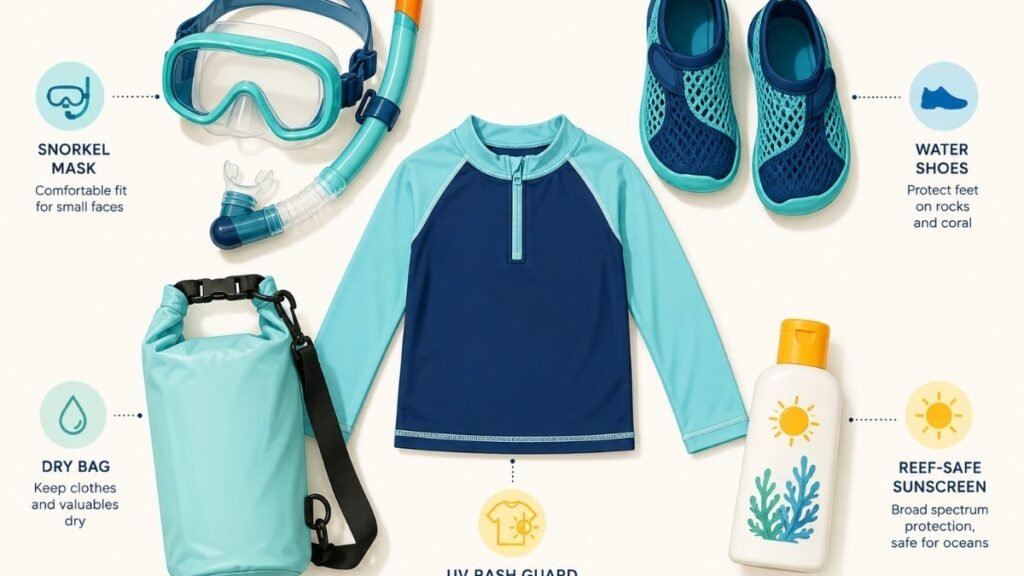
Family snorkeling essentials checklist:
- ☐ Properly fitting mask (an ill-fitting one ruins the whole experience for kids)
- ☐ Water shoes
- ☐ Rash guard or UV swimwear
- ☐ Reef-safe sun protection
- ☐ Dry bag
- ☐ Child safety/flotation equipment
If your family is new to snorkeling altogether, it’s worth working through the basics before you’re standing on a boat deck trying to figure out a mask for the first time — our snorkeling guide for beginners walks through fitting, breathing, and easing anxious first-timers into the water. And if this trip is part of a bigger Caribbean itinerary, our Turks and Caicos snorkeling guide is a useful comparison point for calmer, reef-heavy alternatives.
One thing worth clarifying for parents: shallow water doesn’t eliminate risk. Currents, boat traffic, slippery rocks, and sun exposure are still very much in play even when the water only reaches a child’s waist.
Key takeaway: The best family snorkeling beach combines manageable, shallow water with safe access and the right gear — not simply the clearest underwater view.
The Best Remote and Less-Crowded Beaches in the Dominican Republic
Fewer crowds almost always means fewer conveniences — that trade-off is worth understanding clearly before you build a whole day around a remote beach.
Bahía de las Águilas
Best for: Remote, undeveloped natural scenery.
This is about as far from a resort beach as it gets in the DR — genuinely stunning, and genuinely lacking in typical facilities. Bring everything: water, food, shade, sun protection, and a plan for your own trash, since waste management is limited or nonexistent here. Families with very young children may find more developed alternatives easier to manage for a full day.
Less-Resort-Oriented Alternatives
Dominicus, Cabarete, and similar areas let independent travelers access attractive beaches without committing to a big resort stay — the trade-off being that you give up some built-in convenience for more flexibility.
Remote beach preparation checklist:
- ☐ Water
- ☐ Food
- ☐ Shade (umbrella, tent, or canopy)
- ☐ First-aid supplies
- ☐ Sun protection
- ☐ Phone/electronics protection
- ☐ Waste bags
A remote beach is often beautiful precisely because it lacks the infrastructure of a developed resort beach — that’s usually the whole appeal, and it’s worth reframing the lack of amenities as part of the experience rather than a shortfall.
Key takeaway: Less-crowded beaches can feel more authentic, but families need to trade convenience for preparation and self-sufficiency.
How to Choose a Dominican Republic Beach Based on Water Conditions and Sargassum
Beach conditions in the Dominican Republic are not fixed — they shift by season, and sometimes noticeably from one section of coastline to the next just a short walk apart.
Key factors to watch:
- Sargassum (seaweed): seasonal and unpredictable, affecting shoreline appearance, smell, and water access
- High surf: varies by beach and by day
- Currents: can be strong even where the surface looks calm
- Boat traffic: heavier near resort zones and excursion departure points
- Coastal erosion: narrows some beach sections over time
- Water clarity: affected by weather, wind, and runoff
One honest caveat: a traveler’s report from six months ago — or even a “best month to avoid sargassum” claim — can’t guarantee what you’ll find on your specific trip dates. It’s genuinely useful to check recent local reports shortly before your beach day rather than planning your whole itinerary around older information.
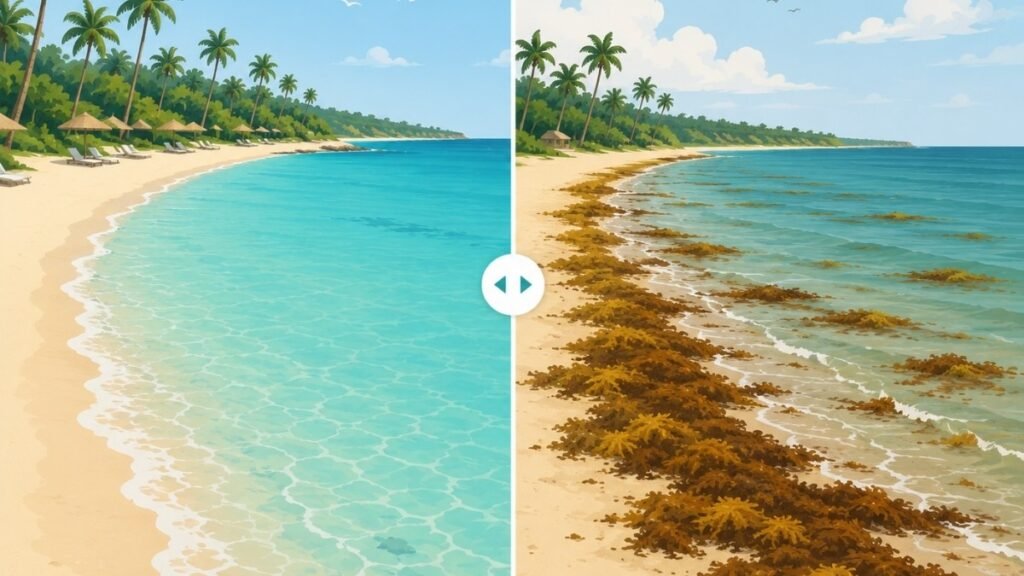
How Sargassum Can Affect a Beach Day
Sargassum tends to build up along the shoreline, sometimes with a noticeable odor and a change in water appearance. It’s seasonal and variable — resorts often clean their frontage regularly, but that cleanup has limits, especially during heavier sargassum periods. There’s no single month that guarantees seaweed-free water everywhere, so flexibility matters more than timing your trip around a rumor.
How to Read Beach Conditions for Children
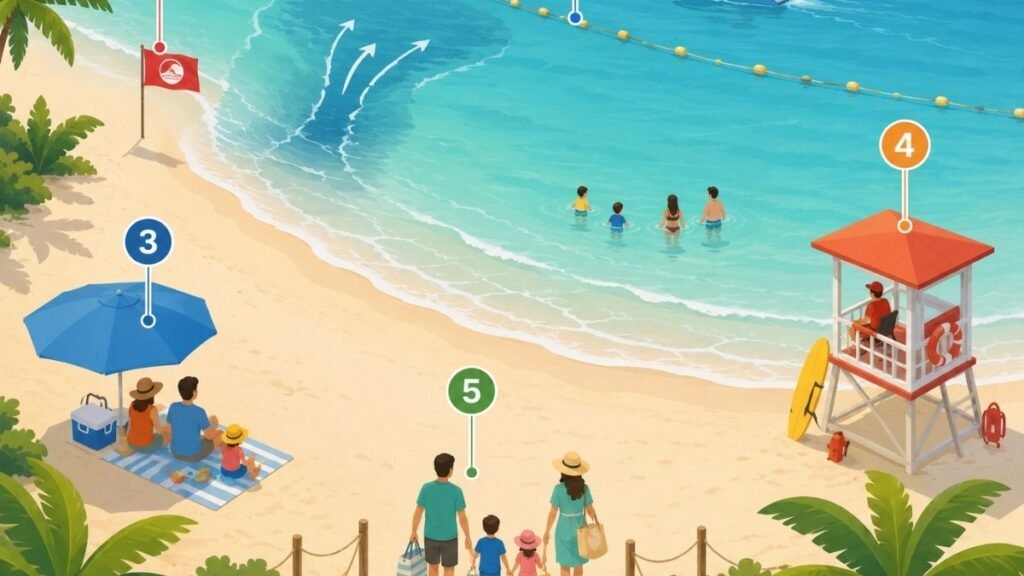
Before letting kids in the water, look for:
- A calm, gradual entry point
- Manageable wave height
- Posted safety warnings or flags
- Lifeguard presence, where available
- Low boat traffic near the swimming area
Clear water is not the same thing as safe water — it’s worth repeating, because it’s the single most common assumption that catches families off guard.
What to Do When Conditions Are Poor
- Switch to a different beach or protected cove nearby
- Consider a pool day or supervised excursion instead
- Never push kids into rough or unpleasant conditions just to stick to the original plan
| Condition | What it can mean | Family response |
|---|---|---|
| Visible seaweed on shore | Seasonal sargassum buildup | Check a nearby alternative beach |
| Choppy, uneven water | Wind or swell picking up | Save swimming for calmer hours or a protected cove |
| Cloudy/brown water near shore | Runoff or recent weather | Wait it out or move to a clearer section |
| Heavy boat activity | Excursion or fishing traffic | Swim further from the channel, supervise closely |
A very common planning mistake: booking an entire vacation around one beach’s reputation from a single trip report or a long-range seaweed forecast. Conditions shift too much for that to be reliable — flexibility is the better strategy.
Key takeaway: Beach conditions are dynamic, so the smartest approach is choosing a flexible home base and deciding day-by-day based on current, local conditions.
Dominican Republic Beach Safety for Families with Children
Before kids run into the water, it’s worth taking two minutes to actually look at the beach in front of you — waves, hazards, and exits included.
Watch for:
- Rip currents
- High surf
- Sudden drop-offs
- Boat traffic
- Sea urchins or sharp rocks/coral
- Jellyfish and other marine-life concerns
- Heat and dehydration
- Sun exposure
- Crowd density that makes keeping an eye on kids harder
Good habits worth building into every beach day:
- Supervise young children at arm’s length, not just “within sight”
- Follow local warning flags and posted instructions
- Use properly fitted flotation gear when appropriate
- Choose beaches whose facilities actually match your child’s age
5-minute pre-swim safety check:
- ☐ Check wave height and water entry
- ☐ Scan for visible hazards (rocks, drop-offs, marine life)
- ☐ Locate the nearest exit point and restroom
- ☐ Confirm exactly where kids are allowed to play
- ☐ Secure valuables before anyone gets in the water
Jellyfish encounters and minor marine-life stings do happen occasionally, even at generally calm beaches — knowing what to do in the moment makes a real difference, and our guide to jellyfish sting treatment and beach safety covers the practical first-response steps worth knowing before you travel, not while you’re standing on the sand trying to remember them.
When a Beach Isn’t Suitable for Young Children
- Strong, consistent surf
- Difficult or rough boat transfers
- Remote locations with no nearby support
- Heavy motorized boat traffic close to the swimming area
- Rapidly changing or poor-visibility conditions
A misconception worth correcting directly: shallow water is not automatically risk-free. Currents, sudden drop-offs, and marine life can all still be present a few feet from shore.
Key takeaway: A truly family-friendly beach is one where you can realistically supervise your kids and manage the hazards and support available — not just one that looks calm in photos.
What to Pack for a Dominican Republic Beach Day With Kids
The right gear solves specific problems — shade, sun, slippery footing, hydration, sand, and wet electronics — rather than just filling out a generic packing list.

Core family beach essentials:
- UPF 50+ swimwear or rash guards
- Broad-spectrum sunscreen (reef-safe where relevant)
- Wide-brim hats
- Water shoes
- Refillable water bottles
- Dry bags
- Waterproof phone protection
- Compact first-aid supplies
Situation-specific extras:
- Remote beaches: portable shade, extra food, extra water, a sand-resistant mat
- Snorkeling beaches: properly fitted masks and water shoes
- Surf beaches: protective gear and, ideally, a lesson with a certified instructor
- Boat excursions: child life jackets and a motion-sickness plan if needed
Not everything needs to be purchased new — some bulkier items (like large shade tents) are worth renting locally or checking if your resort provides, especially if you’re mostly sticking to resort beaches rather than remote ones.
Essentials for Babies and Toddlers
- Shade
- Extra hydration
- Sun-protective clothing
- Diaper and changing supplies
- Safe, age-appropriate water-play equipment
Essentials for Older Kids
- Water shoes
- Snorkeling gear
- Dry bags
- Activity-specific safety equipment (life jackets, surf gear, etc.)
Essentials for Remote Beaches
Treat these as self-sufficiency trips: pack as if nothing will be available once you arrive, because often, very little is.
Family beach packing checklist:
- ☐ Sun protection (clothing + sunscreen)
- ☐ Water shoes
- ☐ Snorkeling gear (if planned)
- ☐ Dry bags
- ☐ Extra water and snacks
- ☐ First-aid basics
- ☐ Shade solution for remote beaches
Key takeaway: The right beach gear solves the specific conditions your family will actually face — it’s not about packing everything in a generic vacation list.
How to Plan a Dominican Republic Beach Trip: Resorts, Public Beaches, and Day Trips
Where you stay shapes which beaches are realistically accessible — and how much extra planning each beach day requires.
When an All-Inclusive Resort Makes Sense
- Families prioritizing convenience over exploration
- Younger children who benefit from on-site shade, food, pools, and kids’ activities
- Travelers who want predictable meals and facilities without extra logistics
When Independent Accommodation May Be Better
- Budget-conscious families
- Those who want a local neighborhood feel and more flexibility
- Travelers planning to explore multiple beach areas rather than staying put
When a Day Trip Is Worth the Extra Cost
- Isla Saona
- Cayo Arena
- Other beaches requiring specialized boat transport
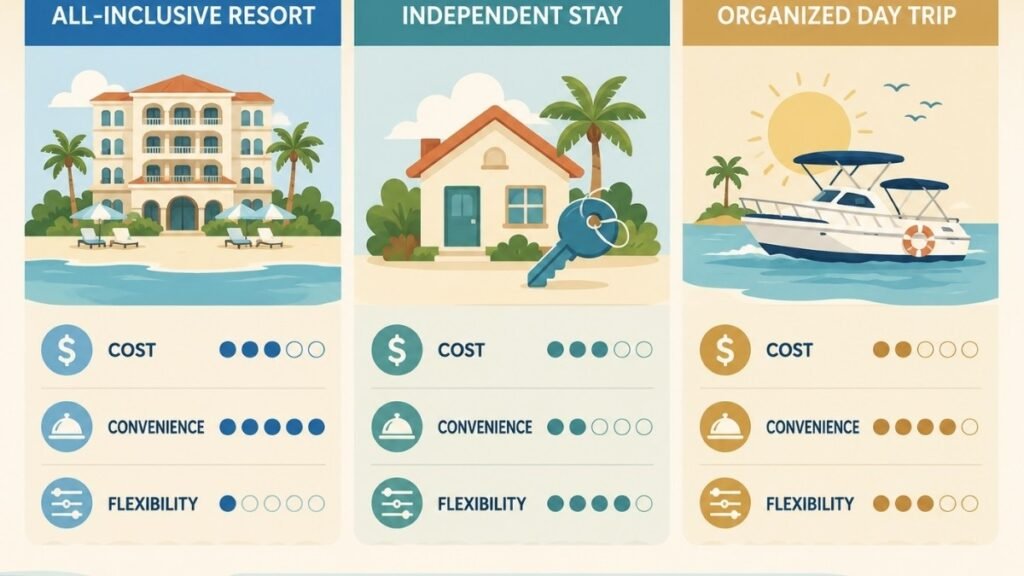
| Resort stay | Independent accommodation | Organized day trip | |
|---|---|---|---|
| Convenience | High | Moderate | Moderate |
| Cost structure | Bundled, upfront | Flexible, à la carte | Add-on cost |
| Beach access | Direct, on-site | Varies by location | Included transport |
| Family logistics | Simplest | More planning needed | Simple but scheduled |
| Flexibility | Lower | Higher | Lower |
A cost-planning tip worth remembering: the cheapest accommodation upfront isn’t always the cheapest option overall once you factor in transportation, meals, beach gear, and excursion add-ons. It’s worth running the full math before assuming independent travel is automatically the budget-friendly choice.
Key takeaway: The right accommodation strategy depends on whether your family values convenience, flexibility, lower upfront costs, or guaranteed access to specific beaches.
FAQ
What is the best beach in the Dominican Republic for clear and calm water?
Cap Cana and Dominicus Beach are generally the most reliable picks for calm, clear swimming conditions. Both offer a more protected feel than busier stretches of Bávaro or wave-heavy spots like Macao. Still, check recent local conditions before your trip, since clarity and calmness can shift seasonally.
What is the difference between Bávaro Beach, Cap Cana, and Macao Beach?
Bávaro is the classic, developed family beach with more crowds and boat traffic; Cap Cana tends to be calmer and quieter; Macao is known for stronger waves and surfing rather than easy family swimming. Choose based on your kids’ ages and comfort with waves.
Which beaches in the Dominican Republic are safest for families traveling with young children?
Cap Cana, Dominicus Beach, and Playa Dorada tend to offer the calmest water and best facilities for young children. Prioritize gentle entry points, visible safety flags, and low boat traffic over pure scenery when making the final call.
How does sargassum (seaweed) affect different beaches in Punta Cana?
Sargassum builds up seasonally and unevenly, sometimes affecting one beach section while leaving a nearby stretch mostly clear. Resorts often clean their frontage, but there’s no guaranteed seaweed-free month — check recent conditions close to your travel dates.
What are the best beaches to visit on the North Coast of the Dominican Republic?
Playa Dorada for family-friendly facilities, Cabarete for wind sports and older kids, and Playa Sosúa for an accessible local beach experience are the standout picks. Conditions and crowd levels vary more here than in the main resort zones.
Do I need to stay at an all-inclusive resort to access the best beaches in the DR?
No. Public beach access exists at many spots, and independent accommodation near Dominicus or Cabarete can put you close to excellent beaches without a resort stay. Just confirm access details in advance, since resort beachfront and public beach access aren’t always the same thing.
Why do some beaches in Bávaro have a gasoline smell or narrow shoreline?
This is usually tied to boat traffic near shore and, in some sections, ongoing coastal erosion. It varies by specific beach segment, which is why checking which part of Bávaro you’ll actually have access to is worth doing before you book.
Where should I go in the Dominican Republic if I prefer less crowded and non-resort beaches?
Dominicus Beach, select North Coast pockets, and remote spots like Playa Rincón or Bahía de las Águilas offer a quieter, less-developed experience. Just be ready to bring more of your own supplies, since facilities are limited the further you get from resort zones.
Final Thoughts
Choosing the right Dominican Republic beach really comes down to matching water conditions, safety, facilities, and access to your family’s specific situation — not simply picking whichever beach looks best in a search result. A calmer, less photogenic cove that fits your toddler’s comfort level will make for a far better afternoon than a stunning surf beach that has everyone on edge. Use current conditions, not last year’s trip report, to make the final call each day.
🏖️ Behind This Guide
Planning a beach trip in the Dominican Republic shouldn’t feel like sorting through dozens of conflicting recommendations. Yet one guide tells you to head straight for Bávaro, another recommends Bayahibe, while others barely mention the differences that matter most to families—like wave conditions, beach access, or how easy it is to spend a full day with young kids.
That’s why we built this guide around the things travelers actually need to know before choosing a beach—not just which one looks the prettiest in photos.
This guide focuses on four essentials:
- 🌊 Water Conditions — Calm swimming, waves, currents, and seasonal changes that affect your beach day.
- 👨👩👧👦 Family-Friendly Beaches — Safe, comfortable spots for babies, toddlers, older kids, and multi-generational trips.
- 🏖️ Planning Made Simple — Facilities, accessibility, excursions, and practical tips to help you choose the right beach.
- ☀️ Real-World Beach Safety — Sargassum, boat traffic, sun exposure, and the details many travel guides overlook.
Because the goal isn’t simply to visit the most famous beach.
It’s to spend less time worrying—and more time enjoying the Caribbean together.
🌊 Continue Exploring
- Costa Rica Beaches: The Honest Family Guide
- Turks and Caicos Snorkeling: The Honest Family Guide
- Things to Do in Turks and Caicos: The Honest Family Activity Guide
- Snorkeling for Beginners: Everything You Need Before Getting in the Water
- What to Bring to the Beach: Complete Beach Gear Guide
❤️ A Final Note
Good decisions rarely come from chasing the latest trend—they come from having clear, trustworthy information.
At Exproly, we’re here to help you cut through the noise, avoid common mistakes, and make smarter choices with practical advice you can actually use.
Our goal is simple: helping you make confident decisions, one guide at a time.